


Refurbished iPhone vs New Battery Life: The 2026 Showdown

18/06/2026

9 Mins

A good refurbished iPhone often gets much closer to new battery life than most buyers expect. The real difference usually isn’t “refurbished versus new”. It’s 100% battery health on a new iPhone versus a properly tested refurbished one that still has strong battery health or has had the battery replaced.
If you buy carefully, the day-to-day gap can be small enough that most people won’t feel short-changed. If you buy badly, battery life is the first place you’ll notice it.
The Short Version
For most UK buyers, refurbished iPhone vs new battery life comes down to one simple question. What battery health is the phone actually on when it arrives?
A new iPhone starts at 100% capacity. A refurbished iPhone can still be a very sensible buy because many good refurbished units sit in the 85% to 100% range for daily use, and Apple shows that figure clearly in Settings > Battery > Battery Health & Charging on supported models via Apple’s battery health guidance.
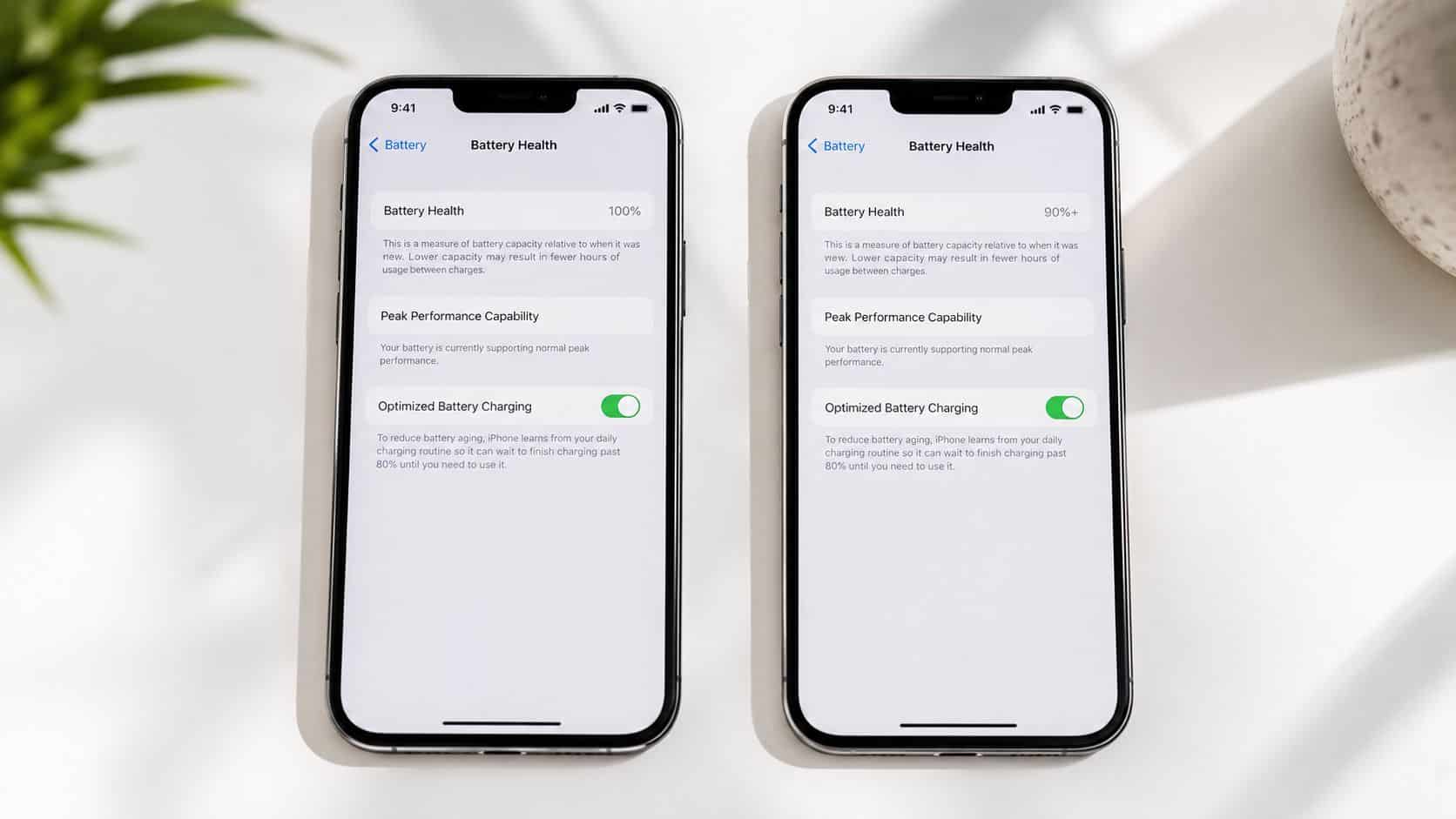
Quick comparison
- New iPhone 100% battery health out of the box. Best choice if you want the longest possible runtime and don’t want to think about battery condition at all.
- Refurbished iPhone Usually the smarter value buy if the seller checks battery health properly and won’t send out tired batteries.
- Best buying rule Check battery health before you focus on colour, storage, or cosmetic grade.
- What works Buying from a retailer that tests charging, battery stability, and everyday performance.
- What doesn’t Buying a “cheap bargain” with no clear battery standard, then finding it needs topping up halfway through the day.
In plain English A well-prepared refurbished iPhone can feel very close to new in daily use. A poorly prepared one feels old very quickly.
That’s why many buyers are better off spending less on the handset and putting the focus on condition, testing, and battery health. If you’re comparing options, it makes more sense to buy refurbished iPhones from a seller that’s clear about standards than to assume every used phone will perform the same.
What iPhone Battery Health Actually Means
People often mix up battery life and battery health. They’re related, but they aren’t the same thing.
Battery life is how long the phone lasts on a charge today. Battery health is how much of the battery’s original ability it still has left after months or years of use.
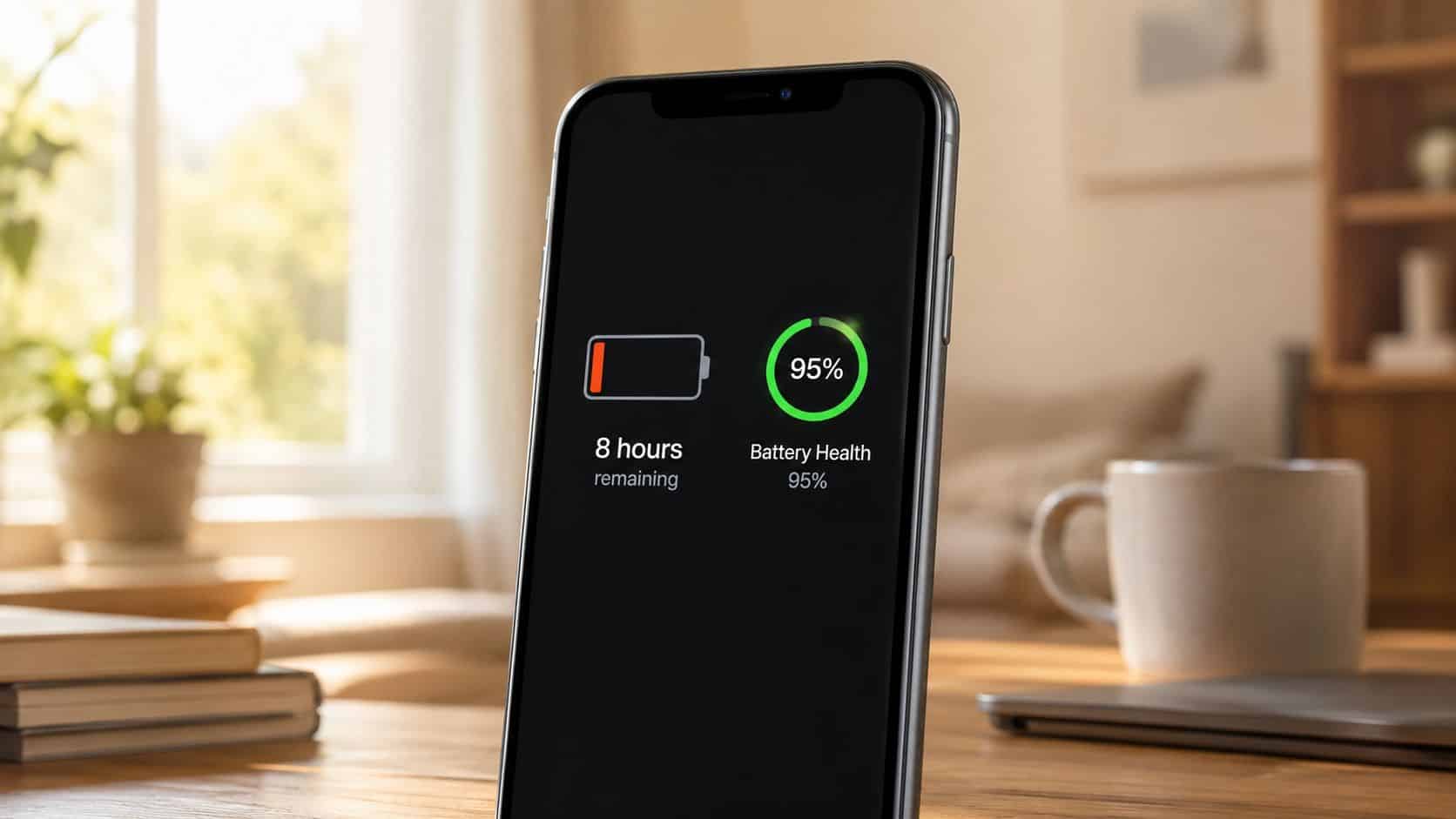
Maximum Capacity
This is the figure most buyers should care about first. Apple shows it as a percentage in Settings > Battery > Battery Health & Charging, and it tells you how the battery compares with when it was new.
The easiest way to think about it is like a water bottle. When it’s new, it holds a full amount. Over time, the bottle doesn’t leak, but it simply can’t hold quite as much as it did before. That’s what battery ageing looks like in real life.
Apple says iPhone 15 models are designed to retain 80% of their original capacity after 1,000 complete charge cycles under ideal conditions, and treats that level as still within expected performance in its official battery information. For buyers, that matters because a new iPhone starts at 100%, while a well-refurbished one may sit anywhere from 80% to 100%, so the real-world gap can be smaller than people expect.
Peak Performance Capability
This tells you whether the battery can still deliver power properly when the phone needs it. A battery can show decent capacity and still behave badly under load if it’s unstable or worn in the wrong way.
That’s why a proper refurbishment check shouldn’t stop at the percentage alone. If the phone struggles with charging behaviour, power delivery, or shutdown risk, the battery needs closer attention even if the number doesn’t look terrible on first glance.
A battery percentage is useful, but it isn’t the whole story. Daily reliability matters just as much.
For a more practical buying view, this guide to understanding iPhone battery life in the UK is worth checking before you compare listings.
How to Check an iPhone’s Battery Health
If you’re looking at your current handset, a trade-in, or a refurbished phone before buying, check the battery menu yourself. It takes less than a minute and tells you far more than a seller saying “battery is good”.
How to check battery health, quick steps
- Open Settings. Start on the iPhone home screen and tap the Settings app.
- Tap Battery. This takes you into the phone’s power usage section.
- Tap Battery Health & Charging. This is the menu that shows the battery condition on supported iPhones.
- Read Maximum Capacity. This is the key percentage showing how the battery compares with when it was new.
- Check Peak Performance Capability. Make sure the phone reports normal performance and doesn’t show battery-related warnings.
- Look for service messages. If the phone suggests service, battery replacement may be close.
- Ask the seller to confirm the reading before dispatch. That matters if you’re buying online and want the condition recorded clearly.
Visible battery health reporting arrived with iOS 11.3, which is why checking an iPhone is much easier than it used to be. For most phones people are realistically shopping for now, that means you can judge the battery on something more useful than guesswork.
If you want a more detailed buyer checklist, this refurbished iPhone battery health guide helps you spot the difference between a well-prepared phone and one that’s only been cleaned up for resale.
Our Experience Refurbishing This Model at Used Mobiles 4U
One thing we regularly notice is that battery health tells you a lot about how a phone has been used, but not everything. Two iPhones with similar cosmetic wear can behave very differently once they’re on charge, under load, or left idle overnight.
Our technicians often see handsets that look tidy on the outside but show signs of a hard life once diagnostics begin. Charging issues, inconsistent drain, previous poor-quality repairs, or battery messages in settings are far more important than a few marks on the frame.
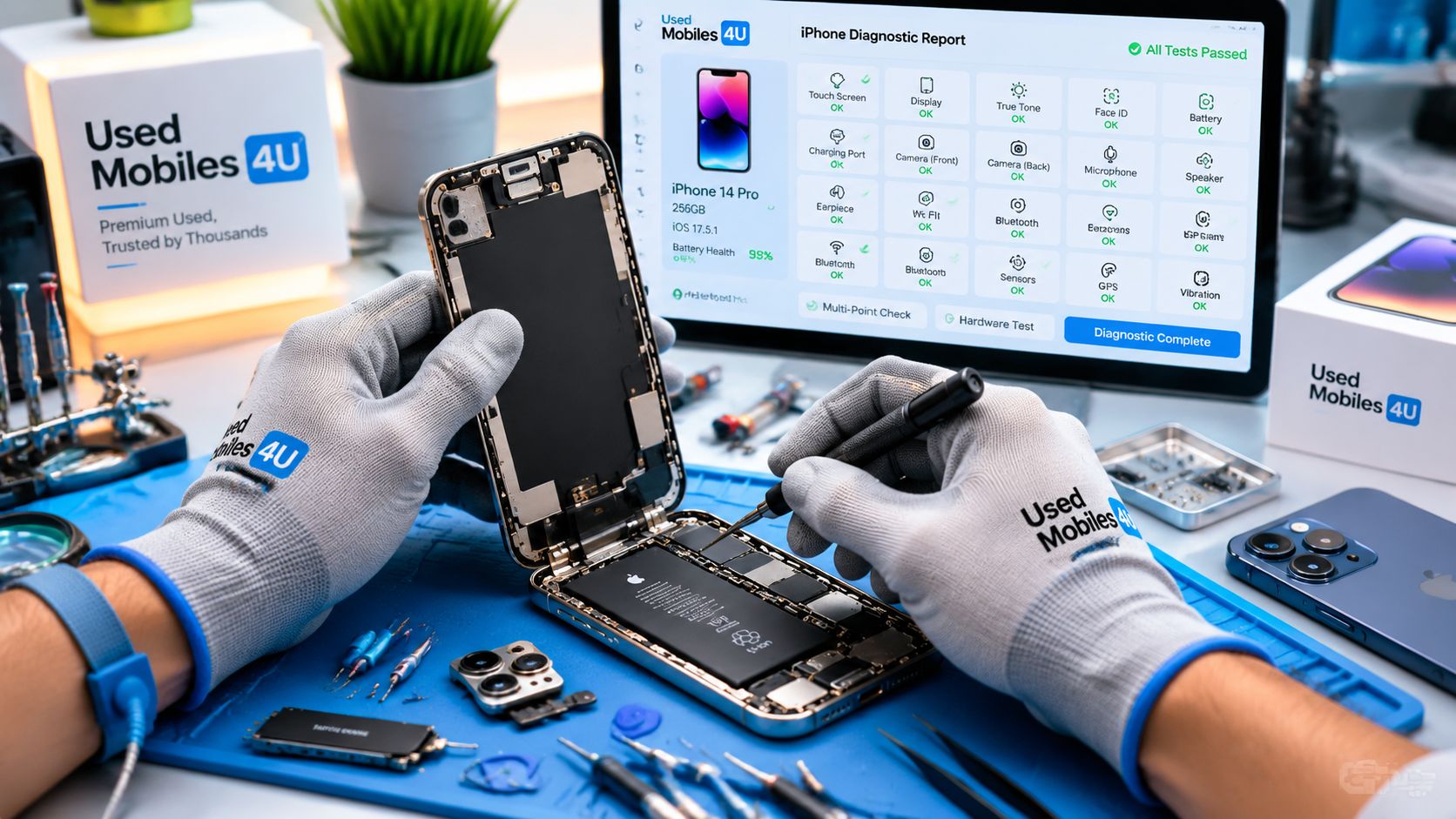
What gets checked on the bench
- Battery health reading We check the reported condition in iOS where available, but we don’t rely on that alone.
- Charging behaviour A phone needs to charge properly, hold charge sensibly, and behave normally when unplugged.
- Performance stability We look for signs the phone is throttling, overheating, or showing battery warnings.
- Previous repair quality Poor adhesive work, missing screws, bent shields, or low-grade parts often point to corner-cutting elsewhere.
- Related faults We also check the charging port, cameras, speakers, Face ID, and general board condition because battery complaints sometimes start somewhere else.
The practical rule is simple. If a battery is weak, inconsistent, or below our minimum standard, it shouldn’t stay in the phone just because it technically still powers on.
That fits the wider refurb trade reality as well. For UK retail refurbishment, the meaningful comparison isn’t just refurbished versus new. It’s whether the phone has a battery in the stronger health bands or a replacement battery fitted, since performance management and shutdown risk become more relevant below about 80%, as described in this practical overview from The Big Phone Store.
What usually separates a good unit from a poor one
A higher cosmetic grade doesn’t automatically mean better battery life. We’ve seen very clean phones with tired batteries, and rougher-looking ones that still hold charge well because they were used differently or maintained better.
Bench note If a seller talks a lot about scratches but says very little about battery condition, that’s usually the wrong way round.
Signs of heavy use often show up around the charging port, speaker grills, screen edges, and screw heads. If those areas suggest repeated charging strain or previous opening, we check the phone even more carefully. The aim is to catch the problems that a marketplace listing won’t tell you.
If you want to see how that approach fits into device testing more broadly, the Used Mobiles 4U Refurbishment Process explains what’s checked before a phone is approved for resale.
Answering Your Top Battery Questions
These are the things buyers usually ask when they’re standing at the counter comparing a refurbished iPhone with a brand new one.
What buyers usually ask us
- Will 85% battery health last all day? In normal daily use, that’s generally the point where a refurbished iPhone is still expected to get through the day comfortably. Once you slip below the lower band, top-ups become much more likely.
- Is an original battery always better than a replacement? Not automatically. A healthy original battery is often fine. A worn original battery is still a worn battery. What matters is present condition and stable performance, not sentiment.
- Why do some used iPhones feel much worse than others? Storage size and colour don’t affect stamina. Battery wear, charging habits, prior repair quality, and general condition do.
- Can I trust the battery percentage on its own? It’s a strong starting point, but not the only thing worth checking. A phone also needs to charge properly and perform normally under use.
Battery health became much easier for buyers to judge once Apple introduced visible reporting in iOS 11.3. Since then, refurbished buying has shifted because buyers can compare a used iPhone with a new one using a simple percentage, and batteries at 85% or higher are commonly treated as suitable for daily use while anything below 80% is much more likely to be considered replacement territory, as outlined in this explanation from Wisetek Market.
Choose new or refurbished
Choose a new iPhone if:
- You want zero compromise You want fresh battery health, untouched internals, and the longest likely runtime straight away.
- You’re a very heavy user Long workdays, constant hotspot use, gaming, filming, or navigation may make the extra headroom worthwhile.
- You don’t want to think about battery condition at all You’d rather pay more and remove that question completely.
Choose a refurbished iPhone if:
- You want better value For most people, a well-checked refurbished iPhone gives a very similar daily experience without paying new-phone money.
- You care more about real use than box-fresh status Messaging, email, calls, banking, streaming, photos, and school or work apps don’t usually require perfect battery health to feel smooth.
- You’re buying from a proper retailer Clear grading, battery standards, warranty cover, and UK support matter far more than buying from a random private listing.
If you’re choosing between a new iPhone and a properly refurbished one with strong battery health, refurbished is the better buy for most people. The savings usually outweigh the smaller battery gap.
Is a Refurbished iPhone the Right Choice for You?
For many buyers, yes. Not every buyer, but many.
A common example we see is a parent buying a first iPhone for a teenager. They want decent battery life, reliable charging, good cameras, and something that won’t cost a fortune if it gets knocked about. In that situation, a tested refurbished iPhone usually makes more sense than buying new.
Who it suits best
- Students You need a phone that lasts through lectures, travel, and everyday app use without stretching the budget more than it needs to.
- Parents Value matters. So does knowing the phone has been checked properly and isn’t likely to turn into a battery problem straight away.
- Small businesses If you’re buying several handsets, refurbished often gives you the reliability you need without tying up as much cash in hardware.
- Practical upgraders If your current phone is tired but you don’t need the latest box on day one, refurbished is often the sensible middle ground.
In UK refurb guidance, a refurbished iPhone with 85%+ battery health is generally expected to last a full day under normal use, while anything below 80% is more likely to need a top-up and may show more obvious stamina loss. That’s why battery health is the most useful buying measure when weighing a refurbished phone against a new one, as noted in this UK-focused piece from The iOutlet.
Who should avoid it
If you’re the sort of user who pushes your phone hard from early morning to late evening, wants the absolute best battery runtime available, and doesn’t mind paying for it, new still has the edge. The same applies if you simply prefer unopened devices and don’t want any compromise, however small.
For everyone else, the better question isn’t “Is refurbished worse?” It’s “Has this phone been tested properly, and is the battery still in a healthy range?” If the answer is yes, a refurbished iPhone is often the more sensible purchase.
The short version is this. Refurbished iPhone vs new battery life isn’t a dramatic gap when the refurbished phone has been checked properly. It’s worth buying if you want strong everyday performance, clear value, and you’re happy to prioritise condition over shrink-wrap. Avoid it only if you want the absolute maximum battery life available and don’t mind paying for the privilege.
If you’d like a tested, SIM-free iPhone with clear grading, battery standards, warranty cover, and UK support, take a look at Used Mobiles 4 U. You can browse refurbished iPhones, compare condition options, and choose a handset that suits your daily use rather than paying extra for brand new by default.
Written by James Waterston, 24 years in the mobile phone industry from customer service through to Sales Director of a global repair and recycling company. Now running Used Mobiles 4U for over 8 years.
LinkedIn: James Waterston
Meta description: Refurbished iPhone vs new battery life explained simply. Learn what 85% to 100% battery health means and which option makes better sense for daily use.
Looking for a refurbished phone?
Shop professionally tested refurbished iPhones and Samsung phones with 18 month warranty, 30 day returns and free UK delivery.
Browse Refurbished Phones