


Are Second-Hand iPhones Waterproof? Everything You Need to Know

06/06/2025

5 Mins
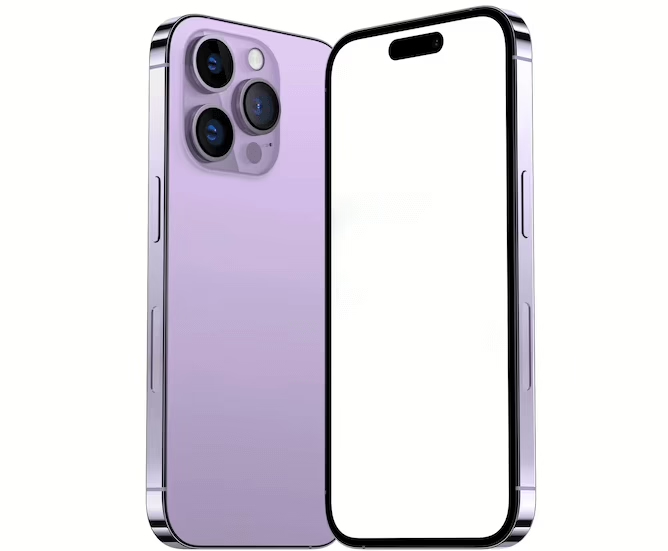
In today’s fast-paced, tech-savvy world, smartphones are indispensable. Apple’s iPhones continue to dominate the market thanks to their premium build, cutting-edge technology, and sleek design. But what if you want an iPhone without the premium price tag? Second-hand iPhones are becoming increasingly popular, offering a cost-effective way to access Apple’s ecosystem. However, one common concern users have is this: Are second-hand iPhones waterproof?
This guide will take a deep dive into this question—exploring the water-resistance technology behind iPhones, what happens during refurbishment, how water protection might be affected, and what you can do to protect your investment.
1. Understanding iPhone Water Resistance: The Basics
What Does “Waterproof” Really Mean?
Before we answer the main question, it’s essential to clarify a critical point: no iPhone is truly waterproof. Instead, Apple advertises its devices as water-resistant, meaning they are designed to handle accidental splashes or brief submersion under controlled conditions—not deep-sea dives or extended exposure.
What is an IP Rating?
Apple uses Ingress Protection (IP) ratings to define how well its iPhones withstand water and dust. An IP rating typically consists of two digits:
-
The first digit refers to protection against solids like dust (rated 0 to 6).
-
The second digit refers to protection against liquids like water (rated 0 to 9).
For example:
-
iPhone 7 to iPhone X: IP67 – can survive in up to 1 meter of water for 30 minutes.
-
iPhone 11 Pro, iPhone 12, 13, 14, and newer: IP68 – rated for 2–6 meters of depth, depending on the model, for up to 30 minutes.
These ratings are established in laboratory settings, under ideal conditions that rarely reflect real-world usage.
2. How Water Resistance is Built into iPhones
Apple achieves water resistance through multiple design elements:
-
Rubber seals and adhesives: Applied around buttons, SIM trays, speakers, and other openings.
-
Internal gaskets and glue: Reduce internal water intrusion.
-
Hydrophobic coatings: Repel water on the logic board and other critical components.
These components work together to provide short-term protection against water damage. However, they’re not permanent and can degrade over time—particularly with drops, temperature shifts, and general wear and tear.
3. What Happens to Water Resistance During Refurbishment?
Refurbishment involves disassembling a phone, replacing faulty components, cleaning, testing, and reassembling it. This process can interfere with the integrity of the original water-resistant seals.
Key Points of Impact:
-
Opening the Phone: iPhones are sealed with strong adhesive. Opening the device breaks these seals, which are difficult to replicate outside of Apple’s controlled assembly process.
-
Parts Replacement: If screens, batteries, or buttons are replaced, the new parts may not fit perfectly or may not be resealed properly.
-
Reassembly Quality: Unless the refurbisher uses water-resistant adhesive and resealing methods (often costly and time-consuming), the device may lose its IP rating altogether.
Most independent refurbishers focus on functionality and cosmetics, not waterproofing. As a result, even if the phone was originally IP68 rated, a second-hand version may no longer be water-resistant at all.
4. Can Second-Hand Phones Be Resealed for Water Resistance?
Technically, yes—but with caveats.
Apple-Certified Refurbished vs. Third-Party Second-Hand
-
Apple-Certified Refurbished devices are restored using original parts and manufacturing techniques. These may preserve water resistance to a certain degree, though Apple still advises against water exposure.
-
Third-Party Second-Hand Phones vary widely in quality. Some high-end refurbishers invest in reapplying seals and testing for water resistance, but most do not.
There are no industry standards or legal requirements to re-certify IP ratings after refurbishment. Unless explicitly stated, you should assume that water resistance is no longer guaranteed.
5. Manufacturer Warranties & Water Damage Policies
One of the most misunderstood aspects of iPhone water resistance is Apple’s own policy.
Does Apple Cover Water Damage?
No, Apple’s limited warranty—and even AppleCare+—does not cover water damage. This policy applies to both new and second-hand phones.
Despite advertising water resistance, Apple makes it clear that any liquid damage is considered accidental and voids warranty coverage. Even the Liquid Contact Indicator (LCI) built into every iPhone serves as a way for Apple to verify exposure—not prevent damage.
If Apple doesn’t cover water damage on new phones, you can bet that second-hand iPhones—especially from third-party sellers—are not protected either.
6. Risks of Using Second-Hand iPhones Around Water
There are several risks associated with exposing second-hand iPhones to moisture:
-
Short-circuiting: Moisture can damage sensitive components, particularly the logic board.
-
Corrosion: Over time, even a tiny bit of water can lead to rust and corrosion.
-
Battery issues: Water can interfere with charging ports, connectors, and the battery itself.
-
Void warranties: As mentioned, water damage is generally excluded from most warranty protections.
Even water-resistant phones can suffer damage if exposed to hot water, soapy water, or other liquids not included in lab testing. A second-hand iPhone is even more vulnerable.
7. How to Check If Your Second-Hand iPhone Has Been Water Damaged
If you’ve already purchased a second-hand iPhone, you can do a quick visual inspection:
-
Locate the LCI: It’s usually in the SIM tray slot. If the indicator has turned red, the phone has been exposed to moisture.
-
Check for foggy camera lenses or speaker distortion: These can indicate past liquid exposure.
-
Inspect the seals: A poorly sealed phone might have gaps around the edges or uneven surfaces.
You can also use third-party diagnostic tools or ask a technician to check the phone’s condition if you’re uncertain.
8. Best Practices for Protecting Second-Hand iPhones
While you shouldn’t rely on water resistance, you can still take steps to safeguard your device:
Protective Measures:
-
Use a Waterproof Case: Brands like LifeProof or Catalyst offer full waterproof protection, including for second-hand phones.
-
Avoid Wet Environments: Keep your phone away from pools, sinks, rain, and bathrooms.
-
Don’t Charge When Wet: Lightning ports can short-circuit if moisture is present.
-
Use Wireless Charging: This can reduce the need to expose charging ports.
-
Apply Water-Resistant Coatings: Some stores offer nano-coating services, though they’re not foolproof.
9. Buying Tips: What to Look for in a Second-Hand iPhone
To reduce risks and improve your chances of getting a high-quality device:
Always Buy From Trusted Sellers:
-
Apple Refurbished Store: Offers devices certified by Apple with a one-year warranty.
-
Reputable Resellers (like Used Mobiles 4U): Look for reviews, warranty information, and return policies.
-
Check for IP Claims: Avoid sellers who falsely advertise waterproof capabilities without certification.
-
Request Diagnostic Reports: Ensure the device was tested for basic functionality and hasn’t suffered water damage in the past.
10. Final Thoughts: Should You Trust a Second-Hand iPhone Near Water?
To sum up:
-
No second-hand iPhone should be considered waterproof.
-
While some might retain some resistance, there’s no guarantee unless it’s resealed by Apple itself—and even then, Apple doesn’t cover water damage.
-
If you plan to use your iPhone around water, invest in proper protective accessories or consider buying a new, IP-rated model.
The Bottom Line:
Second-hand iPhones are a smart, sustainable, and budget-friendly choice—but not if you expect them to survive a swim. Exercise caution, understand the limitations, and take proactive steps to protect your device.