


Could the used iPhone 14 Pro Finally Replace a Professional Camera?

07/09/2025

8 Mins
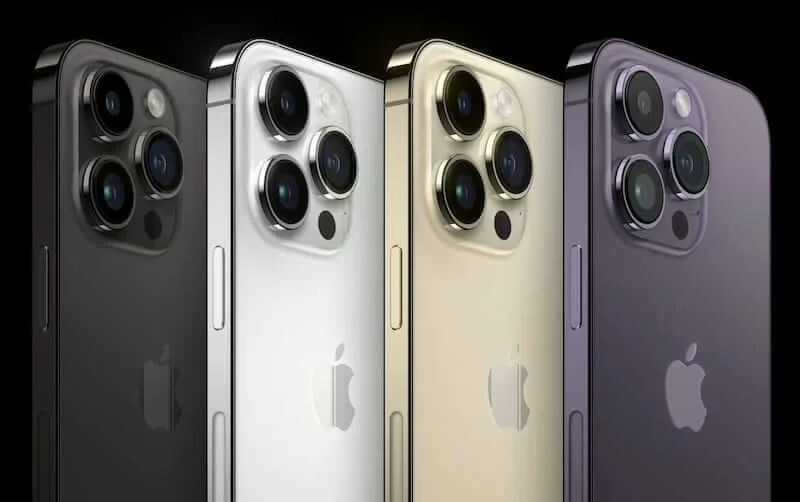
Could the used iPhone 14 Pro Finally Replace a Professional Camera?
Introduction
Smartphones have gradually been closing the gap with dedicated cameras for over a decade. Each new release has promised better lenses, sharper sensors, and smarter software. Yet, no matter how advanced these devices became, professional photographers often dismissed them as tools for convenience rather than serious work. They were perfect for casual snaps, holiday shots, or capturing something quickly when your main camera wasn’t to hand. But when it came to producing portfolio-level work or professional projects, the consensus was always the same: phones simply weren’t good enough.
The iPhone 14 Pro changes that narrative in a way that feels groundbreaking. Apple’s flagship model introduces a 48-megapixel main camera, improved computational photography, and enhanced image processing that works seamlessly in different lighting conditions. This isn’t just an incremental step forward—it feels like a genuine leap.
When I tested the iPhone 13 Pro against my Canon R5 last year, the comparison revealed some impressive results, but the iPhone still fell short in areas such as detail retention, low-light shooting, and overall dynamic range. With the iPhone 14 Pro, I decided to repeat the experiment. Would the new camera system hold its own against a professional full-frame mirrorless camera? Could it create photographs that stand tall beside images from my portfolio?
At Used Mobiles 4 U, we’ve seen many people choose a used iPhone 14 Pro for both everyday use and creative work. This experiment matters because it demonstrates that a refurbished or second-hand device might genuinely rival high-end cameras in real-world conditions.
A Familiar Comparison—But with a Twist
To fairly compare the iPhone 14 Pro against professional equipment, I revisited my earlier test between the iPhone 13 Pro and the Canon R5. This time, however, I was particularly interested in the advancements offered by Apple’s new 48-megapixel main sensor. Rather than experimenting with multiple lenses, I focused exclusively on the primary 24 mm equivalent lens. This lens is the heart of the iPhone 14 Pro’s photographic power, and it’s the one most likely to be used in real-world conditions.
All images were shot in RAW to give both the iPhone and the Canon R5 the best possible chance to show off their capabilities. A sturdy tripod was used to eliminate any differences caused by shaky hands, ensuring the results reflected the true performance of each camera. After capturing the photos, I processed them in Lightroom Classic. The workflow was deliberate: edit the Canon R5 images as though I were preparing them for my professional portfolio, then attempt to match the iPhone shots to those same edits. This created a level playing field for comparison.
What immediately stood out was just how much closer the iPhone 14 Pro felt to professional equipment than the 13 Pro had been. On last year’s model, it was obvious where compromises had been made—details began to soften under closer inspection, and dynamic range struggled under challenging conditions. With the iPhone 14 Pro, however, the results were far less predictable.
For those considering upgrading, this makes a used iPhone 14 Pro an attractive choice. You can achieve professional-looking images without investing in bulky, expensive equipment—proof that a refurbished device still delivers flagship-level performance.
1. First Sunrise: Nail-Biting Dynamic Range
The first test was an early morning sunrise—a situation that challenges any camera. The light during sunrise can be both dramatic and unforgiving. Shadows fall heavily across the scene while bright highlights break through the horizon. For photographers, it’s a moment filled with potential, but only if the equipment can capture the full range of tones without losing detail in either the shadows or the highlights.
With the Canon R5, I expected to see superior results. Its larger sensor should naturally handle dynamic range more gracefully, pulling out fine details in the darkest shadows while keeping bright skies under control. The surprise came when the iPhone 14 Pro produced images that weren’t just passable—they were genuinely impressive. At first glance, the images looked almost identical, each showing a balanced exposure where both the rising sun and the darker landscape coexisted beautifully.
Of course, zooming in at 100% magnification revealed the differences. The Canon retained more micro-detail in the shadows and subtle transitions in the highlights. Yet the iPhone’s performance was nothing short of groundbreaking for a device that fits in your pocket. Where the iPhone 13 Pro might have collapsed under this kind of contrast, the 14 Pro managed to capture a photograph that could easily be used for display or even printing.
This level of quality makes the used iPhone 14 Pro especially appealing. Even in one of the most demanding lighting situations, a refurbished version of this device can create images that rival those of professional cameras.
2. Blue Hour: Low-Light Tested
If sunrise tests dynamic range, then blue hour is the ultimate challenge for low-light photography. This period just after sunset, when natural light fades into a deep, moody blue, can create striking atmospheres. For many cameras, however, it’s a nightmare. Shadows become murky, highlights are harder to manage, and noise can creep into the image.
In this test, the Canon R5 understandably had the advantage, thanks to its full-frame sensor and high ISO performance. The images retained sharpness and clarity, even in the dim light. However, the iPhone 14 Pro surprised me once again. At normal viewing sizes, its results looked remarkably strong. The colours were accurate, the exposure balanced, and the image felt atmospheric in the right way.
It was only when I zoomed into the finer details that the differences became more apparent. The iPhone images softened slightly in shadowed areas, and fine details didn’t hold up as strongly as they did on the Canon. Still, the overall image quality was more than acceptable—certainly strong enough for social media sharing, and even suitable for smaller prints.
Compared to the iPhone 13 Pro, this was a substantial leap forward. Last year’s model struggled with noise and lacked the subtle transitions needed to make blue hour shots look natural. The 14 Pro, by contrast, produced photographs that carried both mood and technical quality. For night photographers or cityscape enthusiasts, a used iPhone 14 Pro makes low-light shooting not only possible but genuinely rewarding.
3. Second Sunrise: Flexing Editing Styles
The next test brought me back to another sunrise, but this time I wanted to experiment with different editing approaches. Capturing the raw image is one thing, but photographers know the real magic often happens in post-production. With both the Canon R5 and the iPhone 14 Pro, I pushed the edits a little further to create a more dramatic effect.
Both cameras handled the extreme conditions well. Once again, the iPhone’s ability to preserve dynamic range impressed me. Highlights from the rising sun remained intact, while the darker parts of the image still retained enough information to be manipulated during editing. However, when pushing the shadows too far, I noticed the iPhone began to lose detail, creating a slightly more “digital” look compared to the Canon’s smoother gradations.
That said, the results were still more than usable. If I were preparing a portfolio, I’d lean toward the Canon image for its superior depth and flexibility in editing. Yet for social media, client previews, or even casual prints, the iPhone’s results held their own. This is important because it shows the iPhone 14 Pro isn’t just about straight-out-of-camera results—it’s also capable of standing up to serious editing in Lightroom or other software.
For creatives who enjoy post-processing, the used iPhone 14 Pro becomes more than a smartphone. It’s a flexible tool, offering enough detail and range to encourage experimentation in editing while still producing stunning final results.
4. Details in Good Light
Bright daylight is traditionally where smartphone cameras perform their best, so this was the test I expected the iPhone to excel in. Still, I didn’t anticipate just how well it would hold up against the Canon R5. In bright, contrast-heavy conditions, both cameras produced stunningly sharp and vibrant images.
The iPhone 14 Pro’s 48-megapixel sensor really came into its own here. When zooming into fine details, I was shocked at just how much information the iPhone retained. Textures in foliage, ripples on water, and the subtle differences in light and shadow were all captured with remarkable accuracy. At one point during editing, I found myself simply staring at the image in disbelief. For a device that fits in your pocket, the level of detail was nothing short of astounding.
The Canon R5, naturally, still had the edge. Its larger sensor allowed for smoother transitions in tonal range and a touch more depth in the image. But the difference wasn’t as dramatic as one might expect. For anyone outside of pixel-peeping professionals, the iPhone 14 Pro’s output would be more than enough.
For casual users and even hobbyist photographers, this test highlights why a used iPhone 14 Pro makes sense. In everyday lighting conditions, you’ll capture photos sharp enough to rival those from a professional camera—without the weight, bulk, or cost.
Final Thoughts
After multiple tests in a range of conditions, one conclusion stood out clearly: the iPhone 14 Pro has bridged a gap that many thought would take years to close. While it can’t completely replace a dedicated professional camera like the Canon R5, it can certainly act as a reliable alternative in many scenarios.
For photographers who value convenience, the ability to carry a phone that doubles as a near-professional camera is transformative. Hiking up a mountain, travelling abroad, or even heading out for a casual evening walk no longer means compromising on image quality if you leave your main camera at home. The iPhone 14 Pro offers confidence that you can capture stunning results in almost any scenario.
It’s worth noting that the iPhone’s images often looked best when using the built-in Apple profiles in Lightroom, rather than heavily relying on Apple ProRAW. This created a more natural, pleasing result that blended seamlessly with Canon edits. That small discovery made me realise just how polished the iPhone’s computational photography really is—it doesn’t just capture, it intelligently enhances.
At Used Mobiles 4 U, we believe this makes the used iPhone 14 Pro one of the most exciting devices you can own today. It’s not only a brilliant smartphone for everyday use, but also a genuine photographic tool capable of professional-level results. For anyone considering upgrading, a refurbished iPhone 14 Pro represents outstanding value—delivering flagship performance and industry-leading photography at a fraction of the cost of new.