


iPhone 15 vs iPhone 11: Time to Upgrade?

23/10/2025

9 Mins
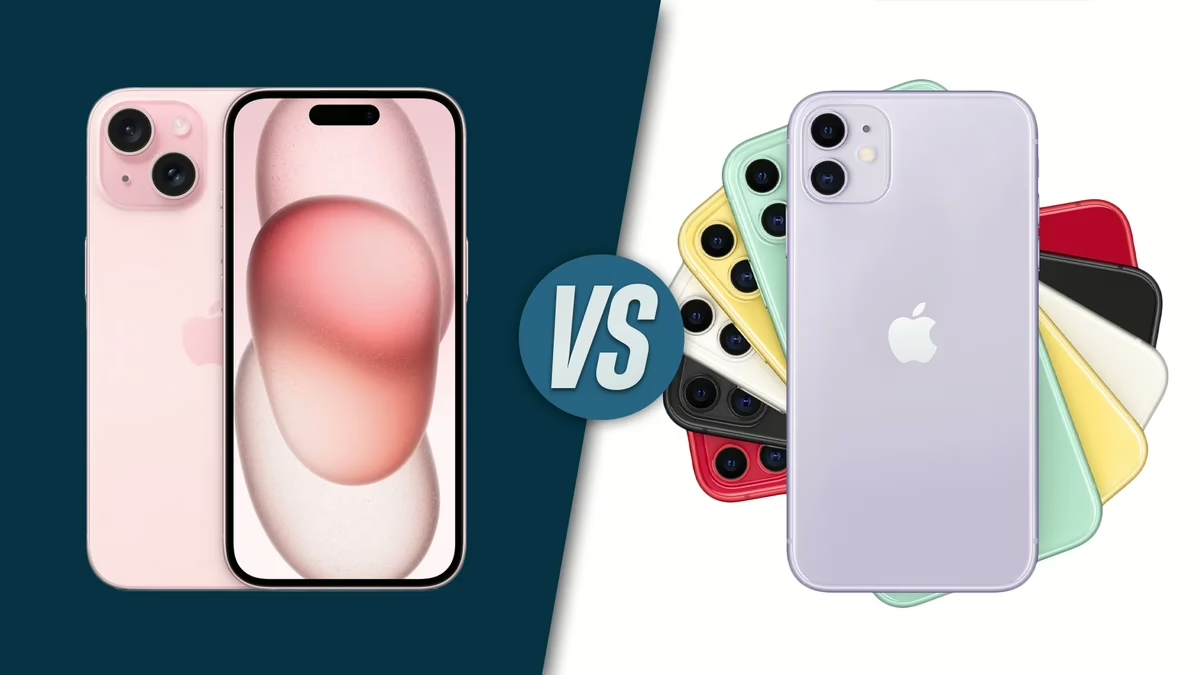
iPhone 11 vs iPhone 15: Time to Upgrade?
Introduction
While the pace of smartphone innovation has slowed compared to the leaps we saw a decade ago, the four-year span between the iPhone 11 and the iPhone 15 is long enough to reveal meaningful progress. Both devices were well-rounded and reliable in their respective eras, but iPhone 11 vs iPhone 15 shows just how far Apple has come in improving performance, display quality, camera systems, and even small but impactful design details.
The iPhone 11 introduced the return of flat edges to the lineup and brought solid performance for its time, but its LCD screen felt outdated compared to Android competitors. The iPhone 15, meanwhile, delivers a sharper, brighter OLED display, a more efficient chipset, and a much-improved camera system that is especially effective in low-light situations. The transition from the notch to Dynamic Island also brings a fresh, more modern look and practical functionality to the display.
For those still using an iPhone 11, this comparison is an opportunity to evaluate what four years of Apple’s innovation means in everyday use. From battery life to software support and from build quality to photography, iPhone 11 vs iPhone 15 highlights an evolution that may convince some long-time iPhone 11 owners to finally upgrade, while assuring others that their trusty device still holds up.
Design and Size
One of the most visible shifts in iPhone 11 vs iPhone 15 is in the overall design language. The iPhone 11 has smooth, rounded edges and a glossy glass back, which gave it a softer, almost pebble-like feel in the hand. It was comfortable to hold but prone to fingerprint smudges. The iPhone 15 retains the flat-edged form introduced with the iPhone 12 series but softens it slightly with subtle contours where the frame meets the back glass. This makes it feel both modern and more ergonomic than the sharper-edged predecessors.
The change in back glass is also notable. While the iPhone 11’s glossy glass often showed smears and reflections, the iPhone 15 introduces a matte, colour-infused glass back that resists fingerprints and maintains a cleaner look throughout the day. This small but practical change helps the iPhone 15 maintain a more premium appearance over time.
Another striking difference is on the front. The iPhone 11 still has the traditional notch at the top of the display, while the iPhone 15 adopts Dynamic Island, an adaptive and interactive area that replaces the static notch. It makes the display feel more immersive and brings new functionality to notifications and live activities.
Both devices are close in size, with the iPhone 11 measuring 5.94 x 2.98 x 0.33 inches and weighing 6.07 ounces, while the iPhone 15 comes in slightly more compact at 5.81 x 2.82 x 0.31 inches and 6.03 ounces. The iPhone 15 is therefore a bit slimmer and lighter, which adds to the sense of refinement.
The switch from Lightning to USB-C is another design and usability improvement that favours the iPhone 15. It simplifies charging and accessory connections by aligning the iPhone with most modern devices.
In summary, iPhone 11 vs iPhone 15 showcases a move toward a more premium, practical, and user-friendly design without drastically changing the size or ergonomics that users have grown to love.
Display Differences
Comparing the iPhone 15 vs iPhone 11: Key Features
When we look at iPhone 11 vs iPhone 15, the display is one of the areas where the generational leap is clearest. The iPhone 11 was the last base model iPhone to use an LCD panel rather than OLED. While the LCD was bright enough for most indoor use, it could not match the rich contrast and deep blacks that OLED delivers. It also lacked the sharpness and vivid HDR performance that has since become standard in modern smartphones.
The iPhone 15 replaces that older technology with a high-quality OLED display that makes a difference in every scenario. Blacks are now truly black because individual pixels switch off, enhancing depth and contrast. Colours look more vibrant yet stay accurate, which is particularly noticeable when viewing photos or HDR video content.
Brightness is another area where the gap in iPhone 11 vs iPhone 15 is significant. The iPhone 11 topped out at around 625 nits, which was decent in 2019 but can feel lacking today, especially under bright sunlight. The iPhone 15 reaches up to 2,000 nits in outdoor peak brightness and 1,600 nits in HDR, making it much easier to see even on the sunniest days.
Both devices have 6.1-inch screens with a standard 60 Hz refresh rate, so while the iPhone 15’s visuals are sharper and brighter, motion fluidity remains similar to that of the iPhone 11. For many users upgrading, the leap in contrast, brightness, and HDR quality will feel far more impactful than the refresh rate.
Overall, the iPhone 11 vs iPhone 15 comparison makes it clear that Apple has addressed one of the older device’s key shortcomings. The move to OLED, combined with higher brightness and Dynamic Island functionality, makes the iPhone 15’s screen far more modern and visually satisfying.
Performance and Software
In the battle of iPhone 11 vs iPhone 15, performance is another critical difference. The iPhone 11 is powered by the A13 Bionic chip, which was a powerhouse in 2019 and still handles everyday tasks like web browsing, messaging, and light gaming without much trouble. However, as apps and iOS features have become more sophisticated, the limits of the A13 are starting to show, particularly in demanding workflows such as video editing, graphics-heavy gaming, and multitasking.
The iPhone 15 features the much newer A16 Bionic chip, which brings around 30–40 percent better performance in CPU and GPU tasks compared to the A13. More importantly, it is also significantly more power-efficient, meaning it can deliver higher performance while consuming less energy. This contributes to improved battery life and smoother operation under heavy loads.
Another edge for the iPhone 15 is memory. It comes with 6 GB of faster LPDDR5 RAM, compared to the iPhone 11’s 4 GB of older-generation memory. The extra RAM helps keep more apps running in the background without slowdowns and supports more advanced camera and AI-driven features.
On the software side, iPhone 11 vs iPhone 15 also means different support timelines. The iPhone 11 launched with iOS 13 and is now running iOS 17, but it will likely only receive updates for another year or two. The iPhone 15, being the latest release, will get several more years of updates and security patches, extending its relevance well into the future.
The iPhone 15 also launches with the latest iOS, bringing new features such as improved Live Translation, redesigned interfaces, and better privacy tools. Many of these new features are supported on older devices, but some rely on the more advanced hardware of the A16 chip to function smoothly.
For those weighing iPhone 11 vs iPhone 15, the newer phone’s performance advantage means not just speed today but longevity for years to come, ensuring that it remains capable as apps and software evolve.
Camera
Cameras have always been a hallmark of Apple’s upgrades, and iPhone 11 vs iPhone 15 tells a story of how far smartphone photography has come in four years. The iPhone 11’s dual-camera system, featuring a 12 MP wide and a 12 MP ultra-wide lens, still produces decent photos in good lighting. However, in low light or when zooming, it begins to show its age. HDR and Portrait modes work well but lack the refinement of Apple’s more recent computational photography.
The iPhone 15 makes a dramatic leap by introducing a 48 MP main sensor—a huge jump from the iPhone 11’s 12 MP. This sensor captures far more detail and allows for better cropping and zooming without sacrificing image quality. It also enables a high-quality 2× sensor crop mode, which acts as if the phone had a dedicated telephoto lens, something the iPhone 11 lacks.
Low-light performance has improved significantly as well. Night-mode shots are clearer, brighter, and less noisy on the iPhone 15, thanks to both the larger sensor and advanced image processing. Portrait photography has also advanced, with the newer device allowing users to adjust focus and depth after the shot—a feature that adds creative flexibility.
The ultra-wide lens has likewise been enhanced, offering sharper results and better edge-to-edge clarity. The front-facing camera on the iPhone 15 has autofocus and a wider f/1.9 aperture, letting in more light for improved selfies, especially in dim conditions.
In short, iPhone 11 vs iPhone 15 in camera terms is no contest. For casual photographers, the iPhone 11 remains serviceable, but anyone who values higher detail, richer colours, better low-light shots, and more versatile zoom will find the iPhone 15’s camera system a major reason to upgrade.
Audio Quality and Haptics
Audio has always been one of Apple’s strong suits, and in iPhone 11 vs iPhone 15, the differences are incremental but still noteworthy. The iPhone 11 introduced good stereo speakers that were clear and reasonably loud for their time. Since then, Apple has refined the sound profile across generations. The iPhone 15 delivers louder output with richer bass and more balanced mids and highs, making music playback, movie watching, and gaming more immersive.
When it comes to haptic feedback, however, there is little difference between iPhone 11 vs iPhone 15. Both devices use Apple’s excellent Taptic Engine, which provides precise, tactile vibrations for notifications, typing, and system interactions. This consistency means that while audio has evolved, haptics remain one of the iPhone’s most polished, steady-state experiences.
For most users, the upgrade in audio will be a welcome bonus rather than a deciding factor. It contributes to the overall impression that the iPhone 15 is a more refined device, but if you are satisfied with the iPhone 11’s speakers and haptics, this category alone will not be the reason to switch.
Battery Life and Charging
Battery life is another area where iPhone 11 vs iPhone 15 shows clear progress. The iPhone 11 was respectable in its day but often struggled under heavy use to last a full day, particularly as batteries aged. Many iPhone 11 units today have diminished battery health, which further limits endurance.
The iPhone 15 benefits from a combination of a more efficient A16 Bionic chip and a modestly larger battery. These improvements translate into noticeably longer runtimes, with Apple rating the iPhone 15 for up to 20 hours of video playback. This makes it a more reliable companion for people who stream content, play games, or use GPS navigation throughout the day.
Charging speeds have seen a modest boost. The iPhone 11 supported 18 W wired charging, while the iPhone 15 supports up to 20 W. More meaningfully, wireless charging has improved: the iPhone 15 supports MagSafe charging at up to 15 W, compared to the iPhone 11’s slower 7.5 W Qi charging.
For users whose iPhone 11 battery struggles to last through the day, upgrading to the iPhone 15 offers a tangible improvement in convenience and reliability. For those whose iPhone 11 battery is still in good condition, the difference may be less dramatic but still noticeable in daily use.
Specs and Longevity
When you break down iPhone 11 vs iPhone 15 by the numbers, the progression is evident. The newer phone offers a sharper OLED display, a faster and more efficient processor, more RAM, a vastly superior main camera, better low-light performance, brighter outdoor visibility, longer battery life, and the convenience of USB-C. It also starts at 128 GB of base storage, compared to the iPhone 11’s 64 GB, which quickly feels cramped for modern photo, video, and app demands.
Longevity is another key factor. The iPhone 11, while still supported, is nearing the end of its major software update window and will likely receive only a couple more iOS versions. The iPhone 15, by contrast, will continue to receive updates for years to come, making it a safer investment for long-term use.
This headroom ensures that the iPhone 15 will not only feel faster today but will also age more gracefully, handling future apps and features with less compromise.
Summary and Final Verdict
In the story of iPhone 11 vs iPhone 15, four years of progress have brought real advantages. The newer model’s brighter OLED display, Dynamic Island, better camera system, longer battery life, and USB-C connectivity all add up to a phone that feels more capable and future-ready. Its improved performance and extended software support mean it will remain relevant for many more years than the iPhone 11.
However, if your iPhone 11 still meets your needs, has decent battery health, and runs smoothly enough for your daily tasks, you may not need to rush out and upgrade. The iPhone 11 remains a dependable device for basic use and will continue to receive at least another year or two of software updates.
For new buyers or those experiencing battery or performance issues with their iPhone 11, the jump to the iPhone 15 is an upgrade you will notice and appreciate in daily use. And for shoppers who want to balance cost and sustainability, choosing a refurbished iPhone 15 from UsedMobiles4U is the smartest way to enjoy the latest features without paying the full retail price.
Ultimately, iPhone 11 vs iPhone 15 is a clear example of how incremental advances over several years add up to a meaningful step forward. Whether you choose to keep your current phone a bit longer or decide that the time has come to embrace a more modern device, the comparison shows how far Apple’s base iPhone has come.