


iPhone 15 vs iPhone 14: The Evolution of Apple’s Smartphones

16/10/2025

7 Mins
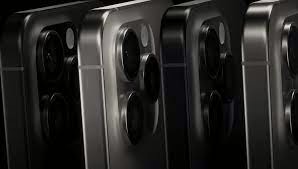
iPhone 15 vs iPhone 14: The Evolution of Apple’s Smartphones
Apple’s iPhone lineup continues to evolve, and the iPhone 15 is the latest in a long line of refinements. For consumers interested in used or refurbished devices, comparing it with the iPhone 14 helps clarify where the meaningful upgrades lie. While both phones share a similar overall design and many overlapping features, the differences in processor performance, camera capability, and design details reveal Apple’s strategy for gradual innovation. The iPhone 15 refines nearly every major element without radically reinventing the formula. This makes the comparison particularly relevant for buyers weighing whether the newer model is worth the higher price tag or if the iPhone 14 still represents a smart, cost-effective choice. Both models run iOS 17, which introduces interactive widgets, enhanced privacy controls, and improved call customization, ensuring that either phone offers a modern experience. Understanding the distinctions between the two models allows potential buyers to make informed decisions that balance budget, performance, and longevity.
Launch & Pricing: Subtle Shifts with Market Implications
When Apple launched the iPhone 15 series, pricing strategy played a crucial role in shaping its appeal. In most markets, Apple reduced the retail cost of the iPhone 15 and 15 Plus by around €50, while the iPhone 15 Pro dropped by roughly €100 compared to its predecessor. Although not dramatic, these adjustments make the lineup slightly more accessible. All new models arrived with iOS 17 preinstalled, bringing improved personalization, refined FaceTime features, and greater connectivity options. For used-device shoppers, this shift has created an interesting dynamic: the iPhone 14 has seen steady price drops in the refurbished market, making it one of the best-value recent iPhones available. Apple’s release pattern also means that both phones will enjoy long-term software support, so buyers need not worry about immediate obsolescence. Additionally, with new regulatory requirements—such as the adoption of USB-C—the iPhone 15 represents a transitional generation for Apple. This shift influences pricing on older models and has encouraged renewed interest in the iPhone 14, which still delivers excellent performance and build quality for a lower price. In essence, Apple’s incremental pricing change benefits budget-conscious users, particularly those seeking certified used devices.
Design & Build: Subtle Refinements and Practical Upgrades
At first glance, the iPhone 15 looks nearly identical to the iPhone 14, but close inspection reveals Apple’s attention to comfort and durability. The newer model introduces gently contoured edges that make it feel smoother in hand, addressing the sharper profile that many users found on previous generations. Apple also changed the rear panel material—switching from the iPhone 14’s traditional glossy glass to a matte, color-infused frosted glass. This provides a more premium texture, resists fingerprints, and gives the phone a softer aesthetic appeal. Another notable evolution is the long-awaited switch from Apple’s proprietary Lightning port to USB-C. While the standard iPhone 15’s data transfer speed remains limited to 480 Mbps, similar to Lightning, the port brings universal cable compatibility, a convenience users have requested for years. Both the iPhone 14 and 15 maintain the same IP68 dust and water resistance rating, ensuring solid protection against everyday hazards. The aluminum frame remains lightweight yet sturdy, while color options have become slightly more subdued and elegant. Overall, the design improvements in the iPhone 15 enhance usability rather than transform appearance. For those purchasing used or refurbished units, the build quality of either device ensures lasting reliability, though the USB-C change may make the newer model more future-proof.
Display & Interface: Visual Continuity with Smarter Features
Apple has refined, rather than reinvented, the display experience between the iPhone 14 and 15. Both feature 6.1-inch Super Retina XDR OLED screens offering exceptional color accuracy, deep contrast, and sharpness. However, the iPhone 15 introduces the Dynamic Island—a feature previously exclusive to Pro models. This clever interface replaces the static notch with a fluid, interactive zone that dynamically expands to display alerts, timers, music playback, and more. While the core panel technology remains nearly identical, the addition of Dynamic Island makes the iPhone 15 feel more modern and engaging to use. The screen resolution sees a minor adjustment (2556×1179 on the iPhone 15 vs. 2532×1170 on the iPhone 14), though the difference is imperceptible in daily use. Brightness levels have improved, with the iPhone 15 reaching higher typical and peak HDR brightness, enhancing visibility in outdoor light. Both models still operate at a 60Hz refresh rate, meaning users will not experience the smoother scrolling found in Apple’s ProMotion displays. Nevertheless, Apple’s display calibration remains industry-leading, delivering vivid and consistent visuals. For those comparing used devices, both models offer outstanding screens, but the iPhone 15’s Dynamic Island and brighter display slightly elevate the experience without making the iPhone 14 feel outdated.
Camera: The Jump from 12MP to 48MP
Photography has always been a defining strength of the iPhone line, and here the iPhone 15 makes its most substantial leap. Apple replaced the 12-megapixel primary sensor found in the iPhone 14 with a new 48-megapixel main camera that uses pixel binning technology to capture richer detail and improved low-light performance. This upgrade significantly enhances image clarity and flexibility, allowing users to shoot at full resolution or employ a 2× optical-quality zoom using the central portion of the sensor—without needing a dedicated telephoto lens. The result is sharper, more natural images across a wide variety of conditions. The ultra-wide and front cameras remain at 12MP, delivering reliable quality with consistent color and tone. Video recording continues to be a strong point, with cinematic mode, HDR recording, and stabilization improvements on the iPhone 15 producing noticeably smoother footage. Both phones handle everyday photography well, but the newer model’s computational enhancements, including improved Smart HDR and better noise reduction, create a visible difference for enthusiasts or content creators. For users buying used iPhones, the iPhone 14’s camera is still exceptional for everyday photography and social media, while the iPhone 15’s 48MP sensor offers more flexibility for those who prioritize professional-grade results.
Performance & Hardware: Efficiency Meets Evolution
Under the hood, the iPhone 15 steps up to Apple’s A16 Bionic chip, previously used in the iPhone 14 Pro models. This chipset brings a more advanced 4-nanometer architecture, offering better energy efficiency, cooler operation, and a modest performance boost compared to the iPhone 14’s A15 Bionic. Everyday differences may seem subtle, but heavy multitasking, gaming, or video editing tasks reveal smoother performance and reduced power drain. The iPhone 15’s updated Neural Engine also accelerates AI-driven features like image recognition and voice processing, enhancing iOS 17’s responsiveness. Storage options remain consistent—128GB, 256GB, or 512GB—and both models include 6GB of RAM, ensuring stable multitasking. The iPhone 15’s internal design improves thermal management, allowing sustained performance during demanding workloads. Benchmark results confirm around a 15–20% improvement in CPU and GPU performance, though real-world use focuses more on efficiency gains. The A16’s superior image signal processor further enhances photo and video output, linking performance directly to camera quality. Ultimately, both devices deliver top-tier speed, but the iPhone 15 has a slight edge in longevity. For buyers considering long-term use or software updates, this efficiency advantage means the iPhone 15 may remain faster and smoother for years to come, while the iPhone 14 continues to deliver excellent value for cost-conscious users.
Battery & Charging: Balanced Power with Incremental Gains
Battery life between the iPhone 14 and 15 remains remarkably close, with both providing a full day of moderate to heavy use. In typical conditions, users can expect roughly 17 to 20 hours of mixed activity such as browsing, messaging, and video streaming. The iPhone 15 benefits slightly from the A16 Bionic’s improved power management, offering marginally longer endurance during standby and light tasks. Charging capabilities remain consistent—both support 20W fast charging, capable of restoring about 50% capacity in 30 minutes. Wireless charging continues through Apple’s MagSafe system at 15W and standard Qi charging at 7.5W. However, the iPhone 15 introduces compatibility with the emerging Qi2 standard, potentially allowing improved alignment and more efficient wireless charging with third-party accessories in the future. The shift to USB-C does not dramatically change charging speed, but it simplifies daily use by eliminating the need for Lightning cables. Real-world battery longevity for used devices will depend on battery health and prior usage, making refurbished models with verified battery replacements more appealing. Overall, both models deliver consistent and reliable power performance, with the iPhone 15 showing minor but meaningful improvements in charging convenience and efficiency.
Verdict: Choosing Between Two Excellent iPhones
Both the iPhone 14 and iPhone 15 exemplify Apple’s steady approach to innovation—evolution over revolution. For most users, the decision will come down to priorities. The iPhone 15 refines nearly every core element: it offers a more comfortable design, a brighter display with Dynamic Island, a significantly upgraded 48MP main camera, and improved efficiency through the A16 Bionic chip. These changes make it a future-ready option that balances performance and longevity. Meanwhile, the iPhone 14 remains an exceptionally capable smartphone that continues to perform well on the latest iOS versions, making it one of the most attractive options for buyers seeking quality at a reduced cost. In the used and refurbished market, its value proposition is even stronger, delivering flagship-level performance at a lower price. Those seeking the best photography experience or future-proof charging should consider the iPhone 15, while budget-conscious buyers will find the iPhone 14 still excels in every key area. In short, both devices stand as excellent choices—the iPhone 15 edges ahead in innovation, but the iPhone 14 retains unbeatable value in today’s used smartphone market.