


What Is Better iPhone or Samsung? A Practical UK Buyer’s Guide
This guide helps you compare iPhones and Samsung mobiles in a practical way, focusing on what matters for UK customers buying, selling, or troubleshooting used and refurbished phones. We’ll look at software, cameras, and long-term value to help you pick the right mobile.
Deciding between an iPhone and a Samsung often comes down to a simple difference. iPhones deliver a polished, secure experience that’s tightly woven into Apple’s world, while Samsung offers endless customisation and a huge variety of hardware on the Android platform. It really boils down to whether you prefer simplicity or flexibility.
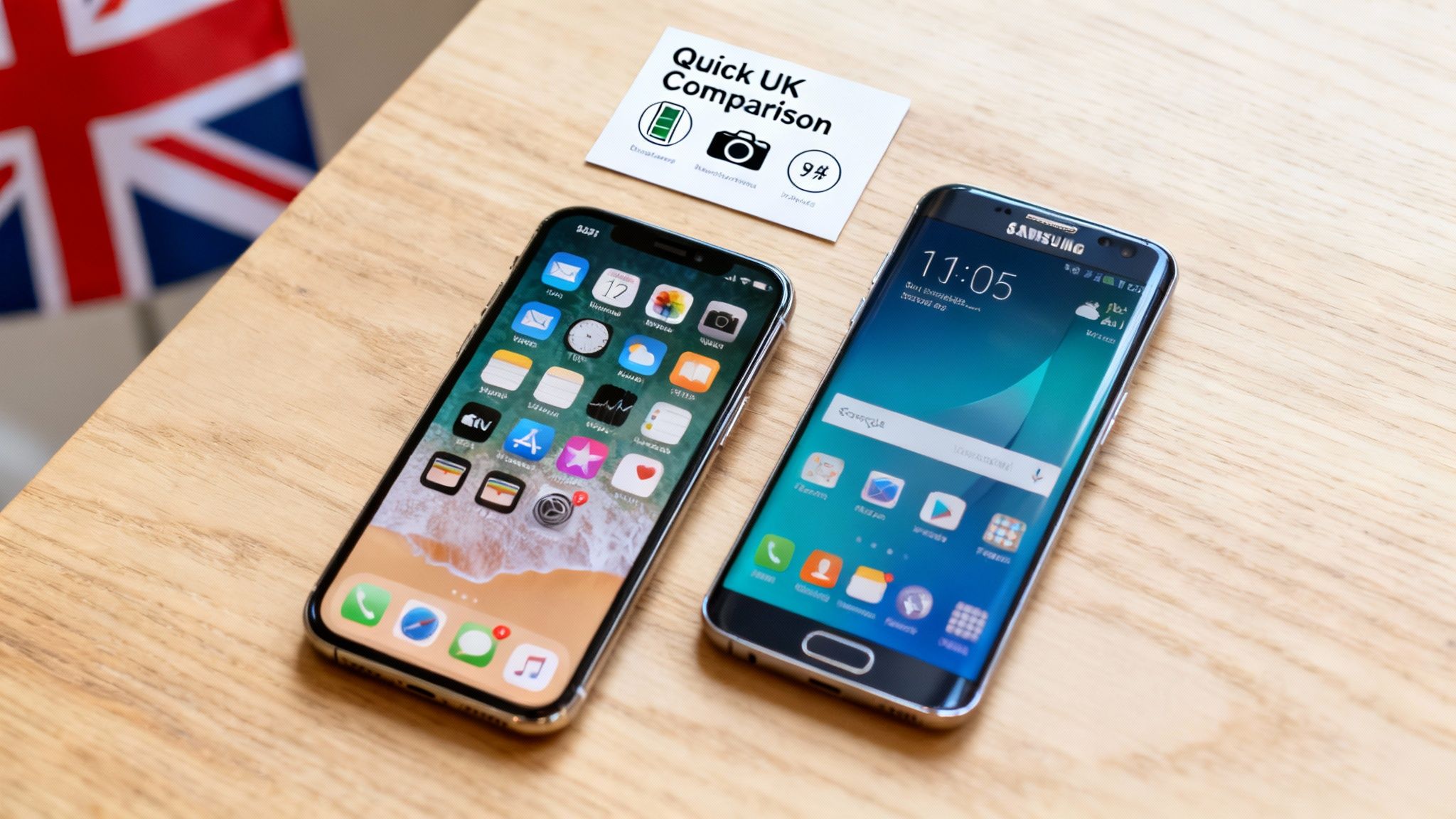
Your Quick UK Comparison
Choosing a mobile is a big decision, and for many UK buyers, the iPhone vs Samsung debate is central to it. To get started, let's break down the main points with a simple overview. This table gives you a quick look at where each brand typically shines.
At a Glance: iPhone vs Samsung
| Feature | Apple iPhone | Samsung Galaxy |
|---|---|---|
| Operating System | iOS (simple, secure) | Android (customisable, open) |
| Ecosystem | Tightly integrated with Mac, iPad & Apple Watch | Works well with Windows & other Android devices |
| Resale Value | Very high, holds value well over time | Good, but depreciates faster than iPhone |
| Hardware Variety | Limited premium models | Wide range from budget to foldable flagships |
| Software Updates | Long-term support (5-7 years typically) | Good support (4-5 years for flagships) |
This is just a brief overview. For a deeper dive, you can explore our complete guide on whether an iPhone or Samsung Galaxy is best for you.
Comparing The Operating Systems: iOS vs Android
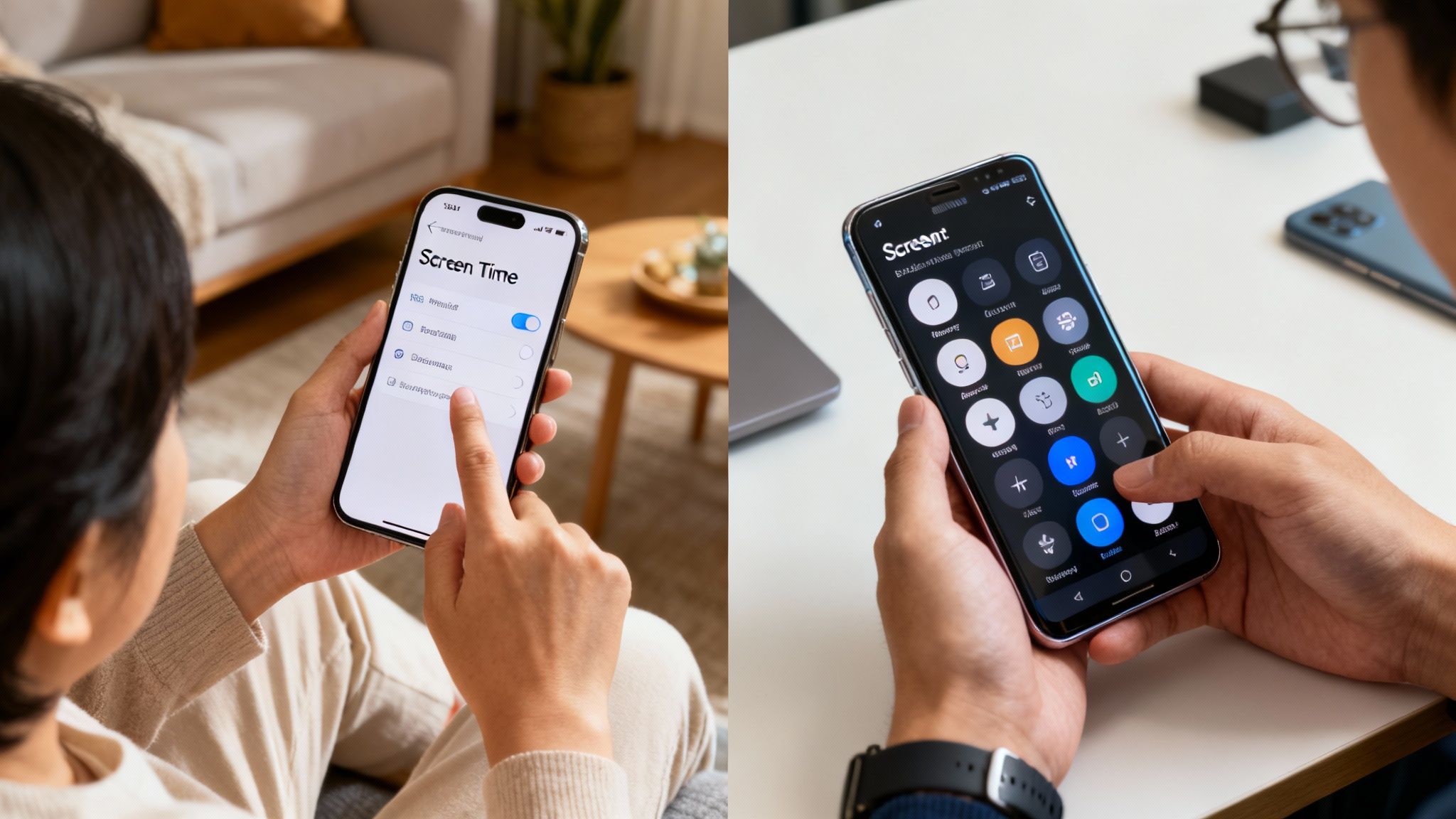
The single biggest difference between an iPhone and a Samsung mobile is the software that runs them. Understanding this is the first step in figuring out what is better, iPhone or Samsung, for you, as it genuinely shapes your entire day-to-day experience with the device.
Apple’s iPhones run on iOS, an operating system known for its simplicity and robust security. It’s a "closed system," which means Apple has complete control over both the hardware and the software. The result is a smooth, reliable experience where everything tends to work together seamlessly.
Samsung phones, on the other hand, run on Android, the operating system developed by Google. Samsung then adds its own custom layer on top, called One UI. Android is an "open system," which gives you far more freedom to personalise your phone, from changing your home screen layout to installing apps from outside the official Google Play Store.
The Apple Ecosystem: A Simple, Connected World
If you already own an iPad, a MacBook, or an Apple Watch, an iPhone often feels like the most natural choice. Apple has built a powerful 'ecosystem' where all its devices communicate with each other effortlessly. You can copy text on your iPhone and instantly paste it on your Mac, or have your Apple Watch unlock your laptop automatically.
This tight integration is a massive selling point. For families, features like Screen Time are simple to manage – just go to Settings > Screen Time on your child’s iPhone to limit app usage. Even simple tasks show off the ecosystem's strengths; for instance, understanding how to share calendar in iCloud is straightforward because it’s designed to be intuitive across all devices.
Example Scenario: A parent is buying their teenager’s first mobile and picks up a refurbished iPhone 12. They feel reassured by the easy-to-use parental controls and the Find My network for locating a lost phone. The fact that most of their child's friends also use iPhones makes sharing things via iMessage and AirDrop second nature.
Samsung's Android: Flexibility and Choice
If you value control and choice, Samsung's take on Android will be more suitable. You can tweak almost everything about how the software looks and feels. Want a different app launcher? No problem. Need to download a specific type of file that iOS won’t allow? Android usually handles it without a fuss.
This flexibility makes Samsung a great option for anyone who likes to tinker with their tech. It also works well with Windows computers and a huge range of other non-Apple gadgets. If the idea of being locked into one company’s way of doing things feels restrictive, Samsung offers a welcome alternative. Our guide on the latest iOS features can also help you see what’s new on the Apple side for a fair comparison.
Hardware Design and Durability
Beyond the software, how a mobile feels in your hand and how well it’s built are important factors, especially when you’re buying a used device. Both Apple and Samsung make premium phones, but they approach design from different places, which affects everything from daily use to long-term value.
Apple is known for its clean, consistent design. iPhones almost always use top-tier materials like surgical-grade stainless steel or titanium, which gives them a solid, premium feel. This consistency is a big reason iPhones hold their value so well; a refurbished iPhone 12 still looks and feels modern today.
Samsung, on the other hand, isn’t afraid to experiment. While its flagship Galaxy S series rivals the iPhone with premium glass and metal builds, Samsung also offers groundbreaking foldable phones, which provide a totally different way to use a smartphone.
Materials and Build Quality
A huge part of durability comes down to what the screen and body are made of.
- Apple's Approach: Newer iPhones have a Ceramic Shield front glass, which Apple claims is tougher than any other smartphone glass. This gives it fantastic drop protection—a crucial feature for a refurbished phone.
- Samsung's Approach: High-end Samsung models use Corning's latest Gorilla Armour or Gorilla Glass Victus. These are also incredibly tough and are especially good at resisting scratches, helping a pre-owned device look its best for longer.
For anyone buying a pre-owned mobile, both technologies offer brilliant protection. Just make sure you check the device's condition grading to understand its history. If you are not sure what to look for, our guide on troubleshooting used iPhones can help.
Performance Under the Hood
When you're weighing up what is better iPhone or Samsung, the processor is a key battleground. Apple designs its own A-series Bionic chips, which are known for their power and efficiency. Because Apple controls both the chip and the iOS software, it can fine-tune them to work together perfectly.
This tight hardware-software integration is why an iPhone can often feel faster and smoother than a Samsung phone, even if the Samsung device has more RAM on paper.
Samsung generally uses either its own Exynos chips or Qualcomm's Snapdragon processors, depending on the region and model. While these are powerful chips, especially in flagship models, Apple’s A-series chips often pull ahead in sheer power and long-term performance. That’s a massive plus for a refurbished device that needs to stay responsive for several more years.
Camera Performance for Real-World Use
For many of us, the camera is a critical feature. It's easy to get lost in megapixel counts and technical jargon, but what really matters is how photos look in day-to-day life. Let's break down their distinct camera styles.
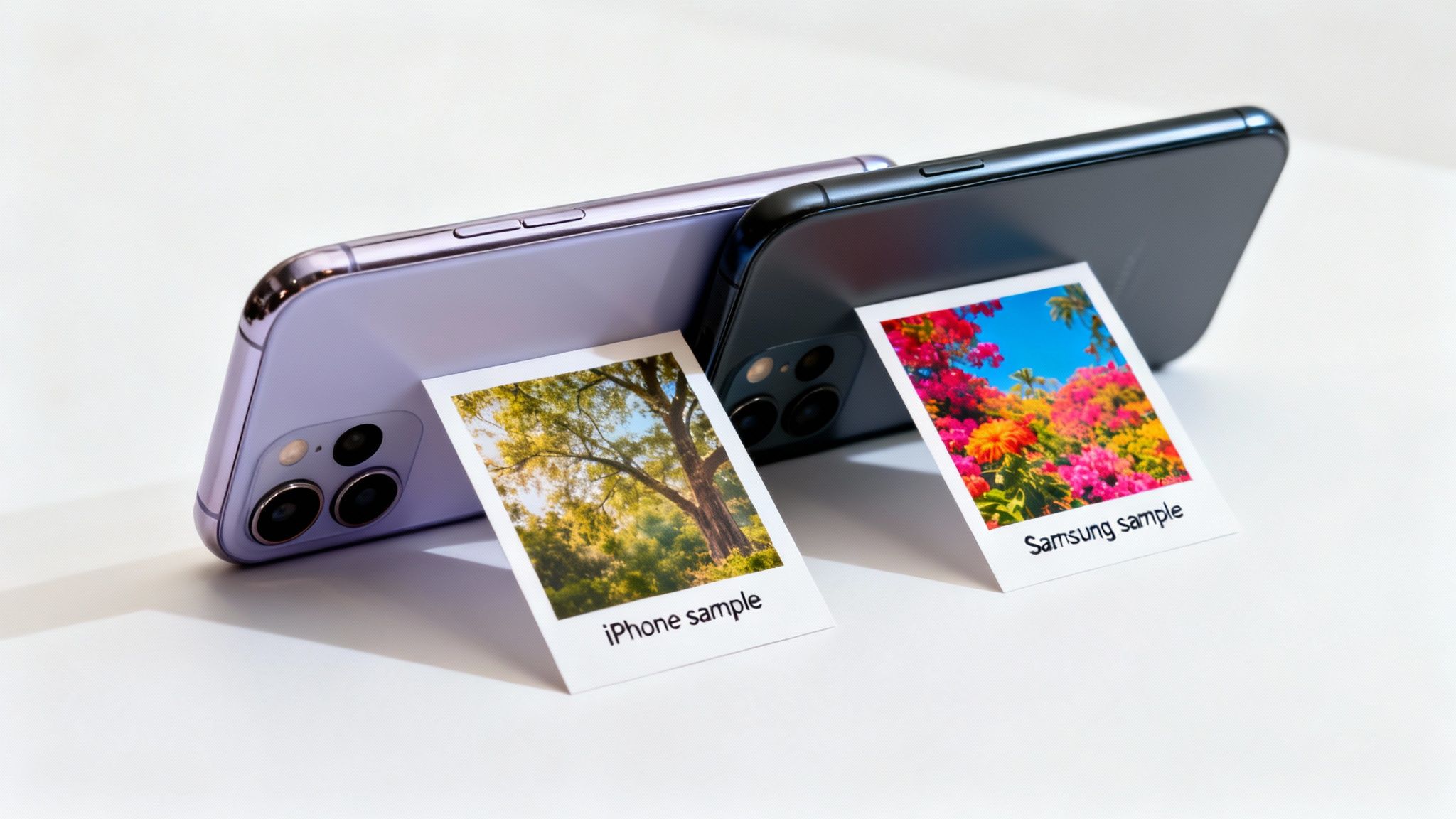
iPhones have built a reputation for reliable, natural-looking photos. Apple’s approach to colour is all about capturing scenes as your eyes see them. This makes the iPhone an exceptional point-and-shoot camera; you can trust it to deliver a great, consistent shot with minimal fuss.
Samsung, on the other hand, often produces more vibrant, saturated images. Photos tend to look punchier straight out of the camera, with brighter colours and higher contrast that many people find appealing. It's a matter of personal taste rather than one being definitively better.
Practical Scenarios and Key Features
The right choice often comes down to how you plan to use the camera.
Example Scenario: A small business owner in Manchester sells handmade jewellery online. She buys a refurbished iPhone 13 because its camera accurately captures the true colours of the gemstones for her website photos. In another case, a travel enthusiast from Brighton opts for a used Samsung Galaxy S22 Ultra, valuing its powerful zoom lens to capture clear shots of distant ships from the pier.
When you look at specific features, the differences become clearer:
- Zoom Capability: This is where high-end Samsung phones really shine. Models in the 'Ultra' range offer incredible optical and digital zoom that far surpasses what most iPhones can do.
- Video Quality: Both brands are fantastic for video, but iPhones are often praised for their smooth, stable, and natural-looking footage, making them a firm favourite among casual video creators.
- Software Features: Both offer modes like Portrait Mode to blur the background, but the look and feel can be quite different.
If you want to dive deeper, you might be interested in our dedicated article comparing Samsung vs iPhone camera performance. Ultimately, the decision comes down to your priorities: true-to-life consistency from an iPhone or vibrant versatility from a Samsung.
Price and Long-Term Value: New vs Refurbished
When you’re trying to decide what is better iPhone or Samsung, your budget plays a massive part. New flagship phones from both brands are expensive, but the smart money in the UK is now often spent in the refurbished market. This is where the conversation shifts from initial price to long-term value.
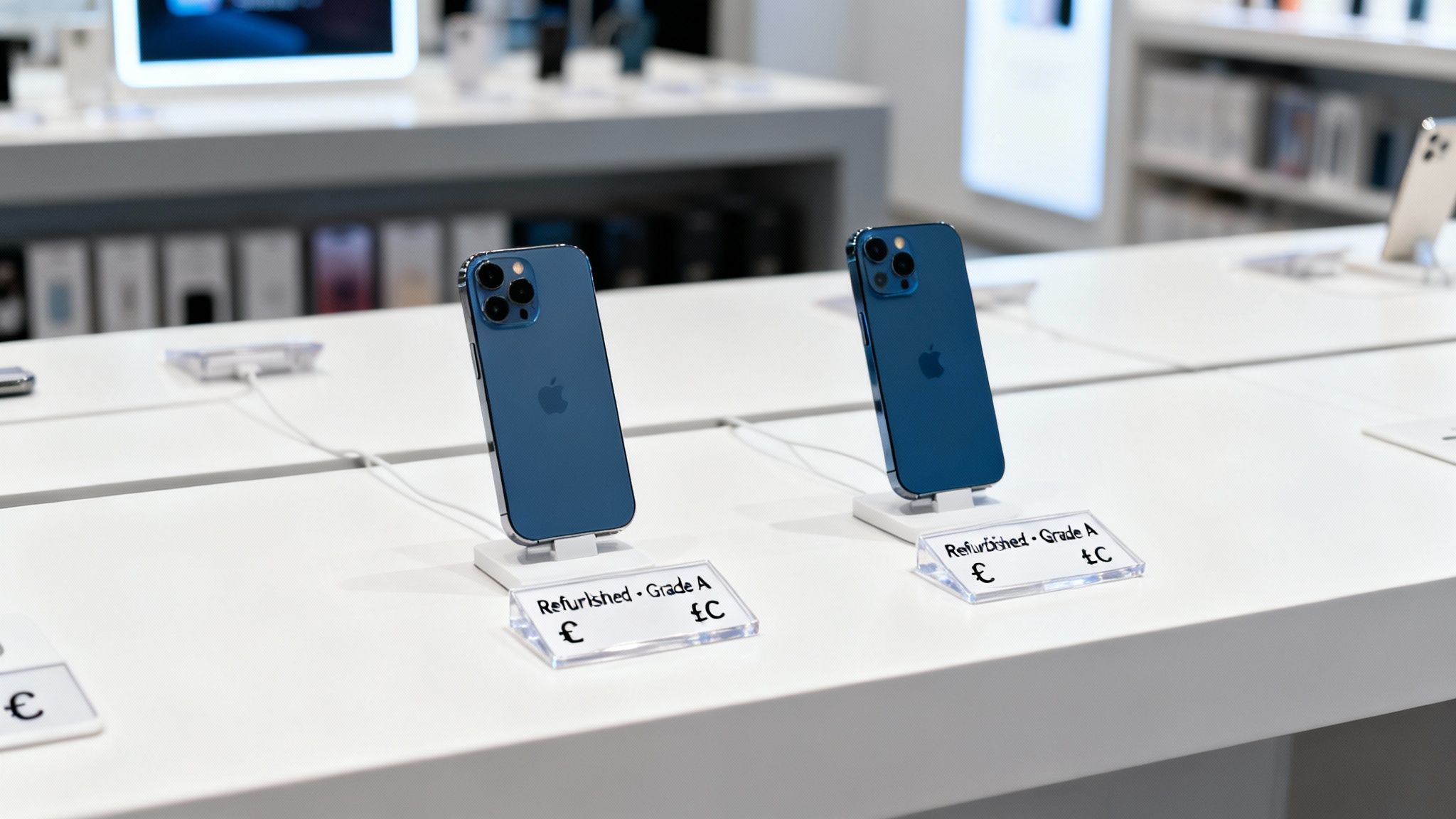
It’s well-known that iPhones hold their value exceptionally well. This is due to tangible factors like years of software support and high build quality. A two or three-year-old iPhone often still feels slick and modern.
This makes a refurbished iPhone a very shrewd long-term investment. While a Samsung might lose its value faster – meaning a lower initial price for a used model – an iPhone’s strong resale value means you get more of your money back when it's time to sell or trade it in.
The Refurbished Market Tells the Real Story
Looking at the demand for pre-owned mobiles in the UK reveals a clear pattern. iPhones are very popular in the refurbished market, which means there is a huge selection of popular models, like the iPhone 12 or 13, available in all sorts of conditions.
Example Scenario: Imagine a student heading to university on a tight budget. They're weighing up a two-year-old flagship Samsung against a refurbished iPhone 12. The Samsung might be a touch cheaper right now, but they opt for the iPhone. They know its resale value will likely be much higher in two years when they’re ready to upgrade, making the total cost of ownership lower in the long run.
Understanding Value Beyond the Price Tag
When browsing refurbished phones, the price is only part of the story. The phone's condition, the warranties on used iPhones, and the seller’s reputation are just as crucial. A model graded as 'Like New' will cost more than one marked 'Good', but you're paying for that pristine condition.
This is where the choice between what is better iPhone or Samsung gets interesting. With a refurbished model, you get great performance for a fraction of what it cost new, and you’re making a more sustainable choice. Our guide on a refurbished iPhone vs a new iPhone breaks it all down for you.
So, Which Is Better: iPhone or Samsung? The Final Verdict
After digging into the details, the question of what is better, iPhone or Samsung, doesn't have a single, clear-cut winner. The best phone for you boils down to your budget, your habits, and what you want your tech to do for you day-to-day.
To put it simply, an iPhone is probably your best bet if you value a straightforward experience, top-tier security, and a flawless connection between your other Apple gadgets. They're known for being easy to use, and their resale value is consistently strong, making a refurbished model a smart investment.
On the other hand, Samsung is the king of choice and customisation. If you love tweaking settings, crave the absolute best screen, or are intrigued by tech like foldable phones, then a Samsung Galaxy will feel like it was made for you.
Making Your Final Call
A quick look at the UK mobile market tells its own story. According to Ofcom, as of early 2023, Apple's iPhone is the most popular smartphone brand in the UK. This long-standing popularity means you’ll find a massive range of accessories and a healthier trade-in market when it’s time to upgrade. You can find similar insights on UK's mobile market trends on Uswitch.com.
Ultimately, the clearest way to decide is to ask yourself a few honest questions. Are you already part of the Apple ecosystem? Do you care more about a powerful camera zoom than software simplicity? Is the freedom to change your home screen more important than having iMessage?
Your answers will point you in the right direction. Once you know which brand feels right, you can confidently pick the specific refurbished model that hits the sweet spot between your needs and your budget.
Got Questions? We've Got Answers
When you're weighing up an iPhone against a Samsung, a few common questions always come up. Here are some straightforward answers, especially for the UK refurbished market.
Which Brand Lasts Longer: iPhone or Samsung?
Both brands make phones that are built to last, but the key difference is software support. Apple is known for providing iOS updates for five to seven years. This is important because it keeps older iPhones secure and able to run the latest apps long after you've bought them.
Samsung has improved in this area, now promising around four years of major Android updates and five years of security patches for their flagship phones. But for sheer longevity, particularly with a refurbished device, an iPhone usually has the edge.
Is It a Hassle to Switch from Samsung to an iPhone?
Switching between ecosystems is far less painful than it used to be. Apple has an app called 'Move to iOS' on the Google Play Store, which helps you bring across your most important data like contacts, messages, and photos.
WARNING: Always back up your Samsung before you start the transfer to avoid any risk of data loss. Some app-specific data might not make the jump. The biggest hurdle will be getting used to a new layout, but most people find iOS intuitive. We have a detailed guide on how to transfer your data that walks you through every step.
Are iPhones Really More Secure Than Samsung Mobiles?
For everyday use, both platforms are very secure. Apple’s "walled garden" approach—where it controls the hardware, software, and the App Store—is generally seen as slightly more resistant to malware.
Android is a more open system. This gives you fantastic flexibility but can be more exposed if you download apps from unofficial places. As long as you stick to the official Google Play Store and use common sense, a modern Samsung and an iPhone both offer brilliant protection for your personal info.
Ready to make a choice? At Used Mobiles 4 U, we offer a fantastic range of fully tested, data-wiped iPhones and Samsung Galaxy mobiles, all backed by a 12-month warranty. Find your perfect refurbished phone at https://usedmobiles4u.co.uk.
Written by James Waterston — 24 years in the mobile phone industry from customer service to Sales Director of a global repair & recycling company; now running Used Mobiles 4 U for 8+ years. LinkedIn