


iPhone 13 Pro
Alpine Green - 256GB - Like New
Original price was: £429.99.£299.99Current price is: £299.99.
 18 MONTH WARRANTY
 CERTIFIED REFURBISHED PHONES
 UK SUPPORT & 30 DAY RETURNS

All refurbished iPhone 13 Pro devices are tested, graded and prepared for reliable premium everyday use before resale. Refurbished iPhone Read More
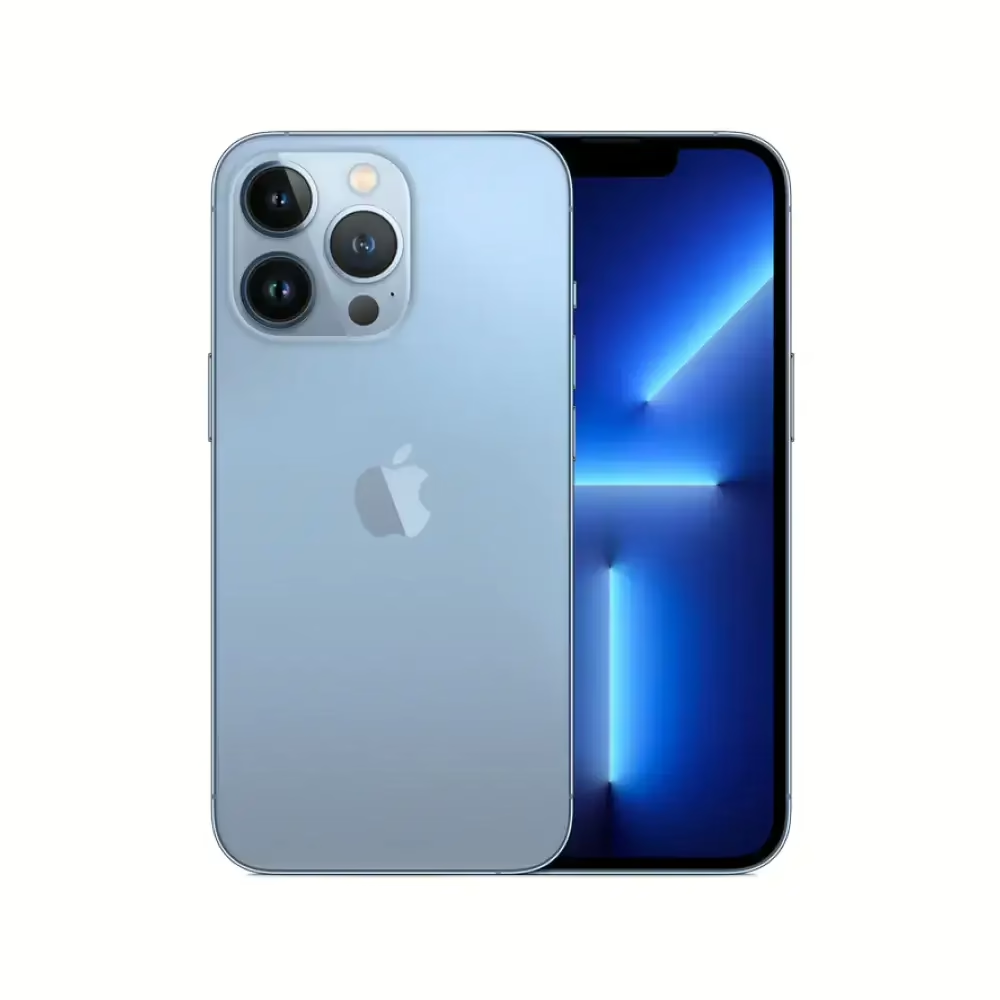
All refurbished iPhone 13 Pro devices are tested, graded and prepared for reliable premium everyday use before resale.
The refurbished iPhone 13 Pro is a strong choice for buyers who want Apple’s Pro features in a manageable size. The biggest difference compared to earlier Pro models is the 120Hz ProMotion display, which makes scrolling, browsing and everyday use feel noticeably smoother.
For many buyers, the iPhone 13 Pro is the point where the Pro range started feeling more refined in daily use, not just more powerful on paper.
If you prefer a larger display and stronger battery endurance, you can also compare the refurbished iPhone 13 Pro Max.
The ProMotion display is usually the first thing buyers notice when moving from a standard iPhone or older Pro model. It makes everyday actions feel smoother, especially scrolling through apps, browsing and switching between screens.
The iPhone 13 Pro also suits buyers who want premium camera and display features without moving to the larger Pro Max size.
The iPhone 13 Pro remains popular because it gives buyers a genuine Pro-level feel in a smaller device. Many buyers choose it because they want the smoother display and premium build without carrying a larger phone every day.
Compared with the iPhone 12 Pro, the display upgrade and battery improvements are usually the most noticeable real-world differences.
Most buyers choosing the iPhone 13 Pro are looking for premium usability and screen quality rather than simply the newest model available.
The iPhone 13 Pro is commonly chosen by buyers who want Apple’s Pro experience in a more practical size. It is especially popular for:
For many buyers, the decision mainly comes down to whether they prioritise portability or the larger-screen, longer-battery Pro Max experience.
Yes. It still offers a premium iPhone experience with ProMotion display, strong cameras and excellent everyday performance.
The biggest everyday difference is the smoother ProMotion display, along with better battery performance and improved camera features.
It suits buyers wanting Pro features, smoother screen performance and premium build quality without moving to a larger Pro Max device.
The iPhone 13 Pro is better for buyers wanting a more manageable size, while the Pro Max is better for those prioritising battery life and a larger display.
From £249.99
Prices for iPhone 13 Pro devices vary depending on storage size, cosmetic grade and availability. Because stock changes often, the most accurate view is always the live listings above. If you’re trying to reduce cost without sacrificing functionality, choosing a lower cosmetic grade is typically the quickest way to save.
Many buyers search “used” or “second hand” terms interchangeably, but refurbished usually means the device has been checked, tested and graded before resale with clearer expectations around condition and aftercare. Our grades reflect appearance only, not performance — you can see the full breakdown in our refurbished phone guide and how devices are prepared on our refurbishment process page.
If you mainly use your phone for calls, messages and everyday apps, lower storage can be enough. If you take lots of photos/videos or want more breathing room for iOS updates over time, 128GB+ is usually the safer pick. You can also browse the full Apple iPhone range to compare models and availability.
At Used Mobiles 4 U, our phones are graded based on their condition to help you make an informed decision. Here are the grading criteria:
Like New: The phone has a battery health over 85% and looks and feels like a brand new phone with no scratches.
Excellent: The phone has a battery health over 85% and may have very minor scratches (not noticeable at arm’s length) on the phone or screen.
Very Good: The phone has a battery health over 85%, some minor scratches on the screen, and some more noticeable scratches on the body/frame.
Good: The phone has a battery health over 85% and will show heavy signs of wear and tear on it.
The iPhone 13 Pro is available in four colour options: Graphite, Silver, Gold and Sierra Blue. Availability of colour options will depend on our online stock.
Yes, the iPhone 13 Pro supports 5G connectivity, with availability depending on your data provider.
The iPhone 13 Pro can provide up to 22 hours of talk time, up to 17 hours of internet usage, up to 22 hours of video playback, and up to 75 hours of audio playback.
The iPhone 13 Pro comes with four storage capacity options: 128GB, 256GB, 512GB and 1TB. Storage capacity availability depends on our online stock.
The iPhone 13 Pro comes with a Super Retina XDR display which has a pixel resolution of 2556 x 1179.
The iPhone 13 Pro measures at 71.5 mm width x 146.7mm height x 7.65mm depth, with a 6.1-inch display screen. The iPhone 13 Pro weighs approximately 204 grams.
Yes, the iPhone 13 Pro can support dual SIM functionality with one physical nano-SIM and one eSIM.
Yes, the iPhone 13 Pro supports wireless charging. It is compatible with MagSafe chargers and other Qi-certified wireless charging accessories.
The iPhone 13 Pro is rated IP68 under IEC standard 60529, meaning it is water-resistant to a depth of 6 meters for up to 30 minutes.
The iPhone 13 Pro is equipped with a triple-camera system, including a 12 MegaPixel wide camera, a 12 MegaPixel ultra-wide camera and a 12 MegaPixel telephoto camera.
There are several differences between the iPhone 13 and the iPhone 13 Pro:
The iPhone 13 Pro comes with an extra camera: a 12 MegaPixel telephoto camera and a LiDAR scanner.
The iPhone 13 Pro display features ProMotion Technology and adaptive refresh rates up to 120Hz.
The iPhone 13 Pro is built with a stainless steel frame and extra colour options (Graphite, Silver, Gold, Sierra Blue, Alpine Green.)
The iPhone 13 Pro Max display screen is slightly larger at 6.7-inches, rather than the iPhone 13 Pro’s 6.1-inch screen. Both display screens feature ProMotion Technology and adaptive refresh rates up to 120Hz.
The iPhone 13 Pro Max has a slightly larger battery and therefore can offer a longer battery life (around 4-5 hours more)
The iPhone 13 Mini is essentially a downscaled model of the iPhone 13:
The iPhone 13 Mini is downsized to dimensions of 64.2mm width x 131.5mm height x 7.65mm depth. The iPhone 13 Mini has a smaller screen display size at 5.4 inches, compared to the iPhone 13 Pro which has 6.1-inch display.
Due to its smaller size, the iPhone 13 Mini has a smaller battery and therefore a shorter battery life (around 5 hours less compared to Pro)
The iPhone 13 Mini does not have any of the premium features that the Pro has, such as: additional 13 MegaPixel telephoto camera, LiDAR scanner, ProMotion technology, adaptive screen refresh rates up to 120Hz.



At Used Mobiles 4 U, you are guaranteed to receive a second hand phone that is fully functional to factory standards.
Another plus point is that we sell second hand phones that are thoroughly tested and working, ready to be used.