


How to Recycle Locked or iCloud Blocked Phones Legally in the UK

23/12/2025

11 Mins
If you have a mobile phone that's locked and you can't access it, you might feel stuck. It could be an iCloud Activation Lock from a previous owner, or the device might be tied to a specific network. This guide will walk you through your safe and legal options in the UK, whether you've bought a used phone with a lock or found an old one you can no longer get into.
How To Deal With Locked and iCloud Blocked Mobiles in the UK
It’s a common problem. You buy a second-hand mobile online, and when it arrives, it’s unusable. Or maybe you've found an old phone in a drawer but can't get past the security screen. While frustrating, it doesn't have to be a dead end.
The first step is to work out what kind of lock you’re dealing with. A phone locked to a mobile network like Vodafone or EE is a very different issue from one blocked by an iCloud Activation Lock. The steps to resolve them are completely different.
Understand the Type of Lock You're Facing
Before you do anything, you need to diagnose the problem. A network lock is often a minor hurdle, while an iCloud lock is a serious security feature tied to an Apple ID. The worst-case scenario is a blacklisted phone, which means it has been reported lost or stolen.
Here's a quick table to help you tell them apart.
Quick Guide to Mobile Phone Lock Types
As you can see, understanding these differences is crucial. A network lock is usually an administrative issue, but an iCloud lock often means the phone is unusable for a new owner.
For more on the second-hand device market, our guide to buying used phones in the UK offers helpful context. This article, however, will focus on what to do next and how you can recycle locked or iCloud blocked phones legally in the UK, making sure you handle things responsibly.
How to Identify the Problem with Your Phone
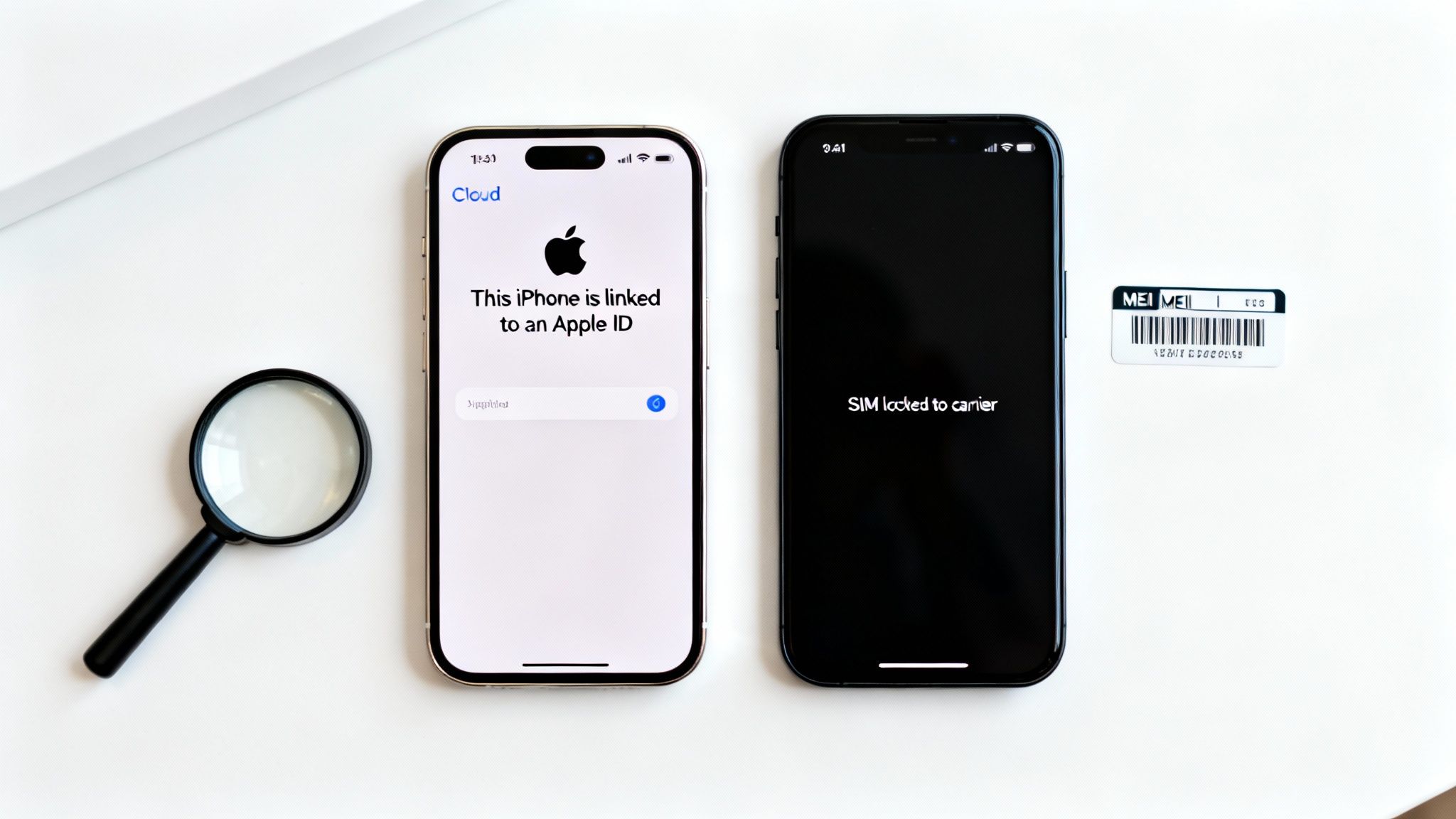
Before you can figure out what to do with a locked phone, you need to identify the exact type of lock. This is the most important first step, as it determines all your legal and practical options.
Is It an iCloud Lock or a Passcode Lock?
It’s easy to confuse these two, but the difference is significant. An iCloud Activation Lock appears during the initial setup of an iPhone, asking for the previous owner's Apple ID and password. It's a key part of Apple's 'Find My' security feature, and there is no way to bypass this screen to use the phone.
A passcode lock is the four or six-digit code (or Face/Touch ID) used to unlock the screen. If you've just forgotten that, the fix is much simpler. If that’s your issue, we have a guide for what to do when you forgot your iPhone passcode.
Warning: Resetting a phone to get past a passcode lock will erase all data. Always back up your device first if you can.
An iCloud lock requires the original owner's Apple ID credentials to activate the phone. A passcode lock is just for daily screen access. Only the iCloud lock makes the device unusable for a new owner without the original owner's help.
Checking for a Network Lock
A network or carrier lock is a less serious issue. It simply means the phone is restricted to a specific mobile provider—like EE, O2, or Vodafone—and won't work with a SIM card from another network.
The check is simple: insert an active SIM card from a different network. If the phone shows a message like "SIM Not Supported" or "SIM Not Valid," you've confirmed it's network-locked.
The Essential IMEI Check for Blacklisting
This is a check you must not skip, as it has legal implications. Every phone has a unique 15-digit IMEI (International Mobile Equipment Identity) number. UK networks share a database of IMEI numbers for devices reported as lost or stolen. If a phone is on this blacklist, it cannot connect to any UK network.
You can find the IMEI in a few ways:
- Dial *#06# on the phone's call screen.
- Look on the original box or the SIM card tray.
- On an iPhone, go to Settings > General > About.
With the IMEI, use a trusted service like CheckMEND. This will tell you if the device has a clean history or has been blacklisted.
A "Pass" result means you're in the clear, but a "Fail" indicates a serious problem. If a phone is blacklisted, you cannot legally sell it. Your only responsible options are to hand it in to the police or find a service to recycle locked or iCloud blocked phones legally in the UK through the proper channels.
Your Legal Options for Unlocking a Phone
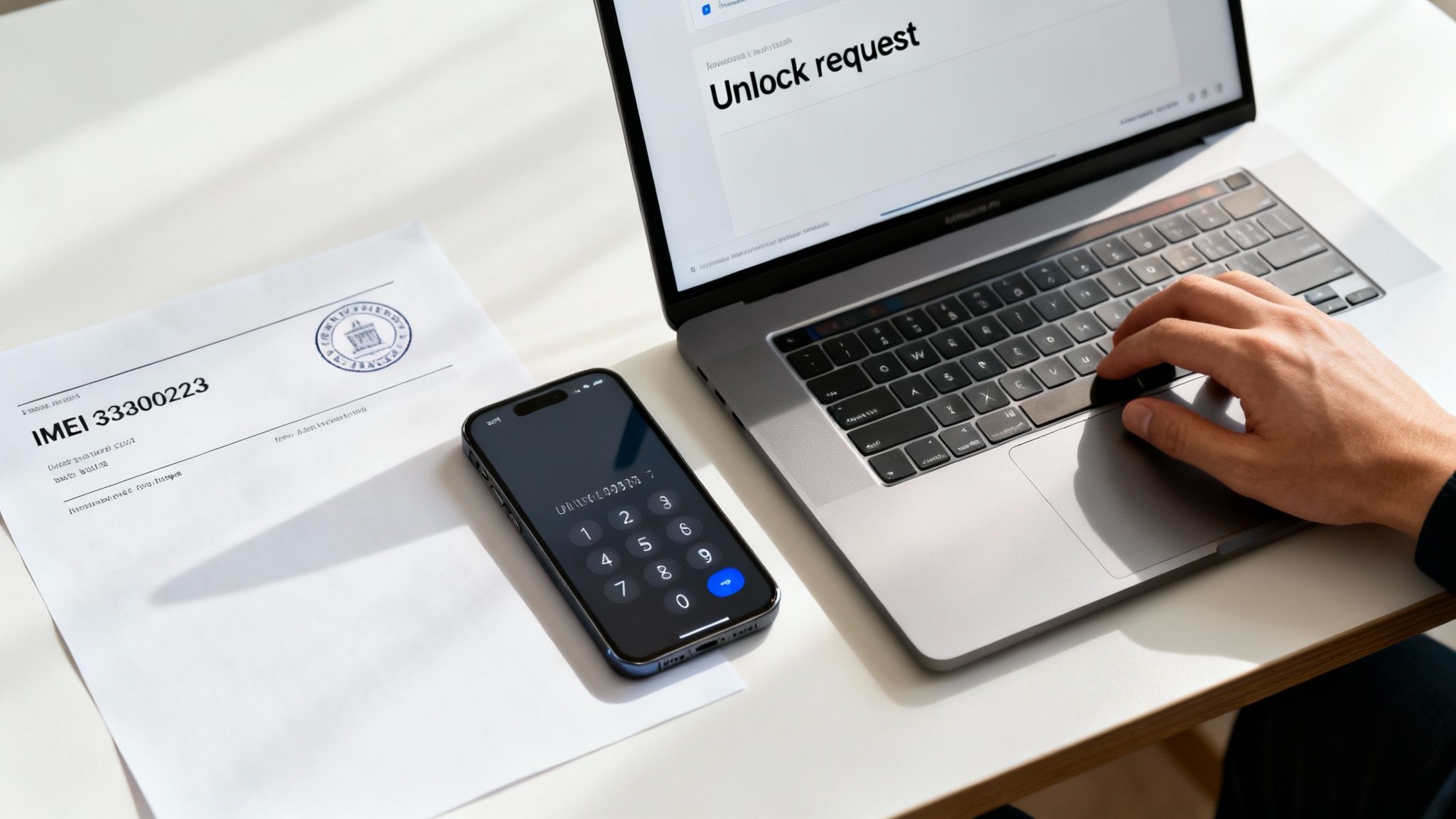
Once you know the type of lock, you can decide on the next steps. The legal paths for dealing with a simple network lock and a much more serious iCloud Activation Lock are completely different.
If the phone is just locked to a specific network, the process is usually straightforward. As long as the device has a clean history, you can contact the original UK mobile network—such as Vodafone, EE, O2, or Three—and request an unlock.
Contacting the Network for an Unlock
Imagine you've bought a second-hand iPhone online, but when your SIM card doesn't work, you realise it's locked to EE. As long as your IMEI check came back clear, you can go to EE's website and fill out their device unlocking form.
You will need the phone's IMEI number. Provided the device isn't reported as lost or stolen, and isn't linked to an unpaid contract, they will typically process the unlock for you.
This might take a few days, and some networks may charge a small admin fee if you weren't the original owner. This is the correct and lawful way to handle a network lock. As more people see the benefits of being free from network restrictions, it's clear why unlocked phones are a smart, flexible choice for UK customers.
A Word of Warning: Be careful with unofficial online services promising cheap, instant unlocks. Many are scams or use methods that could get the phone blacklisted later on. It’s always best to go directly to the network provider.
The Challenge of an iCloud Activation Lock
An iCloud Activation Lock is another matter entirely. It's a powerful anti-theft feature from Apple. There is only one legitimate way to remove it: the original owner must sign out using their Apple ID and password.
This can be done in two ways:
- On the device itself: The owner can enter their Apple ID and password directly on the locked phone.
- Remotely via iCloud.com: The original owner can log into their iCloud account on a computer, go to "Find Devices," select the device, and choose "Erase iPhone" followed by "Remove from Account".
If you cannot contact the original owner, you have unfortunately reached a dead end. Many websites claim they can bypass the iCloud lock for a fee, but these are almost always scams.
The reality is that without the original owner's cooperation, the phone cannot be activated or used. In this case, your only responsible path is to recycle locked or iCloud blocked phones legally in the UK.
When Recycling Is Your Only Lawful Option
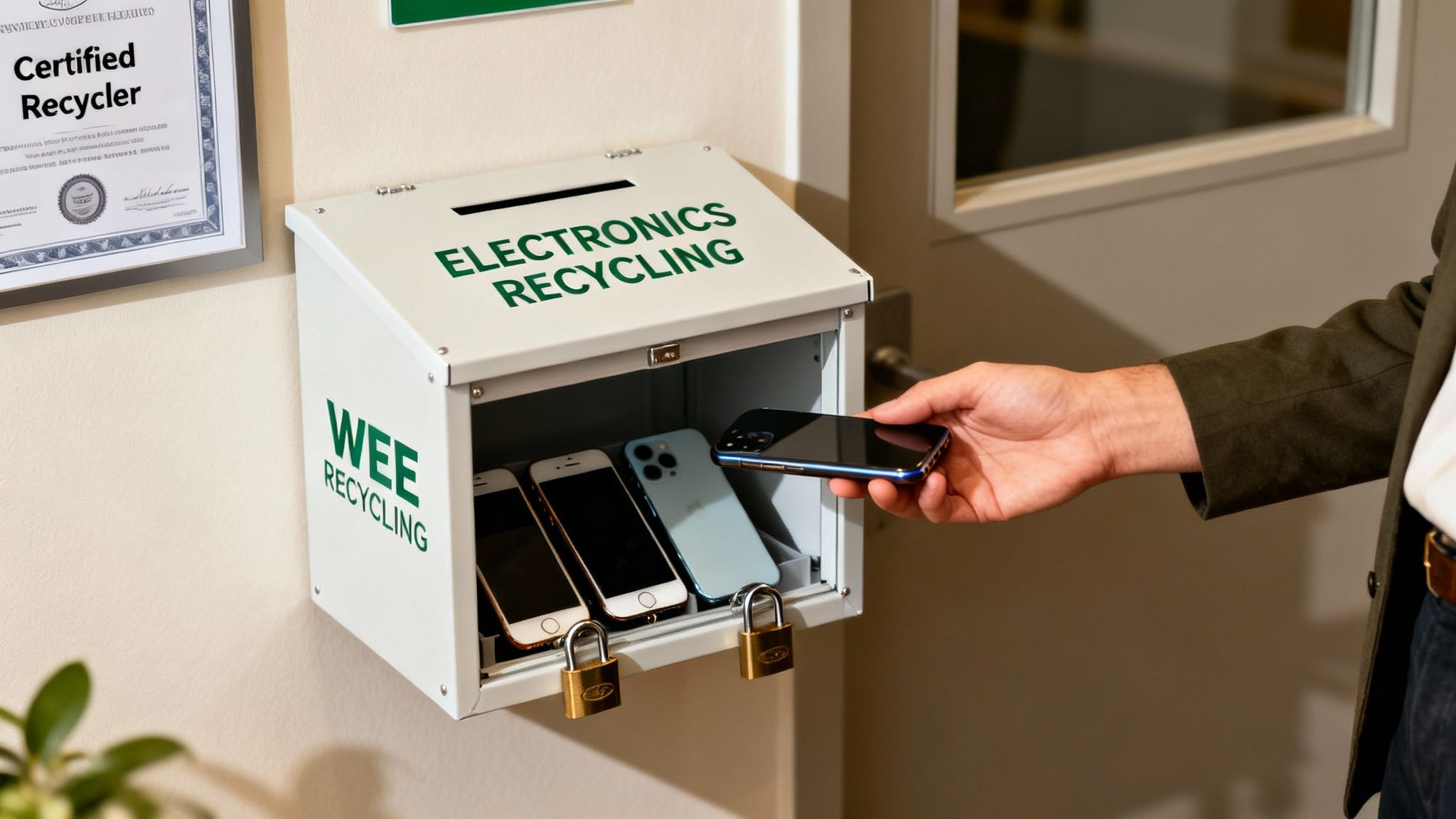
Sometimes, you simply hit a dead end. If you can't contact the previous owner of an iCloud-locked iPhone, trying to find a workaround is not a lawful option. The most responsible and legally correct action in the UK is to recycle the device.
Letting it gather dust isn’t ideal, and throwing it in the household bin is illegal and harmful to the environment. The good news is there is a proper, secure process for this.
What UK Law Says About Electronic Waste
You can't just bin old electronics. In the UK, disposal is governed by the Waste Electrical and Electronic Equipment (WEEE) Regulations. These rules ensure that electronic waste is managed safely and apply to all gadgets, including locked mobiles.
Under WEEE, devices must be sent to an Authorised Treatment Facility (ATF). Here, they are carefully dismantled. Hazardous materials like batteries are removed safely, and valuable components like gold and silver are recovered for reuse. This reduces landfill waste and the need to mine for new materials.
Is My Data Secure If I Can’t Wipe the Phone?
This is a valid concern. If you can’t get into the phone to perform a factory reset, how can you be sure any personal data is safe?
Reputable WEEE-compliant recyclers are legally required to handle data destruction. They use specialised methods to either completely wipe the device’s memory or physically destroy its storage chips, making data recovery impossible.
This process meets strict standards, complying with UK data protection laws. You can trust a certified recycler to treat the data on a locked phone with the same security as a working one.
Here is a common scenario:
- The Customer: Sarah from Manchester bought a used iPhone from an online marketplace.
- The Problem: It arrived with an iCloud Activation Lock. The seller became unresponsive.
- The Solution: After confirming the phone wasn't blacklisted, Sarah realised she couldn't use it. She found her local council's WEEE recycling point and dropped the phone off, confident it would be securely and legally processed.
By doing this, Sarah prevented the device from becoming illegal e-waste and ensured any data from the previous owner was safely destroyed. If you find yourself in a similar situation, our guide on troubleshooting a used iPhone may offer further help.
How and Where to Recycle Your Locked Phone in the UK
If you're stuck with a locked phone that can’t be unlocked or sold, recycling is your best and most responsible next step. Don’t just leave it in a drawer.
The UK has a solid system for handling electronic waste, giving you several safe options. The most important thing is to use a certified recycler that follows the UK's Waste Electrical and Electronic Equipment (WEEE) Regulations. This guarantees the device is handled lawfully, protecting the environment and any data.
Finding a Legitimate Recycling Point
It's easy to find somewhere to take a locked mobile. Many collection points are local and free to use.
Your best options include:
- Local Council Recycling Centres: Most household waste recycling centres have a dedicated section for small electricals.
- Retailer Take-Back Schemes: Large electronics retailers and mobile networks often have in-store drop-off points for old gadgets.
- Specialist Mail-In Services: Some companies accept locked or broken phones for recycling. Our guide on how to recycle a mobile phone in the UK has more details on these services.
The key is to ensure the service you choose is WEEE-compliant. This provides peace of mind that they will securely destroy any data and process the materials according to UK law.
Why Proper Recycling Matters
Recycling a single phone properly makes a difference. A significant amount of e-waste in the UK is not formally recycled, meaning valuable materials are lost and harmful substances can leak into landfills.
When you recycle locked or iCloud blocked phones legally in the UK, you ensure that precious metals are recovered and your old device doesn’t add to this environmental problem. For a deeper look, you can explore detailed UK e-waste statistics.
To find your nearest certified drop-off point, use an online tool. Websites like Recycle Your Electricals have a postcode locator that shows all the approved recycling facilities in your area.
At the end of the day, choosing to recycle is the most secure and ethical way to handle a device that’s reached the end of its useful life. It protects data, helps the environment, and keeps you on the right side of UK regulations.
Frequently Asked Questions About Locked Phones
Here are clear answers to the most common questions about locked mobile phones, helping you understand your options and stay on the right side of the law.
Is It Illegal to Sell an iCloud Locked Phone in the UK?
It is not strictly illegal to sell an iCloud-locked phone, provided you are completely transparent about its status. The device itself is not illegal to own; its usability is just severely limited.
You must state clearly in any listing that the phone has an iCloud Activation Lock and cannot be used with a new Apple ID. Selling it as a fully working mobile would be misleading the buyer and could lead to disputes or fraud claims. Most buyers for these devices are repair shops looking for spare parts like screens or batteries.
What Should I Do If I Think I've Bought a Stolen Phone?
If your IMEI check comes back as blacklisted, or the seller becomes uncontactable, act calmly.
First, try to contact the seller. If it was an honest mistake, they might resolve it. If they are unresponsive, report the issue to the marketplace where you bought it, such as eBay or Facebook Marketplace, as their buyer protection policies may help you get a refund.
If you believe the phone is stolen, you should report it to your local police force. It is always better to be upfront about the situation.
Can I Get Any Money for a Locked Phone?
Yes, but it's important to have realistic expectations. The value depends entirely on the type of lock.
- Network-Locked Phones: These still hold good value. You can sell it as-is (stating which network it's locked to) or get it unlocked first to increase its selling price.
- iCloud-Locked Phones: The value is only in its physical components. Repair shops and some online recyclers buy these phones for spare parts. The amount offered will be low, reflecting that the main board and software are useless.
When you recycle locked or iCloud blocked phones legally in the UK, some services may offer a small payment. It's always worth comparing options, but remember the main goal is responsible disposal.
Written by James Waterston — 24 years in the mobile phone industry from customer service to Sales Director of a global repair & recycling company; now running Used Mobiles 4 U for 8+ years. LinkedIn
Looking for a refurbished phone?
Shop professionally tested refurbished iPhones and Samsung phones with 18 month warranty, 30 day returns and free UK delivery.
Browse Refurbished Phones