


Refurbished iPhone 14 UK: Your 2026 Buying Guide

16/05/2026

11 Mins
Yes, a refurbished iPhone 14 UK is still a smart buy in 2026 for many people, but only if the battery, warranty, return policy and SIM-free status are clear before you pay. If you’re comparing it with newer models, the iPhone 14 still makes sense when you want modern performance and safety features without paying current-flagship money.
Quick Verdict
- Best for Budget-conscious Apple buyers, families, and anyone who wants a recent iPhone without stepping up to newer-model pricing.
- Not ideal for Buyers who want the newest model available or who are tempted by private-sale bargains with no safety net.
- Typical cost or price range In the UK refurbished market, iPhone 14 pricing typically sits around £230 to £400 depending on storage and cosmetic grade, with live 2026 listings starting around £216 to £266 according to this UK buying guide.
- Better alternative A newer refurbished iPhone can make sense if you specifically want a longer ownership runway and the price gap feels justified to you.
- Main risk Buying a cheap handset with poor battery health, vague grading, or no real warranty.
- Practical recommendation Buy the best battery and warranty package you can afford, then worry about light cosmetic marks second.
Quick Comparison
- Choose refurbished iPhone 14 if you want strong day-to-day performance, 5G, modern safety features, and a lower upfront cost than newer iPhones.
- Choose a newer refurbished iPhone if keeping the phone for as long as possible matters more than saving money today.
- Choose certified refurbished over private used if you want proper testing, returns, and less risk.
- Choose Good grade if you don’t mind minor wear and want better value.
- Choose Excellent or Like New grade if the phone is a gift, a work device, or you simply care about appearance.
If you’re trying to decide whether the iPhone 14 is still worth it, the real answer isn’t just about price. It’s about total cost of ownership, how much battery life is left, and whether the seller will still help you if something goes wrong after delivery.
The Difference Between ‘Used’ and ‘Refurbished’ iPhones
A used iPhone and a refurbished iPhone aren’t the same thing, even when the photos look similar. That’s where a lot of buyers get caught out.

What used usually means
When a phone is sold as used, it often means exactly that. Someone owned it, they’re now selling it, and what you get depends on how honest and careful that seller has been.
Sometimes that’s fine. Sometimes it isn’t. A private-sale iPhone can arrive with hidden faults, activation problems, poor battery health, missing repair history, or a network lock the seller forgot to mention.
Practical rule: If the seller can’t clearly confirm battery health, iCloud status, network status and return terms, assume the risk is yours.
What refurbished should mean in practice
A refurbished phone should have been professionally checked, cleaned, data-wiped and graded for condition. If needed, parts may also have been replaced before resale. That’s the real difference. You’re not just paying for the handset. You’re paying to remove uncertainty.
The easiest way to think about it is a certified used car versus a private driveway sale. Both might drive perfectly well, but only one usually comes with proper checks and some comeback if a problem appears later.
- Testing matters because faults don’t always show up in a quick listing photo.
- Data wiping matters because you don’t want activation or privacy issues from the previous owner.
- Grading matters because cosmetic expectations should be clear before the box arrives.
- Warranty matters because refurbished should reduce risk, not just reduce price.
That’s also why the market has grown. A 2025 UK mobile market report says average device ownership has stretched to 3.67 years, refurbished devices account for 15.4% of the market, and 63% of refurb buyers choose pristine, excellent, or very good condition, according to this UK mobile market report. Buyers aren’t only chasing the cheapest option. Most want a phone that still feels properly looked after.
If you want a deeper breakdown, it’s worth reading this guide to compare used and refurbished iPhones.
For a refurbished iPhone 14 UK purchase, that’s the first filter I’d apply. Don’t start with the colour or storage. Start with whether you’re buying a random used phone or a properly refurbished one.
Decoding Refurbished Grades and UK Prices
Grading is where many buyers either save money wisely or pay too much for a condition level they don’t actually need. A lot of people see “Good” and panic, when in reality a Good grade phone can be excellent value if you’re realistic about wear.
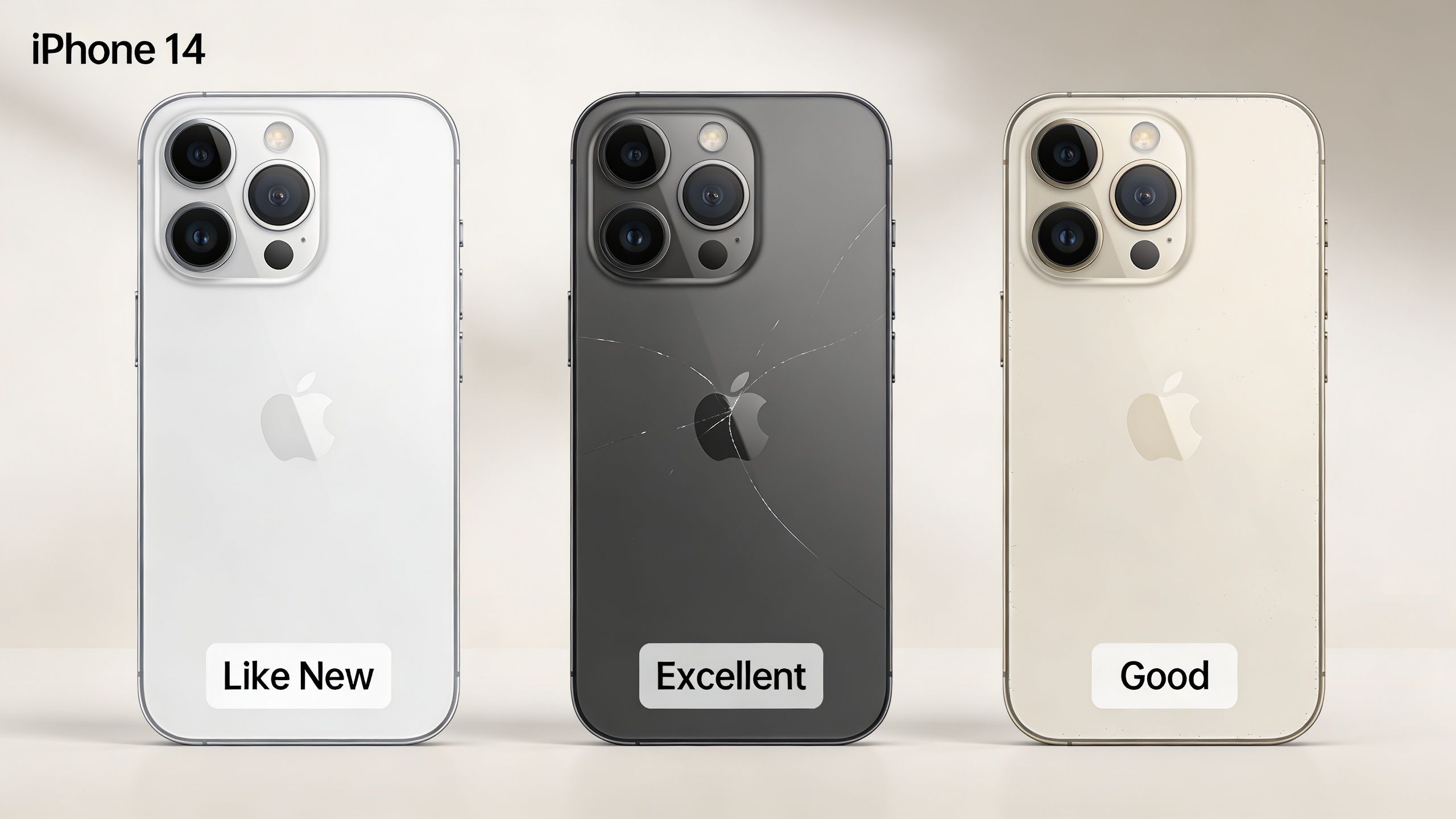
What the grades usually look like
- Like New Usually very clean with little to no obvious wear. Good choice for gifts or if visible marks will annoy you every day.
- Excellent Very light signs of use, often hard to notice unless you’re inspecting the frame and screen closely under good light.
- Good More visible marks, light scratches, or edge wear. This is often the sweet spot for value, especially if the phone is going straight into a case.
What matters is honesty and consistency. One retailer’s Excellent can look like another retailer’s Very Good, so clear grading notes and real product photos help.
A tiny scratch you stop noticing after two days is usually a better compromise than a weak battery you’ll notice every afternoon.
What a fair UK price looks like
In the UK refurbished market, the iPhone 14 typically sells for about £230 to £400 depending on storage and cosmetic grade. Live pricing signals from 2026 also show listings starting from around £216 to £266, which is why the model sits in a strong value band for buyers who still want a recent iPhone, based on this refurbished iPhone 14 UK guide.
That range tells you something useful. If a phone is much cheaper than expected, ask why. If it’s much dearer, check whether the seller is offering anything meaningful in return, such as stronger battery assurance, better grade clarity, or more robust after-sales support.
- Lower end of the range Usually means lighter storage, heavier wear, or both.
- Middle of the range Often buys the best balance between appearance and value.
- Upper end of the range Tends to be higher storage, cleaner condition, or a combination of the two.
If you’re buying a refurbished iPhone 14 in the UK for everyday use, I wouldn’t overpay purely for cosmetics unless appearance really matters to you. For most people, a well-tested Excellent or Good unit is the sensible buy.
If you want help judging condition labels before you order, this guide on buying a refurbished iPhone in the UK is worth a look.
Essential Checks for Battery, Warranty, and Returns
This is the part that matters more than colour, grade, or even storage for many buyers. An iPhone 14 can still feel fast and dependable. But if the battery is tired and the seller disappears when there’s a problem, the value falls apart quickly.
Why battery health matters more than small scratches
Apple’s iPhone 14 uses the A15 Bionic with a 5-core GPU, and Apple rates it for up to 20 hours of video playback on a full charge in its official iPhone 14 technical specifications. That’s still plenty of performance headroom for everyday apps, gaming, photos, and work tasks.
But that headline only means something if the battery is in decent shape. A refurbished handset with a worn battery can still benchmark well and yet feel frustrating in normal use. That’s why I always tell customers to put battery condition ahead of minor cosmetic marks.
- Check the battery promise A seller should make this clear before purchase.
- Check the warranty length A proper warranty tells you the retailer expects the phone to last.
- Check the return process You want written terms, not vague reassurance in a listing message.
What a safe purchase looks like
A solid refurbished buy usually includes a clear battery standard, a straightforward warranty, and an easy return route if the phone isn’t right. That matters even more if you’re planning to keep the device for years rather than treating it as a short-term stopgap.
One common real-world example is a buyer who wants an iPhone mainly for work. They use maps, video calls, banking, email, and photos all day. On paper the iPhone 14 is more than capable. In practice, the whole experience depends on whether the battery can hold up through that routine.
If your phone will be used for admin or expense capture, tools that help you manage receipts with an iPhone scanner are a good reminder of why battery reliability matters so much on a working device. A fast phone with poor battery stamina becomes annoying very quickly.
Cosmetic grade affects how the phone looks on day one. Battery health affects how it feels every day after that.
On retailer policies, stick with sellers who state their terms clearly. Used Mobiles 4 U, for example, offers tested devices with a 12-month warranty, which is the sort of practical protection worth prioritising when you’re comparing similar iPhone 14 listings.
UK Network Compatibility and Why SIM-Free Matters
A surprising number of buyers still focus on storage and colour first, then realise later the phone isn’t as flexible as they expected. If you’re shopping for a refurbished iPhone 14 UK model, SIM-free should be high on your checklist.
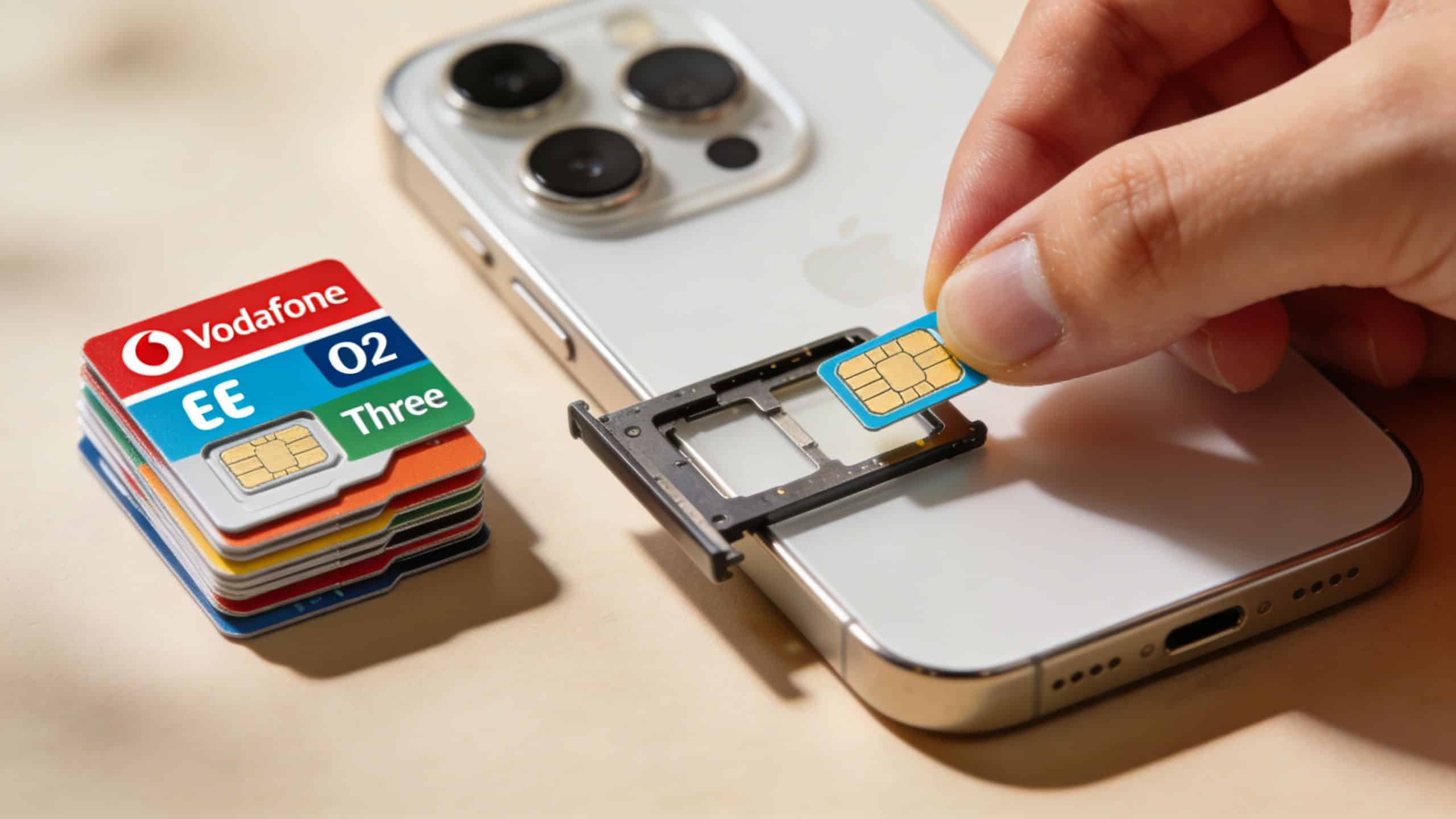
Why SIM-free is usually the better choice
A SIM-free phone isn’t tied to one mobile network. That gives you flexibility to move to the tariff that suits you, whether that’s a low-cost SIM-only deal, a family plan, or a work SIM.
That’s useful now and later. If your needs change, or if you pass the phone to a family member, a SIM-free handset is simply easier to live with.
- Less hassle at setup You’re less likely to hit network restrictions.
- More choice You can shop around for the best contract or SIM-only plan.
- Better resale appeal SIM-free phones are easier to sell on than network-locked ones.
If the term is unclear, this explainer on what does sim free mean on phones is useful.
The iPhone 14 still has modern connectivity
The good news is that the iPhone 14 doesn’t feel dated on connectivity. It keeps the full 2022 safety and networking stack, including 5G support, Wi-Fi 6, and Emergency SOS via satellite, as noted in this used iPhone 14 review.
For a buyer, that means you’re not dropping back to old-network behaviour just because you’re buying refurbished. For families, commuters and business users, that’s still a strong practical reason to choose the model.
A refurbished phone should save you money, not limit where you can use it.
If you’re comparing listings, I’d rather see a properly tested SIM-free iPhone 14 with honest cosmetic wear than a cleaner-looking handset with unclear network status.
Your Refurbished iPhone 14 Buying Checklist
If you’re about to click Buy, slow down for two minutes and run through this list. It catches most of the mistakes that lead to disappointment later.
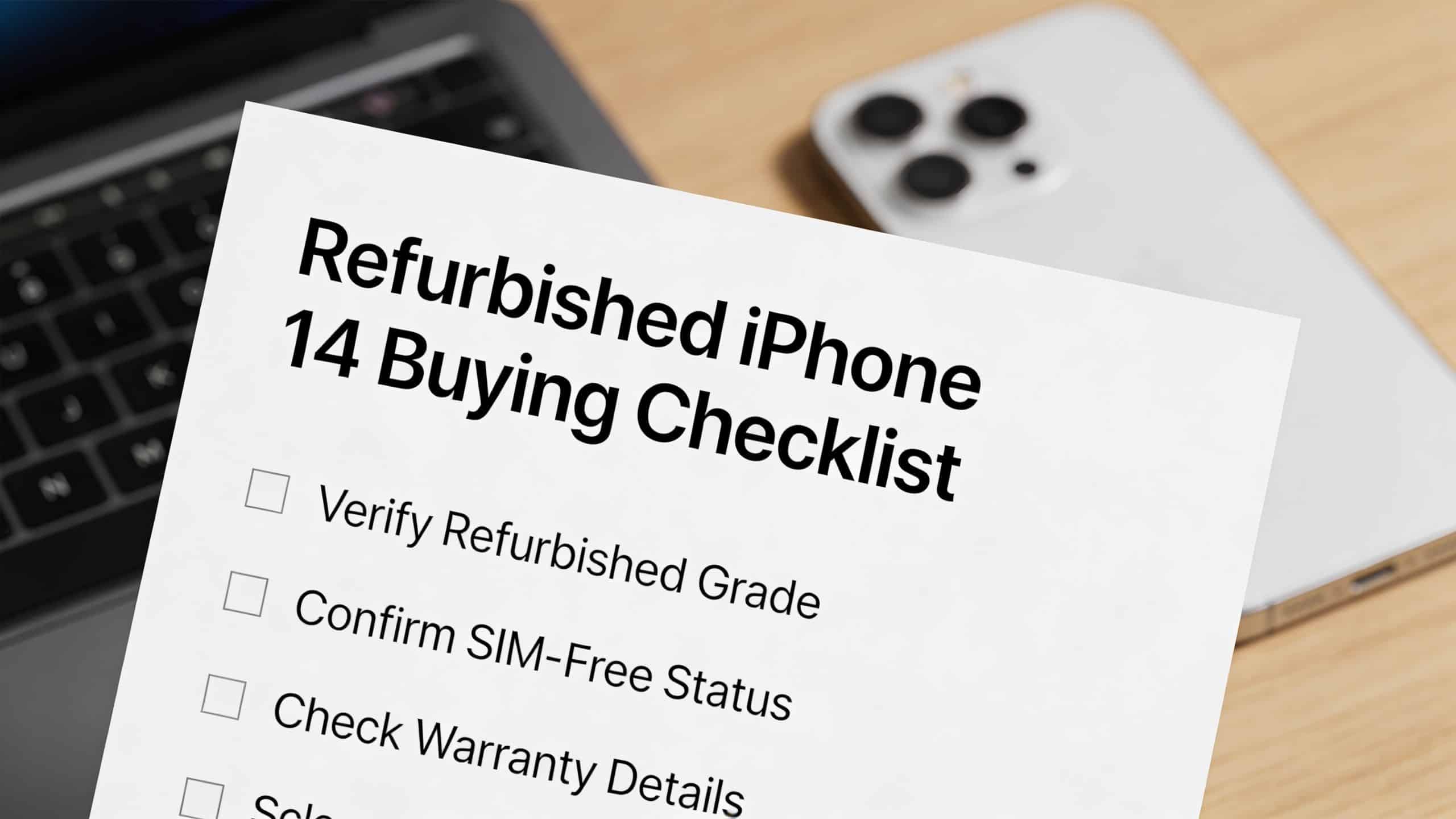
Checklist before you order
- Check who is selling it A specialist refurbished retailer is usually safer than an anonymous marketplace seller.
- Read the grade properly Make sure you know whether you’re paying for appearance or function.
- Confirm battery terms Don’t assume the battery has been checked just because the listing says refurbished.
- Look for a real warranty If the phone develops a fault, you need a clear route back to the seller.
- Read the return policy A return should be straightforward if the condition or performance isn’t as described.
- Check SIM-free status Don’t leave network compatibility to chance.
- Choose storage around your use If you keep lots of photos, videos, and apps, think about that before you chase the lowest price.
A common buyer scenario
A customer recently came close to buying a very cheap iPhone 14 from an online marketplace. The photos looked fine, but once they asked about battery health, warranty, and whether the phone was definitely SIM-free, the seller couldn’t give a straight answer.
That’s often the moment the real price shows up. A phone can look like a bargain until you factor in the risk of a weak battery, no returns, or a hidden problem after setup.
If you’re trying to build your own shortlisting process, guides on finding a reliable pre-owned smartphone can be helpful because they push you to assess the seller as carefully as the phone.
- If the listing is vague Move on.
- If the answers are inconsistent Move on.
- If the seller makes returns difficult Move on.
For readers who’d rather compare retailer listings directly, you can browse a refurbished iPhone 14 selection and judge grade, warranty and storage side by side before deciding.
Frequently Asked Questions for UK Buyers
Is a refurbished iPhone 14 still a smart buy in 2026
Yes, for many buyers it is. The more useful question is whether it’s the smart buy for you.
The iPhone 14 was released in 2022, and some UK retailers list refurbished units from about £219. That makes it a compelling option against newer models, but only if battery condition and warranty are guaranteed, as noted on this refurbished iPhone 14 listing page.
If you want the lowest risk and the longest likely ownership runway, a newer model may suit you better. If you want a sensible price-to-performance balance, the iPhone 14 still lands well.
How long will it get iOS updates
Apple doesn’t publish a fixed support end date in the source material provided here, so the honest answer is that no one should promise a guaranteed final year unless Apple confirms it. What you can say safely is that the phone remains recent enough to stay attractive to buyers who want ongoing usefulness rather than an ageing budget model.
If software longevity is your top priority, paying more for a newer refurbished iPhone may be worth it. If value matters more, the iPhone 14 still sits in a very sensible middle ground.
Should I buy the cheapest one I can find
Usually not. The cheapest listing often becomes the most expensive if you end up needing a battery replacement, dealing with poor returns, or finding out the grading wasn’t honest.
A slightly dearer phone with clear condition notes and proper after-sales support is often the safer total-cost choice.
Can I trade in my old phone
Many UK retailers and specialists accept trade-ins, but the exact offer depends on the model, condition, storage and whether the phone is working properly. Before sending any device away, back it up first and then sign out of iCloud using Settings > [your name] > Sign Out.
If you’re factory resetting an iPhone before trade-in, back it up first to iCloud or a computer. Then go to Settings > General > Transfer or Reset iPhone > Erase All Content and Settings. That step wipes your data, so don’t do it until your backup is complete.
Can businesses buy refurbished iPhone 14 handsets in bulk
Yes, many businesses do exactly that when they want dependable iPhones without stretching the handset budget too far. For business buying, consistency matters more than chasing one-off bargains. You want clear grading, known warranty terms, and a supplier who can actually answer questions after delivery.
That matters for staff rollouts, temporary teams, field workers and replacement handsets. A phone that is cheap but inconsistent across a batch quickly becomes an admin headache.
If you’re unsure whether a refurbished iPhone 14 UK model is the right fit, Used Mobiles 4 U is a practical place to compare certified refurbished devices, check grading clearly, and ask for advice on battery, warranty, trade-in or bulk-buy options before you decide.
Written by James Waterston, 24 years in the mobile phone industry from customer service through to Sales Director of a global repair and recycling company. Now running Used Mobiles 4 U for over 8 years.
LinkedIn:
James Waterston on LinkedIn
Looking for a refurbished phone?
Shop professionally tested refurbished iPhones and Samsung phones with 18 month warranty, 30 day returns and free UK delivery.
Browse Refurbished Phones