


Buy iPhone Pay Monthly UK: 2026’s Best Deals

04/06/2026

12 Mins
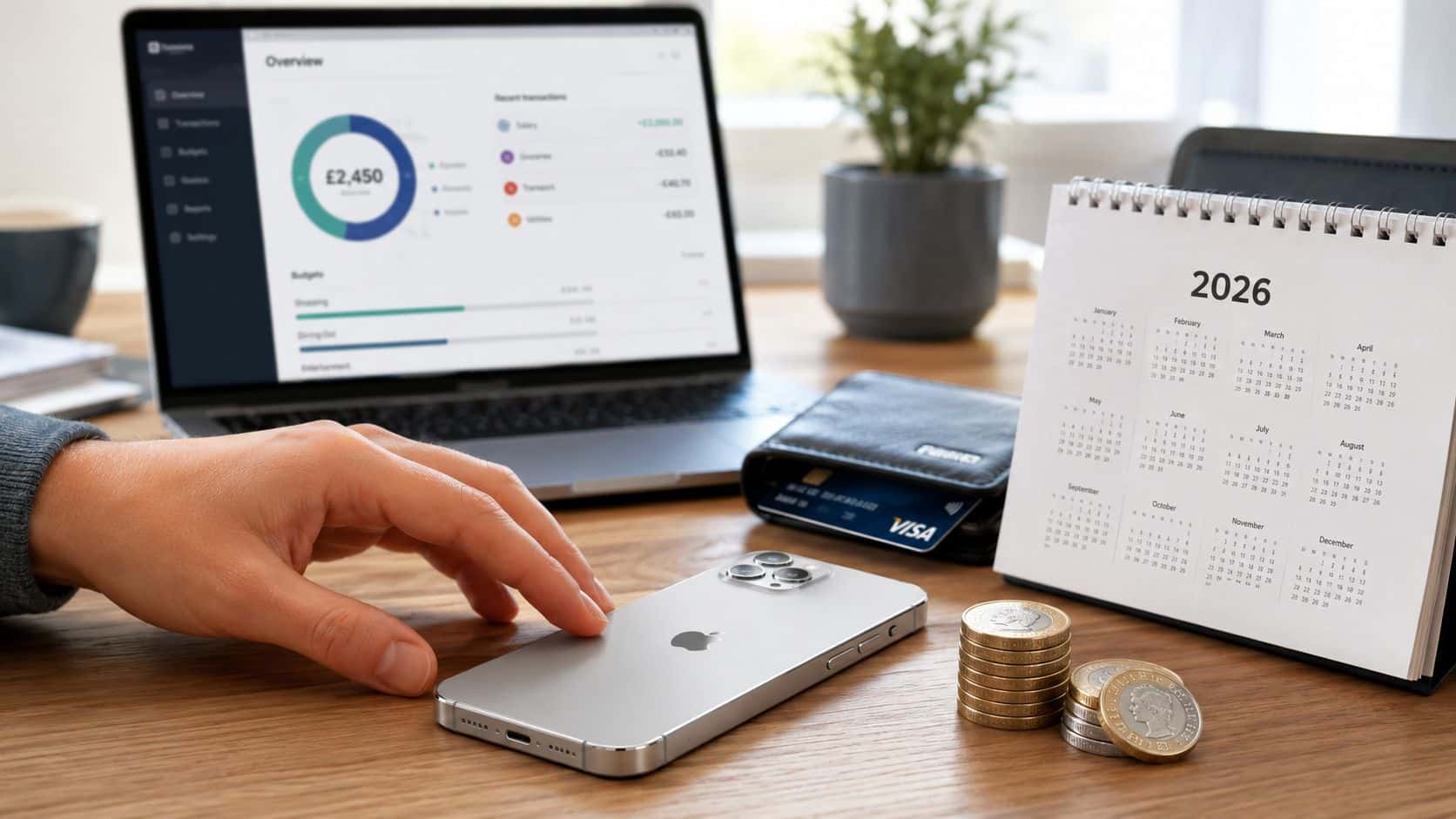
If you want to buy iPhone pay monthly UK, the main choice is simple. Take a network contract and get the phone bundled with airtime, or buy an unlocked iPhone separately and spread the handset cost while using a SIM-only plan.
Most people look at the monthly figure first. In the shop, the smarter move is to look at what you’re actually buying, how flexible it is, and what the phone will still be worth once the payments end.
The Short Version Pay Monthly iPhones
If you’re stood there comparing monthly figures, don’t assume the lowest advertised number is the cheapest route overall. A pay monthly iPhone can be good value, but only when you separate the handset cost from the network cost and check how much flexibility you’re giving away.

In Plain English
- Network contract route. Easy and familiar. You get the phone and airtime together, but the true handset cost is often harder to see.
- Unlocked phone plus separate finance. Usually better if you want control. You can pair the phone with a cheaper SIM-only deal and switch networks later if needed.
- Refurbished can stretch your budget further. Instead of paying monthly for a basic new model, many buyers do better with an older premium iPhone in strong condition. Our take on the best refurbished iPhones is a good place to compare sensible options.
- Monthly prices vary a lot in the UK market. Average UK contract costs ranged from £17.86 for 60GB to 80GB plans to £38.91 for unlimited data, and iPhones held 49% of the UK handset market in November 2025, which helps explain why pay monthly remains a normal buying route rather than a niche one, as shown in Uswitch’s UK mobile statistics.
Shop-floor view: If you keep your phones for years and don’t use huge data, bundled contracts are often less flexible than they first look.
The best option depends on how you use your phone. If you want the latest model every couple of years and don’t mind being tied to one provider, contract deals can be fine. If you want lower overall ownership cost, an unlocked refurbished iPhone with separate payments usually gives you more room to move.
Your Pay Monthly iPhone Options Explained
There are three common ways UK buyers fund an iPhone monthly. They sound similar at checkout, but they work very differently once the cooling-off period has passed.
Network contracts
This is the option most people see first. EE, Vodafone, O2 and similar providers show a monthly price that combines the handset and the airtime plan into one figure.
The catch is that bundled pricing can blur what you’re paying for the phone itself. EE’s pay monthly iPhone pages show the device sold with contract terms rather than as a standalone handset, so you need to compare the handset cost separately from the airtime if you don’t want to overpay for data you won’t use. You can see that bundling clearly on EE’s UK pay monthly iPhone catalogue.
- Best for. Buyers who want one bill, one provider and a straightforward upgrade path.
- What works. It’s convenient, especially if you already know the network coverage is good where you live and work.
- What doesn’t. It can lock you into a tariff that no longer suits you six months later.
Apple checkout instalments
Apple’s checkout flow is more structured than many buyers realise. You don’t always see instalment options immediately. Apple says the process is effectively two-stage. You choose Apple Pay or another checkout route, select a card showing the Pay Later hint, and only then do the available instalment plans appear if the issuer approves. Apple also lets you set up a planned purchase amount before checkout, which is useful if you want to test affordability first on Apple’s UK support page for instalment setup.
That matters because some buyers assume monthly finance is guaranteed if the button appears. It isn’t. Approval and plan visibility depend on the payment method and issuer decision at the time.
If you’re already worried about affordability, check the monthly commitment before you get attached to a specific model and storage size.
Third-party finance and buy now pay later
This sits between outright purchase and contract. You buy the handset from a retailer, then use a finance provider or pay-in-instalments option at checkout. The important difference is that the handset and the mobile service can stay separate.
That separation is where buyers often save money. You can compare cheap iPhone deals UK, choose the handset you actually want, then match it with a smaller SIM-only tariff if your data use is modest. For light to medium users, that’s often more sensible than swallowing a large bundled contract just because the advert looked tidy.
The question most buyers should ask first
Ask this before looking at colours, storage or “free gifts”. Is the phone actually yours in a flexible sense, or are you tied to a network package that makes changing course awkward?
That single question usually clears the fog. If the answer is unclear, the deal probably needs more scrutiny.
New vs Refurbished Which Offers Better Monthly Value
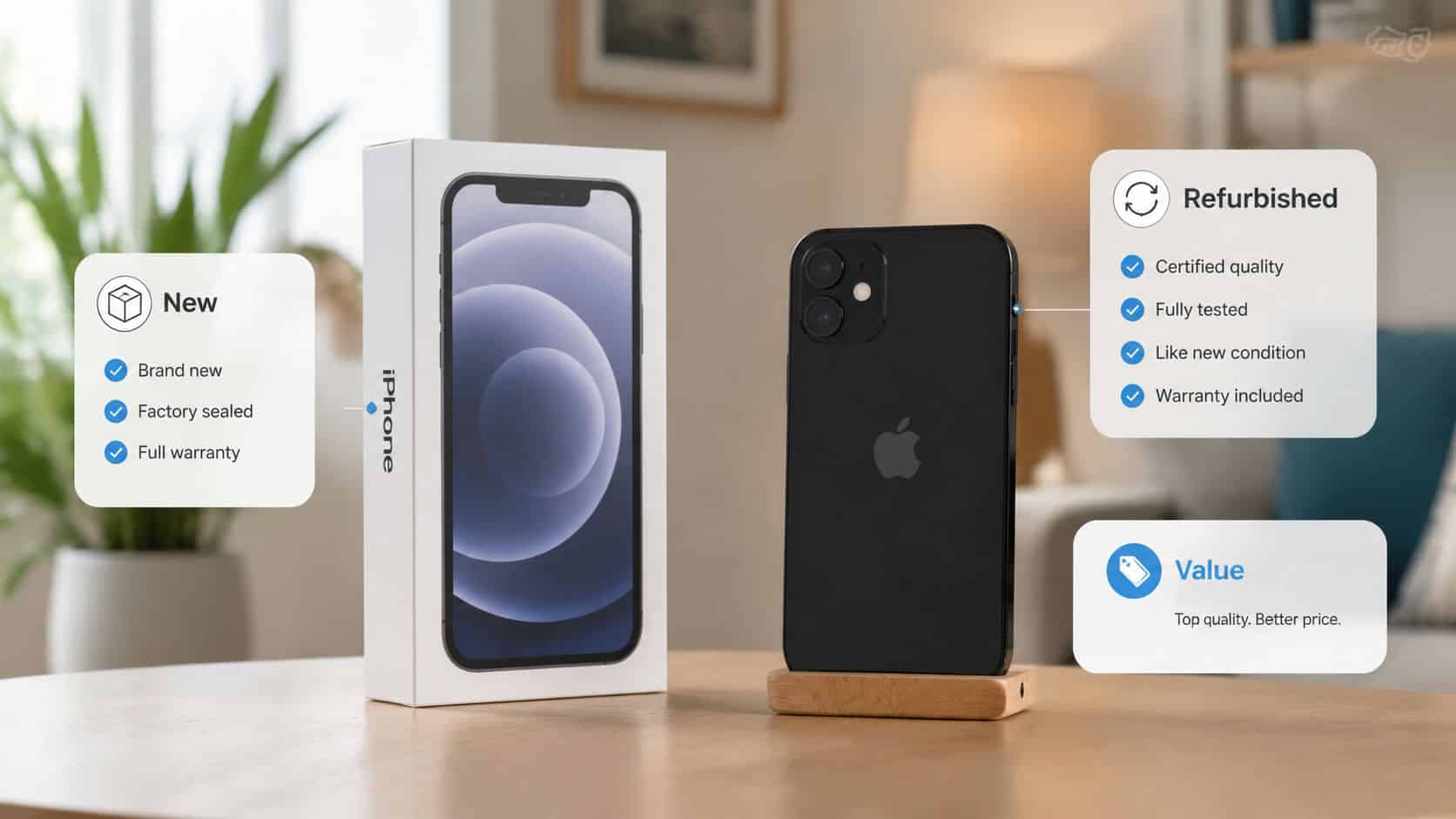
The biggest mistake I see is buyers assuming “new” automatically means “better value”. It often doesn’t. Monthly budgeting can hide that problem because a newer entry model and an older premium model can feel similar in monthly terms, even though the daily experience is quite different.
Why refurbished often makes more sense
If your budget has a ceiling, I’d usually rather see you in a higher-grade refurbished iPhone than stretched into a brand-new basic model on a long contract. A refurbished Pro model from a nearby generation often gives you the things you’ll actually notice every day. Better cameras, better build, better screen, and usually a stronger sense that the phone still has resale value later.
For a lot of buyers, those are the upgrades that matter. Not a box-fresh seal. Not the bragging rights of this year’s launch colour.
- Camera value. A refurbished Pro model usually makes more sense if photography matters, even casually.
- Storage breathing room. Buyers regretting low storage is common. More built-in storage tends to age better than chasing the newest release badge.
- Build and feel. Premium iPhones often hold up better physically and feel less like a compromise after the novelty wears off.
The flexibility point most guides skip
One of the most practical reasons to buy refurbished on separate monthly payments is flexibility. Apple’s UK buying page makes room for questions around network providers, payment, trade-in and setup, which reflects a real buyer concern. People want to know if the phone is unlocked, whether they can swap SIMs, and what happens if they travel or want to leave a contract early. That gap is why checking flexibility matters before you commit on Apple’s UK iPhone buying page.
If you’re buying an unlocked handset, you’ve got options. You can move to a cheaper SIM, use the phone abroad more easily, or hand it on later without the same contract baggage. That tends to matter more in the real world than buyers expect on day one.
My rule for value: buy the best iPhone you can comfortably keep for longer, not the newest one you can just about squeeze into a monthly payment.
A straightforward comparison
Choose a new standard iPhone if:
- You want untouched condition. Box-fresh matters to you more than getting stronger features for the money.
- You prefer manufacturer-first buying. You want the newest cycle, simplest setup path and don’t mind paying more for that comfort.
Choose a refurbished iPhone if:
- You care about real-world value. Better camera, better screen or more storage matters more than release date.
- You want freedom. An unlocked handset paired with a separate SIM is often the cleaner ownership route. You can browse cheap iPhones UK if that’s the path you’re weighing up.
If you asked me for a direct recommendation, I’d lean refurbished for most budget-conscious buyers. Not the roughest grade available. A properly tested, well-graded handset that still has good battery life and no hidden surprises.
How to Check the True Cost of a Pay Monthly Deal
A monthly figure is only useful when you know what sits behind it. This is where buyers either save themselves money or sign up for something that looked neat on the first page and expensive on the last.
How to check the true cost of a pay monthly deal. Quick steps
- Write down the monthly figure. Don’t rely on memory or the headline banner.
- Check the agreement length. A lower monthly payment over a longer term can still be the more expensive route overall.
- Add any upfront payment. If there’s a deposit, include it from the start.
- Separate handset from airtime where possible. If the deal bundles both, ask what part is the phone and what part is the tariff.
- Check for early exit pain points. Look for any minimum term, upgrade conditions, or restrictions around changing network.
- Compare against an unlocked handset plus SIM-only deal. This is where many “good” contracts stop looking so attractive.
- Read the approval wording carefully. The advertised monthly payment may not be the one you’re actually offered.
That last step matters more than people think. Some finance-led iPhone listings in the UK state plainly that pricing depends on personal credit score and credit risk assessment, which means the nice neat monthly number can change once your details are checked, as shown on this UK finance-led iPhone listing.
What weaker credit can change
If your credit file isn’t perfect, it doesn’t always mean “no”. It can mean different terms, a bigger upfront payment, fewer plan options, or a different lender decision than the person next to you.
This is where people get caught by comparing deals that aren’t really comparable. One retailer may be showing a representative example while another is showing a starting figure that only some buyers will get. Neither is automatically wrong. It just means you need to judge the offer you can actually secure, not the one in the hero banner.
- Check the wording. If pricing is based on risk assessment, treat the headline number as provisional.
- Avoid emotional buying. Don’t pick the exact model first and only then discover the payment structure doesn’t suit your budget.
- Leave room in your budget. A monthly phone payment should still feel manageable when your regular bills land.
Good buying decisions usually happen on paper first. Work out the ownership cost before you decide the phone is “affordable”.
The total cost view that helps most
A common example we see is someone focused on one large network’s monthly figure because it looks simple. Once they compare it against an unlocked handset and a small SIM-only package, the contract no longer looks like the obvious winner.
That doesn’t mean contracts are always bad. It means you should compare the total ownership route, not just the format of the advert. If you’re exploring handset-only instalments, our guide to buying refurbished iPhones on finance is useful for understanding how separate-phone finance works in practice.
What buyers usually ask us
- Is a lower monthly payment always better. No. Not if it comes with a longer tie-in or an inflated tariff.
- Should I get more data just in case. Usually not. Paying every month for unused data is one of the easiest ways to waste money.
- Is finance the same as a contract. Not always. A handset finance agreement and a mobile service contract can be completely different commitments.
- Will I own the phone freely at the end. That depends on the structure of the deal, so always check.
What We Check Before Resale
Phones coming off long contracts often look fine at first glance. Then we put them on the bench and the usual signs start to show. Battery wear, clogged charging ports, polished corners, micro-scratches on the display, and sometimes a speaker that sounds weaker than the owner realised because it’s full of pocket dust.

Our Experience Refurbishing This Model at Used Mobiles 4U
One thing we regularly notice with ex-contract iPhones is that cosmetic condition and internal condition don’t always match. A phone can look tidy from arm’s length and still have reduced battery health, a tired charging port, or a rear camera lens surround that’s taken more knocks than the seller realised.
Our technicians often see the same practical issues. Battery health is a major one. So are charging problems caused by compacted lint rather than faulty hardware, and minor screen wear that doesn’t show well in casual photos. Face ID, cameras, charging, speakers, microphones and buttons all need proper checking because these phones are used for far more than calls now.
That matters especially because iPhones are part of day-to-day payment habits in the UK. Apple Pay use was about 67% in stores and 40% for online shopping among UK consumers in early 2024, which is one reason demand stays strong for iPhones generally, as outlined in this Apple Pay usage overview.
- Battery checks. We pay close attention to battery condition because that’s what buyers feel first in daily use.
- Functional tests. Face ID, cameras, microphones, charging and speaker performance matter more than a polished listing photo.
- Grade differences. Like New, Very Good and Good usually come down to cosmetic wear rather than whether the phone is fit for daily use, but the better grades tend to suit buyers who care about resale later.
- Repair versus replace logic. If a handset only needs cleaning, a battery, or a straightforward part replacement, it can still be a very sensible buy. If it shows signs of heavier impact damage or inconsistent charging after repair, it’s less attractive.
A professionally checked used iPhone is usually a safer bet than a random marketplace phone with a vague description and no proper testing trail.
What We Commonly See
- Heavy cable wear. Older Lightning models often show strain around the port area from years of charging.
- Battery complaints that are really usage complaints. Background app load, poor signal and ageing batteries all get blamed together. Proper testing separates them.
- Good outer condition, tired internals. A case can hide cosmetic wear, but it can’t protect battery ageing.
- Value affected by originality and condition. Clean cameras, healthy charging, solid battery performance and clear grading make a phone easier to trust and easier to resell later.
If you’re choosing between a private sale and a professionally refurbished device, this is the difference you’re paying for. Not just the phone. The checking, the cleaning, the testing and the fact someone has already filtered out a chunk of the risk.
Your Path to a Pay Monthly iPhone with Us
If you’ve decided the buy iPhone pay monthly UK route still makes sense, keep it simple. Pick the handset first, then make sure the payment method suits your budget and the phone is still worth owning once the agreement ends.
A sensible buying path
- Choose the model carefully. Don’t start with the newest name. Start with the camera, storage, battery expectations and charging type you actually need.
- Pick the grade you’re comfortable with. If cosmetic condition matters, go higher grade. If value matters most, a lower cosmetic grade can still be a very smart buy.
- Check that it’s SIM-free and unlocked. That keeps your network options open.
- Review the monthly payment option at checkout. Make sure the repayment is manageable without relying on guesswork.
- Pair it with a suitable SIM-only deal. Don’t overbuy data.
A common example we see is someone who wants a nicer iPhone than their network contract budget allows. Instead of settling for a lower-spec new handset, they choose a refurbished model with stronger day-to-day features and keep the monthly outgoings under better control by separating the phone from the tariff.
That route tends to suit buyers who want clearer grading, tested devices, battery health standards, warranty cover and a straightforward returns process, without being locked into one mobile network from the start.
If you’re weighing up your options, take a look at Used Mobiles 4 U for SIM-free refurbished iPhones with clear grading, tested functionality, UK delivery and warranty cover. It’s a practical route if you want the phone you want, without wrapping it into a network contract that doesn’t suit how you actually use it.
Verdict. Buying an iPhone pay monthly in the UK is worth it if you focus on total ownership cost, not just the headline monthly figure. For most budget-conscious buyers, an unlocked refurbished iPhone with separate handset finance and a sensible SIM-only plan is the better long-term move. If you want convenience above all else, a network contract can still work, but check the tie-ins properly before signing.
Written by James Waterston, 24 years in the mobile phone industry from customer service through to Sales Director of a global repair and recycling company. Now running Used Mobiles 4U for over 8 years.
LinkedIn: James Waterston on LinkedIn
Meta description: Buy iPhone pay monthly UK the smart way. Compare contracts vs refurbished unlocked iPhones, avoid hidden costs, and choose better long-term value.