


Refurbished Phones UK Warranty: Your Rights

09/05/2026

11 Mins

Yes. In the UK, a refurbished phones UK warranty from a reputable seller is usually the difference between a sensible purchase and a gamble. If you’re looking at a refurbished iPhone or Samsung phone right now, the practical answer is simple: buy only if the warranty is clear, written down, and easy to claim on.
Quick Verdict
- Best for: Buyers who want lower upfront cost without taking on all the risk of a private sale.
- Not ideal for: Anyone expecting cover for drops, cracked screens, liquid damage, or other accidents.
- Typical cost or price range: Refurbished phones are often sold for less than new, but the exact price depends on grade, model, storage, and seller.
- Better alternative: If you want cover for theft, loss, or accidents, a separate insurance policy is usually the better fit than relying on a standard warranty.
- Main risk: Assuming “warranty included” means every fault is covered, when exclusions often matter just as much as the headline promise.
- Practical recommendation: Stick to a UK retailer offering a written 12-month warranty, a clear return process, and plain-English exclusions.
Quick Comparison
Retailer warranty vs statutory rights
- Retailer warranty: The seller’s own promise to repair or replace a faulty mobile within the stated period. This is usually the fastest route if something goes wrong.
- Statutory rights: Your legal protection under the Consumer Rights Act 2015. Goods must be of satisfactory quality, fit for purpose, and as described.
- What matters in real life: A warranty is the easy front door. Your legal rights are the backstop if the fault shouldn’t have happened in the first place.
- First thing to check: Whether the seller is a proper UK business, not just a marketplace listing with vague terms.
Introduction
If you’re buying refurbished, you’re usually trying to balance price, reliability, and hassle. The warranty is the part that tells you whether the seller is standing behind the phone, or just hoping nothing comes back.
A proper refurbished phone warranty isn’t just a nice extra. It’s what separates a tested retail device from a used handset sold as seen. If you’re still unsure about what is a refurbished phone, the short version is that it should have been checked, cleaned, data-wiped, and assessed before resale.
For most UK buyers, the useful rule is simple. A reputable business seller should offer a written warranty, and that warranty should sit alongside your normal consumer rights rather than replace them.
Practical rule: If the listing talks a lot about the phone’s condition but says very little about warranty terms, return terms, or exclusions, slow down before buying.
This matters because the words on the page and the real-life meaning aren’t always the same. “Warranty included” sounds reassuring, but buyers usually only discover the limits after a fault appears.
By the end of this guide, you’ll know what a refurbished phones UK warranty usually covers, what it usually excludes, where your legal rights fit in, how battery health changes the picture, and how to make a claim without making a bad week worse.
What a Refurbished Phone Warranty Actually Covers
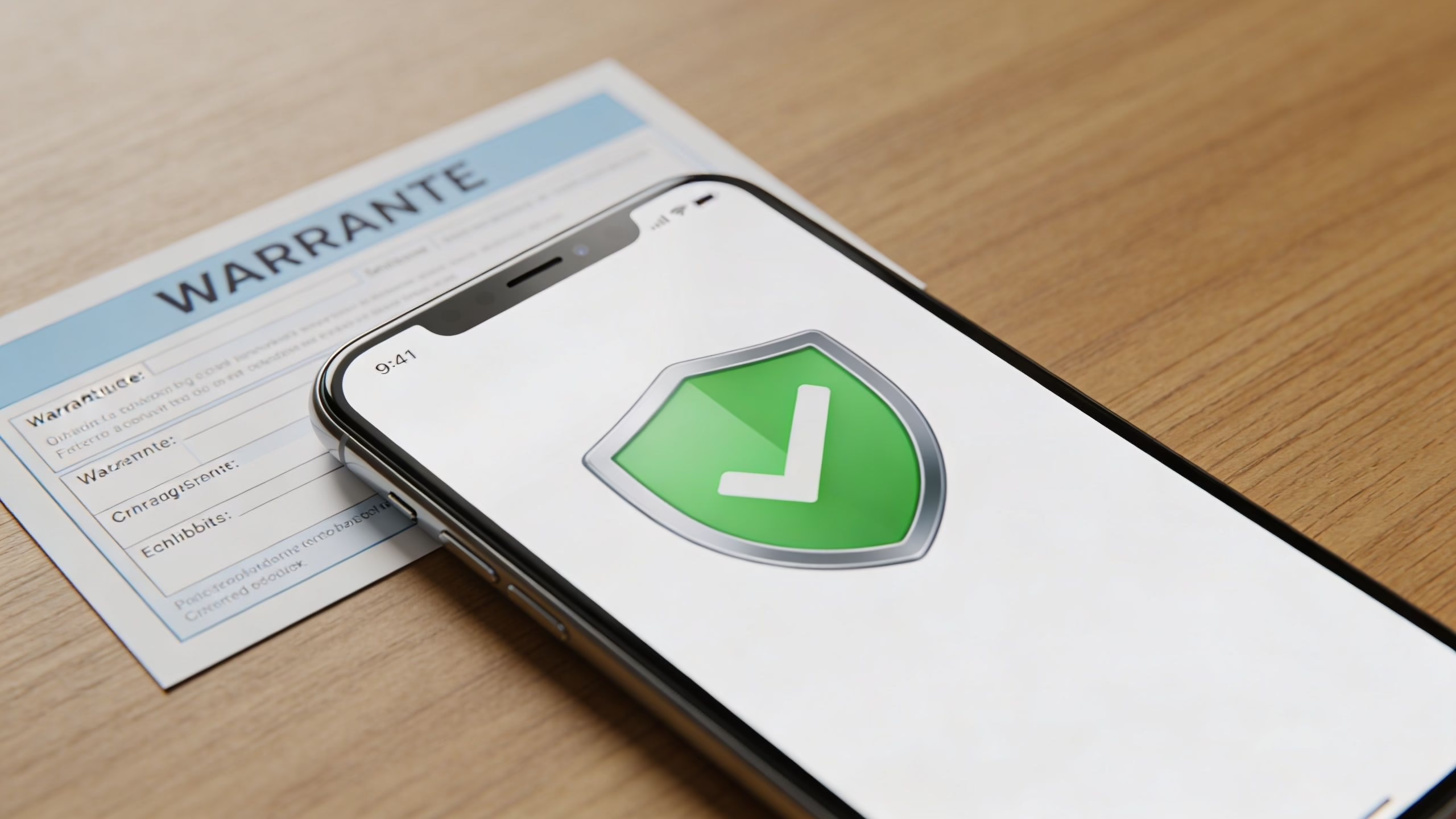
A standard refurbished phone warranty is there to protect you against faults in the device itself. In plain terms, that means problems that appear during normal use and weren’t caused by being dropped, bent, soaked, opened, or tampered with.
The normal benchmark in the UK is a warranty in the 12 to 24 month range from reputable sellers, and that standard has become a major part of buyer confidence according to UK refurbished phone market insights. The same source notes that 41% of sceptics doubt refurbished handset performance, which is exactly why clear warranty cover matters.
What is usually included
When a seller says the phone is covered, they’re normally talking about manufacturing or hardware faults that show up after purchase. That can include parts failing even though the phone has been used properly.
- Charging faults: The phone stops charging properly, the charging port becomes unreliable, or the device fails to hold connection with a known-good cable and plug.
- Button failure: Power buttons, volume buttons, mute switches, or fingerprint sensors stop responding as they should.
- Display issues: The screen develops faults such as touch problems, unresponsive areas, or failure that isn’t linked to impact damage.
- Audio and call faults: Earpiece, loudspeaker, microphone, or internal signal-related hardware faults can fall within cover if the seller confirms them as device faults.
- Internal component failure: Cameras, Face ID or fingerprint hardware, vibration motors, and other fitted components may be covered where the problem is a genuine fault rather than damage.
Good sellers also explain the route for getting help. In practice, most claims are handled as a return-to-base process, meaning you contact the retailer, they test the device, then repair or replace if the fault is confirmed.
What practical buyers should check
Not every warranty with the same headline length gives you the same level of protection. A written policy should tell you what faults are covered, how long it lasts, who pays for return postage, and what happens if a repair isn’t possible.
It’s also worth checking what’s covered on used phone warranties before you buy, not after. That’s where the detail usually lives.
A good warranty reads clearly before purchase. A weak one only becomes visible when you try to claim.
In day-to-day shop terms, the best warranties don’t just exist. They are easy to understand, easy to use, and backed by a seller that actually replies.
What Your Refurbished Phone Warranty Will Not Cover
This is where most misunderstandings happen. Buyers see “12-month warranty” and assume it means the phone is protected against whatever goes wrong in that year. It doesn’t.
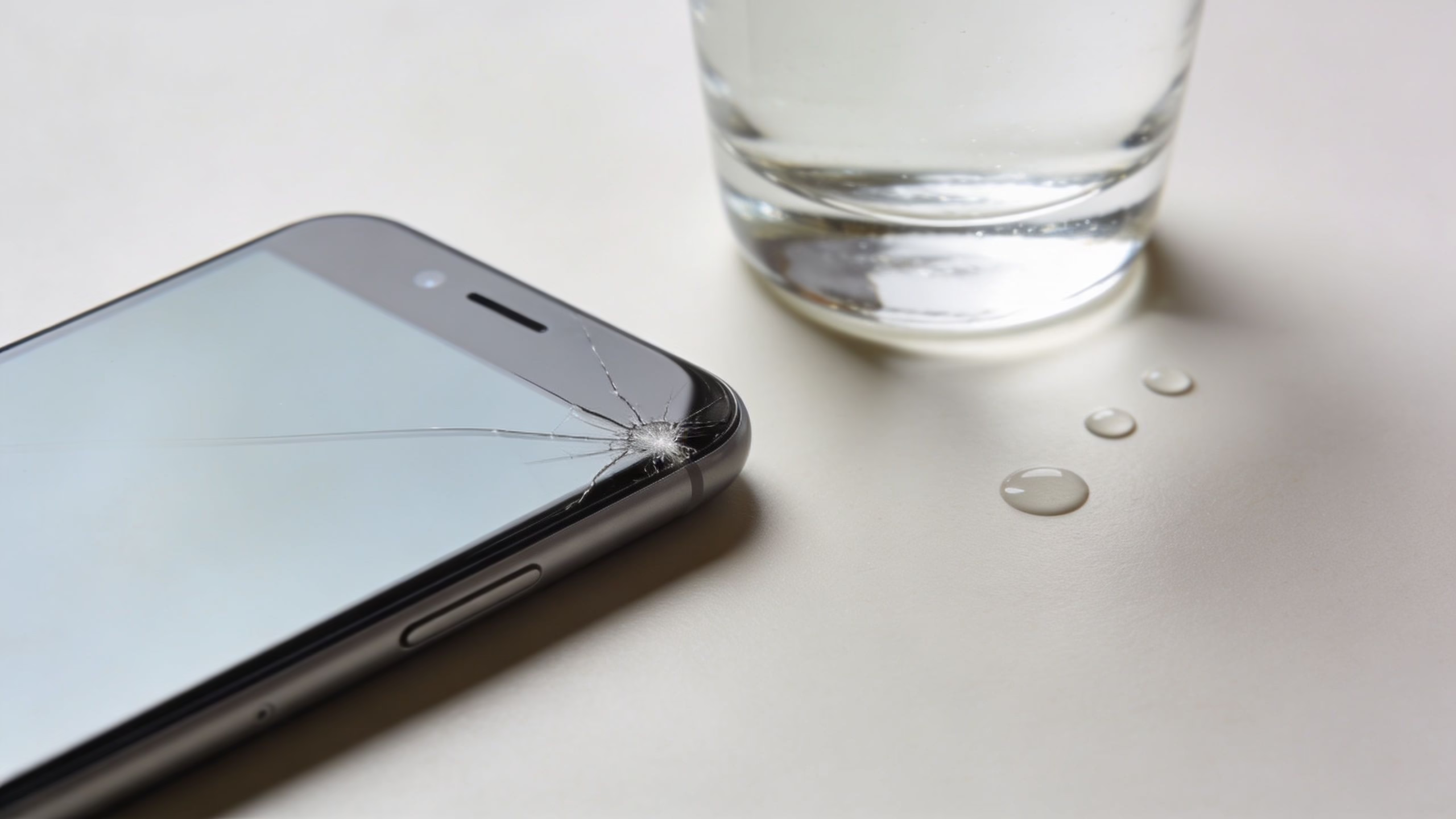
Standard refurbished warranties are for faults, not accidents. If damage is caused by the user, the warranty usually stops being the right route straight away.
The exclusions that catch buyers out
One of the clearest warnings in this area is that refurbished phone warranties do NOT cover accidental damage, water damage, or unauthorised repairs, and many retailers still don’t make those exclusions obvious in their marketing according to Handtec’s warranty breakdown. The same source says water damage is the second-most common phone damage type in the UK, which is why this gap causes so much confusion.
- Dropped phones: If the screen cracks after falling on the kitchen floor, that’s accidental damage, not a warranty fault.
- Liquid exposure: Rain, sinks, baths, spilled drinks, and damp bags can all lead to liquid damage disputes.
- Third-party repair attempts: If another shop opens the device or fits parts without authorisation from the seller, the original warranty may be void.
- Software tampering: Modified software, unofficial flashing, or other unsupported changes can create problems the seller won’t accept as covered faults.
- Wear and tear: Cosmetic marks, battery ageing over time, and ordinary signs of use usually aren’t treated as warranty failures.
What this looks like in real life
A common example is a customer who buys a refurbished iPhone, uses it for a few weeks, then drops it while getting out of the car. Two days later the screen starts flickering. From the customer’s point of view, the screen has failed. From the seller’s point of view, the device suffered impact damage first, so it isn’t a warranty claim.
Another one is liquid exposure that isn’t obvious. A phone may still power on after being splashed, then fail later once corrosion starts inside. Buyers often think the delay means it must be a device fault. Retailers and repair centres usually look for liquid indicators and internal signs of moisture before accepting a claim.
Important distinction: A warranty covers a phone that fails on its own. It doesn’t cover a phone that was damaged first and failed afterwards.
If you want protection against cracked screens, spills, theft, or loss, you’re looking at insurance, not a standard refurbished warranty.
Your Legal Rights vs The Retailer’s Promise
The retailer warranty and your legal rights work together, but they aren’t the same thing. Understanding the difference helps when a seller starts talking as if the written warranty is your only protection.
The seller’s warranty is a contractual promise. It says, in effect, “if this phone develops a covered fault within this period, we’ll deal with it under these terms.” That can be helpful because it gives you a straightforward process.
Where the law matters
Your legal protection comes from the Consumer Rights Act 2015. Refurbished goods still have to be of satisfactory quality, fit for purpose, and as described.
One of the most useful parts for buyers is the first six months. Within that period, if a fault appears, the law gives you a strong position to ask for repair, replacement, or refund because the issue may be treated as having been present at purchase unless the retailer can show otherwise. The same principle is reflected in retailer guidance around refurbished phones and UK consumer protection, including the summary in the Used Mobiles 4 U returns policy.
- Warranty: Usually easier to use day to day because the process is already set out by the seller.
- Statutory rights: More powerful when the phone shouldn’t reasonably have failed in the first place.
- Best approach: Start with the seller’s support team, but keep your legal rights in mind if the answer doesn’t match the fault.
What buyers often get wrong
Some customers assume a warranty replaces their legal rights. It doesn’t. Others assume legal rights mean any problem at any time must result in a refund. That isn’t how it works either.
In practice, the cleanest route is usually this: report the fault promptly, explain clearly what the phone is doing, and let the retailer inspect it. If the response feels unreasonable, that’s when statutory rights matter most.
Your warranty is the seller’s promise. Your legal rights are the fallback if that promise is too narrow or handled badly.
How Our 12-Month Warranty Protects You
A sensible refurbished warranty starts before the phone is ever listed for sale. The less guesswork there is in testing, the fewer nasty surprises there are later.
At Used Mobiles 4 U, devices go through a defined Refurbishment and Testing Process before sale, and each device includes a 12-month warranty, clear grading, and 30-day returns. That matters because the strongest warranty is the one you hopefully never need to use.
Battery health is where expectations need to be realistic
Battery wording causes more confusion than almost anything else in refurbished. Buyers often hear “tested battery” and assume the battery will behave like a brand-new phone for the whole ownership period.
That isn’t how lithium-ion batteries work. The industry standard is that refurbished phones should have at least 85% battery health at sale, while battery-specific cover is often shorter than the main device warranty. The same source notes that a phone sold at 85% health will likely be around 70% after two years, which is normal wear rather than a warranty fault according to The Big Phone Store’s battery and warranty guide.
What that means for a buyer
- Covered issue: A battery that fails abnormally, causes shutdown problems, or shows clear fault behaviour soon after purchase may need attention.
- Not the same thing: Gradual battery ageing over time is expected on a refurbished phone, even one that was properly tested before sale.
- Useful mindset: Judge the battery on whether it behaves properly now, not on whether it can resist normal ageing forever.
This is why clear seller wording matters. Good retailers don’t hide behind vague terms like “battery not guaranteed” while still advertising the phone as fully checked.
If you’re choosing between a cheaper used iPhone from an unknown seller and a properly tested refurbished iPhone with clear battery expectations, the second option is usually the safer buy even if the headline price is higher.
How to Make a Warranty Claim A Step-By-Step Guide
If your phone develops a fault, don’t rush straight into a reset or a repair booking. A rushed mistake can wipe your data or make the claim harder than it needs to be.

How to make a claim quickly
- Check the obvious first. Try a different cable, plug, charger, or SIM if the problem could be accessory-related. Restart the phone and check whether a software update is pending.
- Back up your data before sending the device anywhere. This is essential. Repairs, replacements, or diagnostic resets can remove your data. If it’s an iPhone, use Settings > [your name] > iCloud > iCloud Backup. If it’s an Android phone, use the manufacturer’s backup options in Settings.
- Find your order details. Keep your invoice, order number, IMEI if available, and the date the fault started.
- Describe the fault clearly. Say what the phone does, when it does it, and whether the issue is constant or intermittent. “Battery bad” is vague. “Phone drops from charge to shutdown during normal use” is much more useful.
- Take photos if relevant. If the issue is visible, such as screen flicker or charging errors, a short video can help support staff understand the fault faster.
- Contact the seller before visiting a third-party repair shop. Unauthorised repairs can create warranty problems.
- Pack the phone carefully for return. Remove your SIM card and any case or accessories unless the seller asks for them.
Simple message template
Hello, I’m contacting you about a fault with my refurbished phone. My order number is [order number]. The device model is [model]. The fault started on [date] and the phone is doing the following: [clear description]. I have completed basic troubleshooting and would like to follow the warranty claim process. Please let me know the next steps.
If you want to improve how you word a support request, these AI chatbot customer service tips are useful because they focus on clear, calm communication rather than emotional back-and-forth. That often speeds up a warranty case.
Smart Buyer Questions About Phone Warranties
The headline warranty length isn’t the only thing worth checking. A savvy buyer looks at who the warranty belongs to, what happens if the phone changes hands, and whether the cover depends on a mobile contract.
Is a network warranty always better
Not necessarily. One important issue in the UK is that some network-provided warranties only stay valid while you keep an active airtime plan. That creates a hidden cost compared with retailer-based cover tied to the device itself, and it can reduce flexibility if you want to switch networks or sell the handset later according to Samsung’s Certified Re-Newed information.
- Carrier-tied cover: Can look attractive at first, but may be linked to your ongoing contract.
- Retailer-independent cover: Usually makes more sense for SIM-free buyers because the warranty follows the device sale, not the airtime plan.
- Best fit for many people: If you buy SIM-free and like the freedom to switch networks, independent retailer warranty terms are often easier to live with.
Does the warranty transfer if I sell the phone
This is one of those details buyers forget to ask until later. Some warranties are tied to the original purchaser. Others may follow the device. Some are unclear unless you ask support directly.
If you’re buying for a child, a family member, or a business fleet, check this before purchase. The same applies if you’re using trade-in credit or buying multiple handsets for staff.
Warranty or insurance
They do different jobs. A warranty is about faults in the phone. Insurance is for the things warranties usually exclude, such as accidental damage, theft, and loss.
A parent buying a first phone for a teenager might value insurance more than extended warranty length, simply because drops and spills are more likely than internal component failure. A careful adult buying a SIM-free refurbished iPhone for work may decide the standard warranty is enough.
Ask one question before you buy: “If this phone stops working next month, what exact situations are covered, and what exact situations are not?” If the answer is fuzzy, keep shopping.
That single question cuts through most of the marketing language around refurbished phones UK warranty.
Author Attribution
Written by James Waterston, 24 years in the mobile phone industry from customer service through to Sales Director of a global repair and recycling company. Now running Used Mobiles 4 U for over 8 years.
LinkedIn: James Waterston on LinkedIn
If you’re unsure whether a repair, warranty claim, or replacement phone makes more sense, you can compare options at Used Mobiles 4 U or ask the team for straightforward advice before you buy.
Looking for a refurbished phone?
Shop professionally tested refurbished iPhones and Samsung phones with 18 month warranty, 30 day returns and free UK delivery.
Browse Refurbished Phones