


Cheapest Refurbished iPhone UK: 2026 Buyer’s Guide

24/05/2026

11 Mins
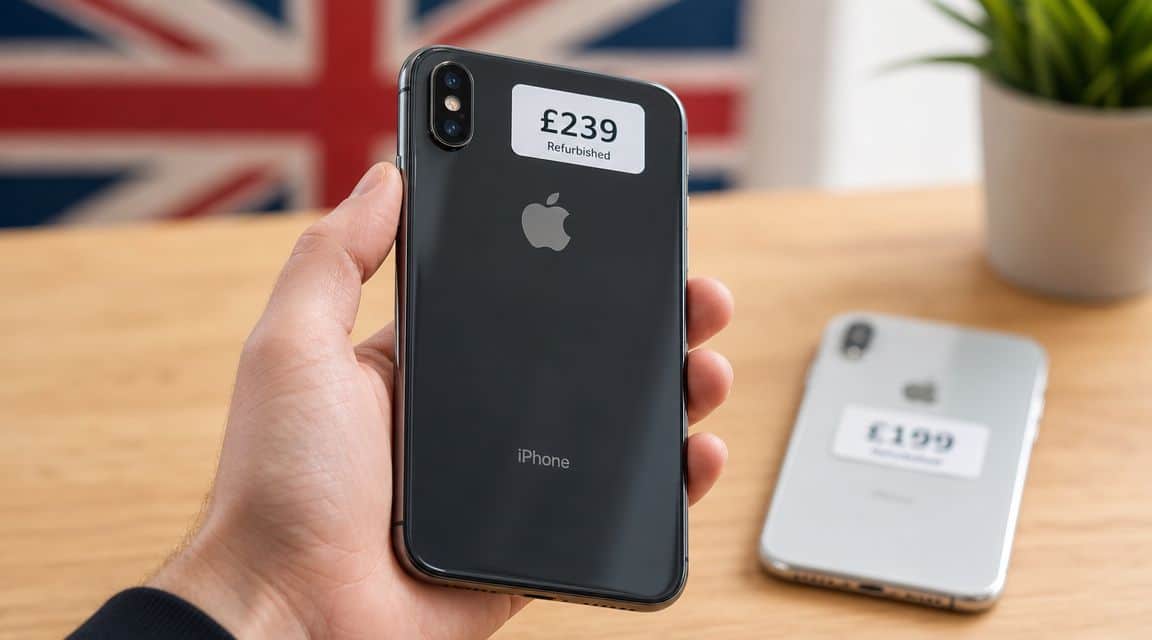
If you’re hunting for the cheapest refurbished iPhone UK listings, the lowest ticket price usually isn’t the safest buy. The smart buy is the phone that’s still cheap after you factor in battery health, grade, warranty and how much life it realistically has left.
A very cheap iPhone can be fine for calls, WhatsApp, school use or as a backup handset. It becomes poor value when the battery is tired, the charging port is worn, or the model is old enough that you’re buying another replacement sooner than expected.
The Short Version What to Look For
If you need the answer fast, focus on four things before you focus on colour, storage or tiny price differences.
- Grade matters more than most buyers expect. A “fair” or “good” phone can save you money, but expect visible wear. That’s often the right move if you care about function over looks. If you want something that still feels presentable every day, don’t chase the absolute bottom price.
- Battery health is where cheap can turn expensive. In the UK market, reputable sellers commonly treat battery condition as a core standard, not an afterthought. If the battery is only just acceptable, daily use can feel frustrating very quickly.
- Warranty tells you how much risk the seller is willing to keep. A proper warranty is part of the value, not a bonus. It usually says more about the phone than the product photos do.
- Seller trust is what separates refurbished from simply used. You want clear grading, tested functions, proper data wiping, and support if something isn’t right. If you’re comparing offers, look at the full package rather than just the headline price. Our latest cheap iPhone deals UK guide is useful if you’re narrowing down current value picks.
Practical rule: Buy the cheapest refurbished iPhone that you won’t need to apologise for a month later.
That usually means accepting cosmetic wear, but not compromising on battery condition, network status, charging, cameras or warranty cover. Those are the bits that cost you time and money if they go wrong.
What Really Determines the Price of a Refurbished iPhone

Two refurbished iPhones can be the same model, same storage and same colour, yet be priced differently for good reason. The three biggest drivers are cosmetic grade, battery condition and warranty.
Cosmetic grade changes the feel of the phone
Grade sounds simple on paper, but in your hand it means very different things. A higher-grade device usually has cleaner edges, fewer screen marks and less wear around the charging port, camera rings and frame.
Lower grades can still be excellent value. The catch is that visible wear often tells you how heavily the phone has been handled over time. That doesn’t automatically mean faults, but it does mean you should expect a more used feel.
- Like New or Excellent. Better if the phone is a gift, a daily work device or something you’ll be looking at all day.
- Good. Often the sweet spot for value. You accept cosmetic signs of use, but the phone can still be the right choice if the important functional checks are strong.
- Fair. Usually where the cheapest deals sit. Fine for a first phone, backup handset or someone using a case from day one.
If you’re interested in how sellers think about this more broadly, this piece on pricing products for retail is a useful reminder that condition, risk and after-sales support all affect the final number, not just the item itself.
Battery health is part of the real cost
This is the bit many buyers skip, then regret later. Apple’s UK refurbished store sets the premium benchmark by stating that every refurbished iPhone gets a new battery and a full 1-year warranty, with savings up to 15%. That’s a very different proposition from a cheaper phone that only meets the wider market minimum.
Across the UK refurbished market, reputable sellers commonly work to at least 80% to 85% battery health. Below that point, day-to-day use can feel noticeably weaker and the odds of needing a battery replacement sooner go up.
A cheap iPhone with a tired battery isn’t really cheap. It just delays part of the bill.
Warranty is a pricing driver, not an add-on
A proper warranty costs the seller money, so it affects price. That’s why very low prices from private marketplaces often look tempting until something like Face ID, charging or the loudspeaker starts playing up.
Shoppers looking for genuine value usually do better when they compare the full package. Cosmetic grade, battery standard, testing and support need to be weighed together. If you want more detail on that side of the market, our insights on budget-friendly smartphones break down why some refurbished phones are cheap for good reasons and others are cheap for risky ones.
Which iPhone Models Offer the Cheapest Entry Point in 2026

If you’re looking for the cheapest refurbished iPhone UK buyers can still use comfortably, older models usually create the entry point. The question isn’t just “what’s cheapest?” It’s “what’s cheap without becoming short-term money?”
Where the price floor usually sits
One established UK benchmark comes from Back Market, where refurbished iPhones have been offered at up to 70% off the price of new, with a 12-month warranty and a 30-day change-of-mind window. Independent UK coverage also highlighted grading tiers of excellent, good and fair, with savings reaching up to 60% versus new, and examples such as an iPhone 12 in fair condition starting from £149 and an iPhone 11 from £128.
That tells you something important. The cheapest refurbished iPhones in the UK are usually older generations where depreciation has already done most of its work. That’s why sub-£150 iPhones tend to be older handsets rather than recent releases.
The better-value choice is often one step newer
TechRadar notes that refurbished iPhones can save “a few hundred pounds” and that older devices such as the iPhone 7, 8, XR and XS commonly appear on the UK market. The more useful buying point is the gap between the iPhone 11 and iPhone 12, where the iPhone 11 can be found from £128 and the iPhone 12 from around £149.
That price gap is small enough that many buyers are better off moving up one model if they can. A slightly newer phone usually gives you a longer runway for software support, stronger resale prospects and a device that feels less dated day to day.
- Choose iPhone 11 if: you need the lowest entry price, you mainly want Apple basics, and you’re buying for lighter use such as calls, messaging, school apps or a backup device.
- Choose iPhone 12 if: you want the better long-term buy, you plan to keep the phone longer, or you’d rather spend a bit more now than replace the handset sooner.
What usually works: Buy the newest iPhone your budget comfortably reaches, as long as the battery standard and warranty are right.
Where I’d steer most budget buyers
For many people, the iPhone 12 is where value starts to feel more balanced. The iPhone 11 can still make sense, especially for a child’s first iPhone or a second handset, but the 12 often lands in the sweet spot between low cost and decent future-proofing.
A common example we see is someone replacing a broken phone quickly and wanting the cheapest Apple option available. In that situation, the older model often looks right at first glance. Once you factor in how long they expect to keep it, the slightly newer model is often the calmer decision.
If you’re actively comparing stock, it’s worth checking current refurbished Apple iPhones side by side by grade and condition rather than focusing on model name alone.
Our Experience Refurbishing This Model at Used Mobiles 4U

When people ask for the cheapest refurbished iPhone UK option, they’re usually talking about models like the iPhone 11 and iPhone 12. Those are also the models where refurbishment quality matters most, because they’ve had enough years of real-world use for wear patterns to become obvious.
What our technicians regularly notice
One thing we regularly notice is that cosmetic grade doesn’t always line up neatly with overall health. A phone can look tired around the frame and still be mechanically sound. Another can look cleaner but show heavier battery wear, weaker charging-port fit, or signs that it’s had a harder life than the surface suggests.
Our technicians often see the same pressure points on budget iPhones. Battery ageing is the most common one in practical use. After that, it’s charging ports packed with debris, worn speaker mesh, camera lens wear, and screens with scratches that become much more visible once the display is lit.
- Battery condition. This affects whether a phone feels dependable or annoying after a week.
- Port and charging fit. A loose cable connection is a red flag for daily frustration.
- Face ID and cameras. These need proper testing, not just a quick power-on check.
- Speaker and microphone clarity. Calls can sound fine in a quiet room and still reveal faults in normal use.
How grade differences look in real life
On lower-grade stock, the usual signs are scuffs on the frame, screen marks, and wear around the corners. That’s normal. What matters is whether the wear is only cosmetic or points to heavier drops, moisture history or poor previous repairs.
That’s where refurbishment experience earns its keep. A screen may power on and look acceptable in a listing photo, but under workshop light you can often spot deep scratches, edge lift, or impact marks that tell a fuller story.
Older budget iPhones can still be very solid. They just need more careful sorting because the gap between a good one and a troublesome one gets wider with age.
Repair or replace logic on cheaper iPhones
A common example we see is a parent buying a first phone for a teenager. They want the lowest sensible price, but they also don’t want battery complaints, poor charging or a front camera that fails the first time it’s needed for school or family calls. In those cases, a scruffier but properly tested iPhone 11 or 12 often makes more sense than a prettier private-sale handset with no comeback.
When we assess stock, the question isn’t just “can this be sold?” It’s “will this still feel like a decent buy after a few months of normal use?” If the answer depends on too many compromises, it isn’t the right cheap phone.
For a closer look at how phones move from intake to final checks, our Used Mobiles 4U Refurbishment Process shows what that bench work involves in practice.
What We Check Before Resale at Used Mobiles 4U
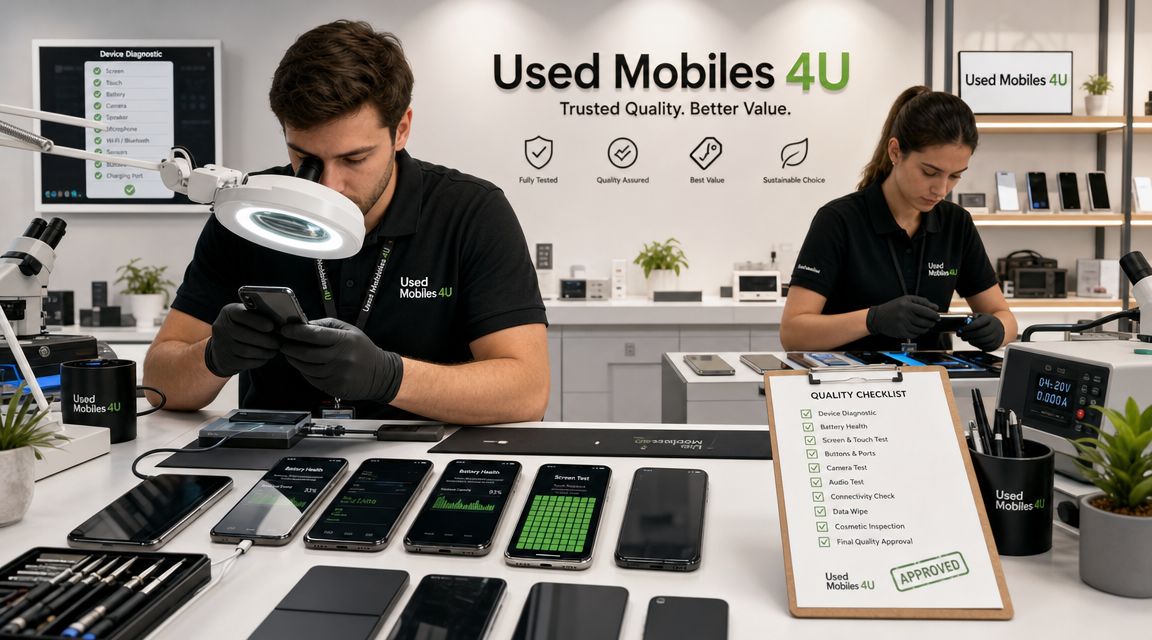
The riskiest cheap iPhone is the one that looks fine on the listing and reveals problems after setup. That’s why resale checks need to be stricter than a simple power-on and visual glance.
What usually affects value
Reputable UK sellers such as O2 and Giffgaff have helped establish a market norm by guaranteeing a minimum battery health of 80% on refurbished iPhones. At Used Mobiles 4U, we aim higher because that extra margin tends to mean fewer battery complaints and a better day-to-day experience.
In practical terms, the following checks matter most before any phone is ready for resale:
- Battery health verification. We prefer a stronger battery baseline because that’s what buyers feel first in daily use.
- Network and SIM status. The phone must be properly unlocked and usable, not tied up with avoidable activation issues.
- Charging and port condition. We check that cables seat correctly and that charging is stable, not intermittent.
- Face ID, cameras and sensors. These are common problem areas on older handsets and need function testing, not assumptions.
- Audio checks. Earpiece, loudspeaker and microphones all need to be clear enough for normal calls and media.
- Data wiping and account removal. A refurbished phone should arrive clean, reset and ready, without previous-user lock issues.
Why these checks matter more than a tiny saving
Private sellers can offer lower prices because they aren’t carrying the same testing, prep or after-sales risk. Sometimes that works out. Quite often, it means the buyer ends up troubleshooting battery drain, connection issues, weak speakers or hidden part history.
That’s why the cheapest sticker price isn’t always the cheapest ownership cost. If a device has been properly tested, clearly graded and backed up with support, you’re paying for fewer unknowns, not just the handset itself.
Bench-side view: Most buying mistakes happen when people judge a phone by model and storage alone, and ignore battery, testing and seller accountability.
Your Step-by-Step Checks on Arrival
Once your phone arrives, don’t spend the first hour just restoring apps and logging into everything. Check the hardware first. If there’s a problem, it’s far easier to sort it before you’ve fully moved in.
How to check your refurbished iPhone on day one
- Inspect the body before setup. Check the screen under light, look at the corners, camera rings and frame, and make sure the grade matches what you expected.
- Power on and confirm activation is clean. The iPhone should start normally and let you begin setup without signs of someone else’s account being left on the device.
- Check battery health. Go to Settings > Battery > Battery Health and read the maximum capacity. This gives you a quick sense of how the phone should perform in daily use.
- Test Face ID or Touch ID. Set it up straight away. If it won’t enrol properly, deal with that before transferring everything across.
- Open the Camera app and test every lens. Try rear camera, front camera, video, focus and flash. Look for blur, flicker or marks that stay in the same place.
- Plug in a charger and gently check the port fit. You want a secure connection, not a loose-feeling cable that cuts in and out.
- Make a call and record a voice note. This quickly reveals microphone, earpiece and loudspeaker problems that photos won’t show.
- Only then start your full transfer. Back up your old phone first, then move your apps, photos and messages once you know the new handset is behaving properly.
Two small checks people often forget
Test Wi-Fi and mobile signal in the places you actually use the phone. Also try rotation, brightness, vibration and the silent switch if the model has one. These are easy to miss during the excitement of setup.
If you like customising your phone once everything’s working, this Pretty Progress guide to iPhone widgets is a handy place to start after the practical checks are done.
Set the phone up in the boring way first. Excitement can wait until you know the camera, charging and battery are all right.
The cheapest refurbished iPhone UK choice is worth buying when it matches your use, has sensible battery health, and comes from a seller that’s done the checks properly. It suits parents buying a first iPhone, buyers needing a reliable backup, and anyone who wants Apple without paying for the newest model. If you want one that’s been tested, clearly graded and supported in the UK, have a look at Used Mobiles 4 U.
Meta description: Cheapest refurbished iPhone UK guide with practical advice on battery health, grades, warranty and which used iPhone models offer real value.
Written by James Waterston, 24 years in the mobile phone industry from customer service through to Sales Director of a global repair and recycling company. Now running Used Mobiles 4U for over 8 years.
LinkedIn: James Waterston
Looking for a refurbished phone?
Shop professionally tested refurbished iPhones and Samsung phones with 18 month warranty, 30 day returns and free UK delivery.
Browse Refurbished Phones