


Debunking Myths About Refurbished iPhones: What You Really Need to Know

19/06/2025

11 Mins
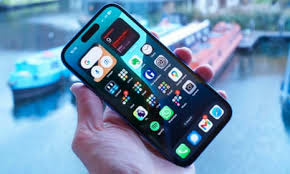
Introduction: Why Refurbished iPhones Deserve a Closer Look
In an era where smartphones have become essential tools for communication, work, entertainment, and even health monitoring, owning a reliable mobile device is no longer optional—it’s a necessity. But staying on the cutting edge of technology can be expensive, especially when it comes to flagship phones like Apple’s iPhone. Fortunately, there’s a smarter, more sustainable option gaining popularity: refurbished iPhones. Still, despite their benefits, many potential buyers hesitate due to myths and misunderstandings.
Refurbished iPhones offer the same premium Apple experience at significantly reduced costs. They’re also a more environmentally conscious choice. Yet, for some reason, the term “refurbished” often raises red flags for consumers who equate it with inferior quality, lack of warranty, or technical issues. These perceptions are mostly outdated or inaccurate. In reality, when purchased from reputable sellers, refurbished iPhones can be every bit as reliable and satisfying as new ones—if not more so.
This article aims to unpack the seven most common myths about refurbished iPhones and shed light on what consumers really need to know. By diving deep into the facts, you’ll see why so many savvy buyers are choosing refurbished over brand new—and why you might want to as well.
Myth #1: Refurbished Means Poor Quality
This is perhaps the most pervasive myth—and also the most unfounded. Many consumers hear the word “refurbished” and immediately imagine a scratched-up, malfunctioning phone that someone returned because it didn’t work properly. But that’s not what refurbished means, at least not when it’s done correctly by professionals.
Refurbishment involves more than a quick clean and reset. At reputable companies like Used Mobiles 4 U, every iPhone that comes in goes through an extensive multi-step process to ensure it meets strict performance and cosmetic standards. This includes full diagnostic tests, hardware checks, replacement of faulty parts (like batteries or screens), and thorough cleaning. Once the device is verified as fully functional, it’s reset to factory settings and prepared for resale.
In many cases, refurbished phones were returned for reasons unrelated to hardware failure. For example, someone might have changed their mind within a return window or exchanged a phone with the wrong specifications. These near-new devices are then inspected, certified, and re-sold—often at a fraction of their original price.
If you’re concerned about receiving a “worn out” phone, most refurbishers also grade their devices by appearance (e.g., “like new,” “good,” or “fair”) so you know exactly what you’re getting. In short, refurbished doesn’t mean low quality. It means quality you can count on—with significant savings.
Myth #2: Refurbished iPhones Have Short Lifespans
Another common misconception is that refurbished iPhones don’t last long. It’s easy to assume that because a device has already been used, its life expectancy must be shorter. However, this oversimplification ignores the quality control measures involved in refurbishment and the overall durability of iPhones themselves.
Apple designs its iPhones with longevity in mind. A well-maintained iPhone can easily last five to six years or longer, especially with Apple’s extended iOS support. Refurbished iPhones from trusted vendors are thoroughly tested and repaired to ensure optimal performance. Any components that show wear or potential for failure are replaced before the phone is sold. This often includes the battery, display, charging port, or logic board components.
Moreover, refurbished phones typically come with warranties—something you don’t get when buying a used phone from a private seller. At Used Mobiles 4 U, for example, each refurbished iPhone includes a 18 Month Warranty. That means if something does go wrong, you’re covered. This level of support adds significant value and peace of mind.
Also, let’s not forget that most consumers upgrade their phones long before their devices become obsolete. If you’re buying a refurbished iPhone from a recent generation, such as the iPhone 12 or 13, it’s likely to remain functional and relevant for years to come, especially for average users who don’t need the very latest tech.
Myth 3: Refurbished iPhones Lack Warranty
One of the biggest deterrents for potential buyers of refurbished phones is the misconception that these devices do not come with a warranty. This belief may have originated from individuals buying second-hand phones through private sellers or unverified marketplaces, where warranties are often not part of the deal. However, the world of professionally refurbished devices tells a very different story.
Trusted refurbishers, like Used Mobiles 4 U, not only test and recondition every iPhone but also back them with comprehensive warranty coverage—typically between 6 and 12 months. This warranty period is designed to offer consumers the same peace of mind they would expect when purchasing a brand-new iPhone. Coverage usually includes hardware malfunctions, touchscreen responsiveness issues, battery faults, charging port problems, and even speaker defects, depending on the terms.
In many ways, the warranty on a refurbished iPhone mimics that of a new phone, providing assurance that any manufacturing or refurbishment-related faults will be corrected free of charge. Some sellers even offer extended warranties or the option to purchase additional protection, creating even more security for buyers.
What sets professional refurbishment apart from a casual used-phone sale is not just the quality control, but the accountability. Reputable sellers often include return policies, customer support lines, and service guarantees that align with standard retail expectations. For instance, at Used Mobiles 4 U, you’ll also get a 14-day return policy in case the device doesn’t meet your expectations.
Ultimately, buying a refurbished iPhone from a verified seller is not a gamble—it’s a smart decision backed by support and service. Warranties ensure that you’re not just getting a great price, but also dependable post-purchase care.
Myth 4: Refurbished iPhones Are Outdated Models
There’s a widely held belief that refurbished phones are synonymous with outdated technology—older iPhones that have long been replaced by newer, more capable models. However, this is no longer true in today’s fast-evolving refurbishment market. In fact, many refurbished phones are current or only one generation behind, and sometimes even devices returned within weeks of their release.
As technology adoption cycles shorten, people tend to upgrade their devices more frequently—often trading in phones that are still in excellent condition. This creates a healthy inventory of recent-model iPhones entering the refurbished market. Retailers such as Used Mobiles 4 U, Wireless Source, and others frequently offer refurbished models from the iPhone 11 series all the way to the iPhone 13 and 14—phones that are still actively supported by Apple and compatible with the latest iOS versions.
These models feature many of the most in-demand technologies: Face ID, edge-to-edge OLED screens, A15 Bionic processors, dual or triple-camera setups, MagSafe compatibility, and 5G support. By choosing a refurbished model from a recent generation, buyers can enjoy most of the same features found in a brand-new iPhone, without paying a premium price.
Moreover, even slightly older models—like the iPhone XR, XS, or 11—still offer robust performance and modern aesthetics. They are more than sufficient for most daily use cases including social media, photography, streaming, and multitasking. For users who don’t need the very latest release, refurbished models strike the perfect balance between cost and capability.
In reality, the refurbished market is far from outdated. It’s a smart, accessible entry point for premium technology. Whether you’re buying your first iPhone, upgrading on a budget, or gifting a device to a family member, refurbished iPhones allow you to step into Apple’s ecosystem affordably—with modern features intact.
Myth 5: Refurbished iPhones Have Poor Battery Life
Battery life is one of the most crucial aspects of smartphone performance. After all, what good is a high-end device if it dies before lunch? It’s understandable that buyers worry about battery degradation in refurbished phones, since all rechargeable lithium-ion batteries naturally lose capacity over time. But the fear that refurbished iPhones always have poor battery life is largely unfounded—especially when buying from a reputable seller.
Trusted refurbishers, such as Revibe, Officially Refurbished, and The Big Phone Store, make battery health a priority. Before any device is resold, it undergoes comprehensive diagnostics, including a check of the battery’s maximum capacity and overall charging behavior. If the battery health is below a certain threshold (typically 80% of the original capacity), it is replaced with a new one. This ensures that refurbished phones offer battery performance that rivals—or even matches—a new device.
Additionally, Apple itself enforces strict standards on what qualifies as “refurbished” under its own programs, and most third-party refurbishers follow a similar set of practices. It’s not uncommon for refurbished phones to include new OEM (Original Equipment Manufacturer) batteries or equivalent high-quality replacements, which ensures not just better longevity but also safety and performance.
Another point to consider is that battery optimization has improved significantly with newer iOS versions. Features like Low Power Mode, optimized battery charging, and background activity controls help extend daily battery life, even on older models.
Lastly, many refurbishers clearly advertise the battery health percentage or whether the battery has been replaced. Transparent sellers empower consumers to make informed choices, so you’re not buying blindly.
In summary, battery life should not be a deterrent when buying refurbished. With proper reconditioning and transparent standards, refurbished iPhones can hold a charge reliably throughout the day—just like new phones.
Myth 6: Refurbished iPhones Are Not Secure
Security is a top concern for anyone purchasing a smartphone—refurbished or new. Understandably, some consumers worry that a pre-owned device might still hold residual data from the previous owner, carry malware, or even be reported lost or stolen. But when you buy from a trusted refurbishment source, these risks are virtually nonexistent.
Professional refurbishers, such as The iOutlet and Grade Mobile, follow strict protocols to ensure data security and device legitimacy. Each refurbished iPhone undergoes a complete data sanitation process. This includes a full factory reset, secure data wipe, and reinstallation of the latest iOS version. The process adheres to industry standards for data privacy and prevents any lingering personal data from previous users.
In addition to data cleaning, refurbishers also run IMEI (International Mobile Equipment Identity) checks. This ensures the phone has not been reported lost, stolen, or blacklisted. Devices that fail this check are immediately rejected from resale. Buyers can rest assured that what they receive is a fully authenticated Apple product that is legally safe to use and register.
Moreover, Apple’s iPhones are inherently secure devices, with features like Face ID, end-to-end iMessage encryption, and Find My iPhone. As long as the iPhone has been properly reset and restored, all these security features remain intact—providing the same robust level of protection as a brand-new device.
Refurbished sellers often provide proof of testing and certification, which further enhances trust. You also have the option to reset your refurbished device again upon receipt to reinforce peace of mind. In short, concerns about refurbished iPhones being insecure are largely unfounded when you’re buying from a reputable source. They’re just as secure, private, and trustworthy as new devices—often at half the cost.
Myth 7: Refurbished iPhones Are Not Cost-Effective
Some consumers hesitate to consider refurbished phones because they assume the savings aren’t worth the risk or possible trade-offs. However, one of the most compelling reasons to choose a refurbished iPhone is the significant financial savings—often 20% to 50% less than the retail price of a new device.
Refurbished iPhones provide access to the same Apple experience, hardware capabilities, and iOS ecosystem as brand-new models, but without the high upfront investment. For example, buying a refurbished iPhone 13 might cost hundreds of pounds less than buying it sealed from an Apple Store—while still performing just as well. These savings can be especially impactful for students, families, and budget-conscious professionals who want premium quality without breaking the bank.
Retailers such as Officially Refurbished often bundle in perks like a 18 Month Warranty, a 14-day return policy, and free accessories, making the deal even more attractive. This value-added approach gives buyers more than just a cheaper phone—it offers a reliable product with after-sales support, which you’d rarely get from informal used phone transactions.
Additionally, the refurbished market opens the door for buyers to upgrade their tech more frequently. With savings built into each purchase, customers can reinvest in slightly newer models every couple of years without suffering from steep depreciation losses or major expenses.
Cost-effectiveness also extends beyond just price. Buying refurbished helps consumers avoid unnecessary mobile contracts, reduce interest on financing plans, and retain better control over their spending. With phones now costing as much as some laptops, opting for a refurbished model is a financially sound strategy—especially in economically uncertain times.
In essence, refurbished iPhones deliver outstanding value for money. They allow you to own cutting-edge technology at a fraction of the cost, without sacrificing quality, security, or peace of mind.
Myth 8: Refurbished iPhones Are Not Environmentally Friendly
In an age where sustainability and eco-consciousness are becoming central to consumer decision-making, the environmental impact of electronic devices is under increasing scrutiny. Many believe that only brand-new devices are safe and efficient, but this couldn’t be further from the truth. In fact, choosing a refurbished iPhone is one of the most environmentally responsible tech decisions you can make.
When you buy a refurbished iPhone, you’re giving a second life to a fully functional device that might otherwise end up as e-waste. According to environmental research, over 50 million metric tons of electronic waste are generated globally each year. Much of this comes from discarded smartphones. By extending the lifecycle of existing devices, refurbished products help reduce the demand for raw materials like lithium, cobalt, and rare earth metals—resources that require environmentally harmful mining processes.
Retailers such as iDeviceCentral and others actively promote refurbishment not just as a business model, but as a climate-positive practice. Each device that is reused means less production energy is expended, fewer toxic chemicals are released, and a smaller carbon footprint is left behind. It’s not just about the phone—it’s about the global supply chain that supports it.
Moreover, Apple itself has embraced the refurbishment model, with a strong push toward carbon neutrality and the use of recycled components in their manufacturing process. Buying refurbished aligns with this sustainable ethos, allowing consumers to support circular economy practices without compromising on performance.
In short, refurbished iPhones are inherently more environmentally friendly than new ones. They maximize the utility of existing technology, conserve natural resources, and cut down on the e-waste crisis plaguing our planet. For environmentally aware consumers, choosing refurbished is not just a bargain—it’s a conscious and impactful choice for a cleaner future.
Conclusion: Why Refurbished iPhones Are a Smart, Modern Choice
As we’ve explored, the myths surrounding refurbished iPhones—from security to battery life, cost-effectiveness to environmental concerns—are largely based on outdated assumptions or misinformation. In today’s marketplace, especially when buying from reliable sources like Used Mobiles 4 U, The iOutlet, or Officially Refurbished, refurbished devices are a smart, viable alternative to brand-new iPhones.
You’re not just saving money; you’re getting access to the same Apple technology and user experience with added sustainability benefits. The majority of refurbished phones come from customers who upgraded early or returned devices within short timeframes, meaning you’re often buying something barely used—yet thoroughly tested, cleaned, and certified. You’ll enjoy warranties, return options, and technical support—something rarely available with second-hand phones from unknown sellers.
Additionally, with Apple’s strong support for older devices in iOS updates, refurbished iPhones from even a couple of years ago are still perfectly suitable for today’s demands—whether you’re using them for productivity, streaming, photography, or gaming.
Most importantly, choosing refurbished also makes a real-world environmental impact. Every phone that gets reused is a small step toward reducing e-waste and conserving valuable resources. As consumers become more conscious of their ecological footprint, refurbished devices offer a simple, actionable way to shop smarter and more sustainably.
So whether you’re a first-time iPhone user, upgrading from an older model, or seeking a dependable backup phone, refurbished iPhones provide performance, reliability, and ethics—all in one purchase.
Explore our collection of expertly refurbished iPhones today and experience the perfect balance between performance, price, and peace of mind.
Looking for a refurbished phone?
Shop professionally tested refurbished iPhones and Samsung phones with 18 month warranty, 30 day returns and free UK delivery.
Browse Refurbished Phones