


Fault Code P0420 Explained: A UK Driver’s Guide

23/07/2026

7 Mins
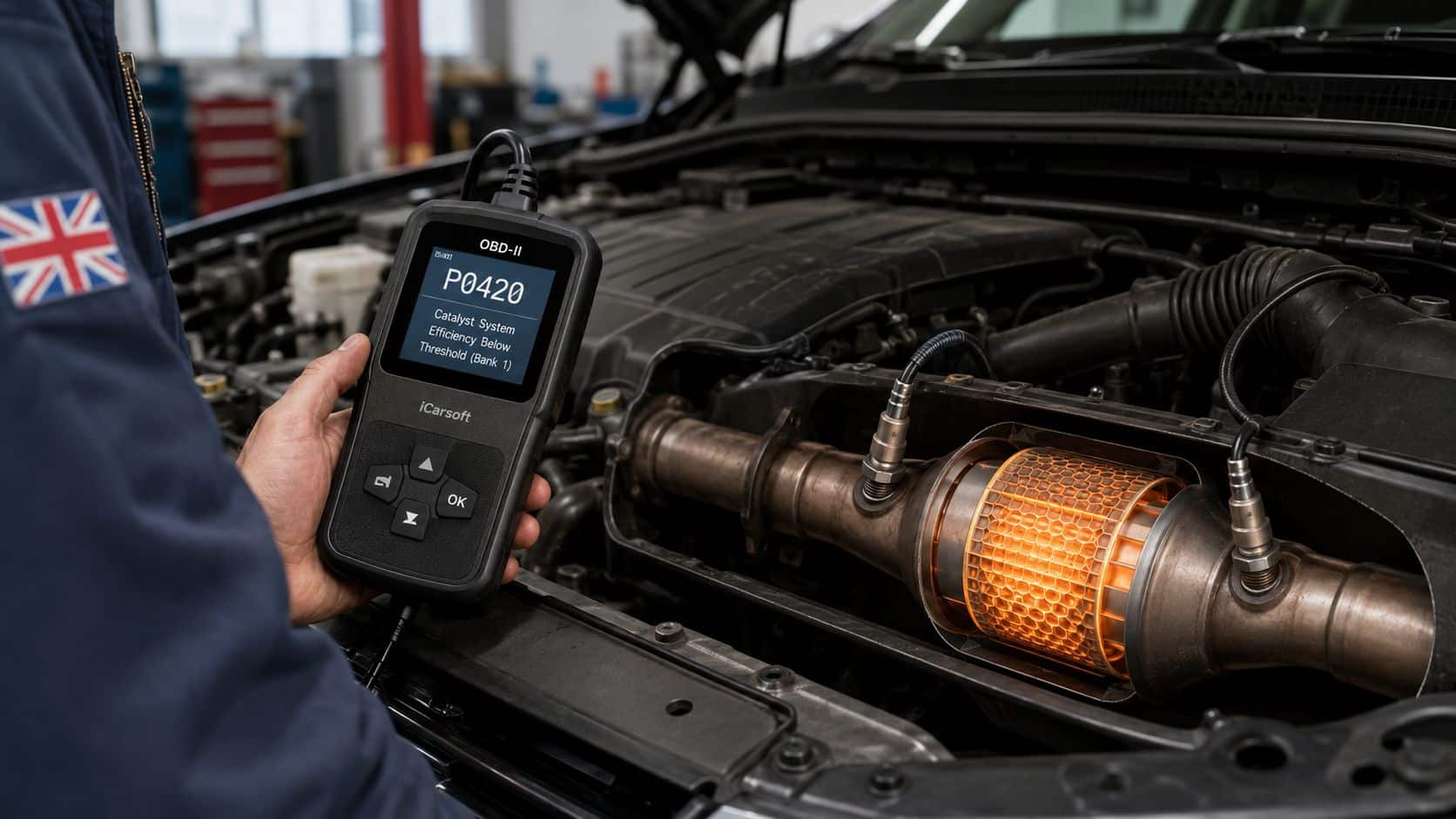
A fault code P0420 usually means the car's catalyst efficiency has dropped below what the engine computer expects. It does not automatically mean you need a new catalytic converter, and that's where a lot of people waste money. The sensible move is to check the cheaper causes first, because an exhaust leak, sensor fault, or engine running issue can trigger the same code.
The Short Version
A P0420 code is the sort of fault that can tempt a driver into buying a catalytic converter too early. The wiser first move is to check what is upsetting the system, because a cheaper fault often sits behind it.
- What it means: P0420 points to a catalyst efficiency fault on Bank 1, so the car thinks the catalytic converter is not cleaning exhaust gases well enough.
- Common trap: Do not go straight to replacing the converter. The same code can come from a bad oxygen sensor, an exhaust leak, or an engine fault that is distorting the readings.
- What to check first: Look for other codes, especially misfire or fuelling faults, then inspect for leaks before you spend money on hard parts.
- Why it matters: On UK cars, a stored P0420 can turn into an MOT problem if the fault is present during inspection, especially on vehicles checked through the OBD system for emissions. The DVSA uses OBD-based emissions checks for cars first used from 1 August 2012 from 1 January 2018 onward.
- Best first move: Confirm the fault properly before buying parts, because the cheapest fix is often the correct one.
Practical rule: if the engine has another fault alongside P0420, fix that first. A catalyst rarely fails on its own.
What P0420 Actually Means for Your Car
Think of the catalytic converter as a filter in the exhaust, and the oxygen sensors as the inspectors watching how well that filter is doing its job. The engine computer looks at how the upstream and downstream oxygen sensors behave, then decides whether the catalyst is storing and cleaning exhaust gases properly. If the signals are too similar, it flags fault code P0420.
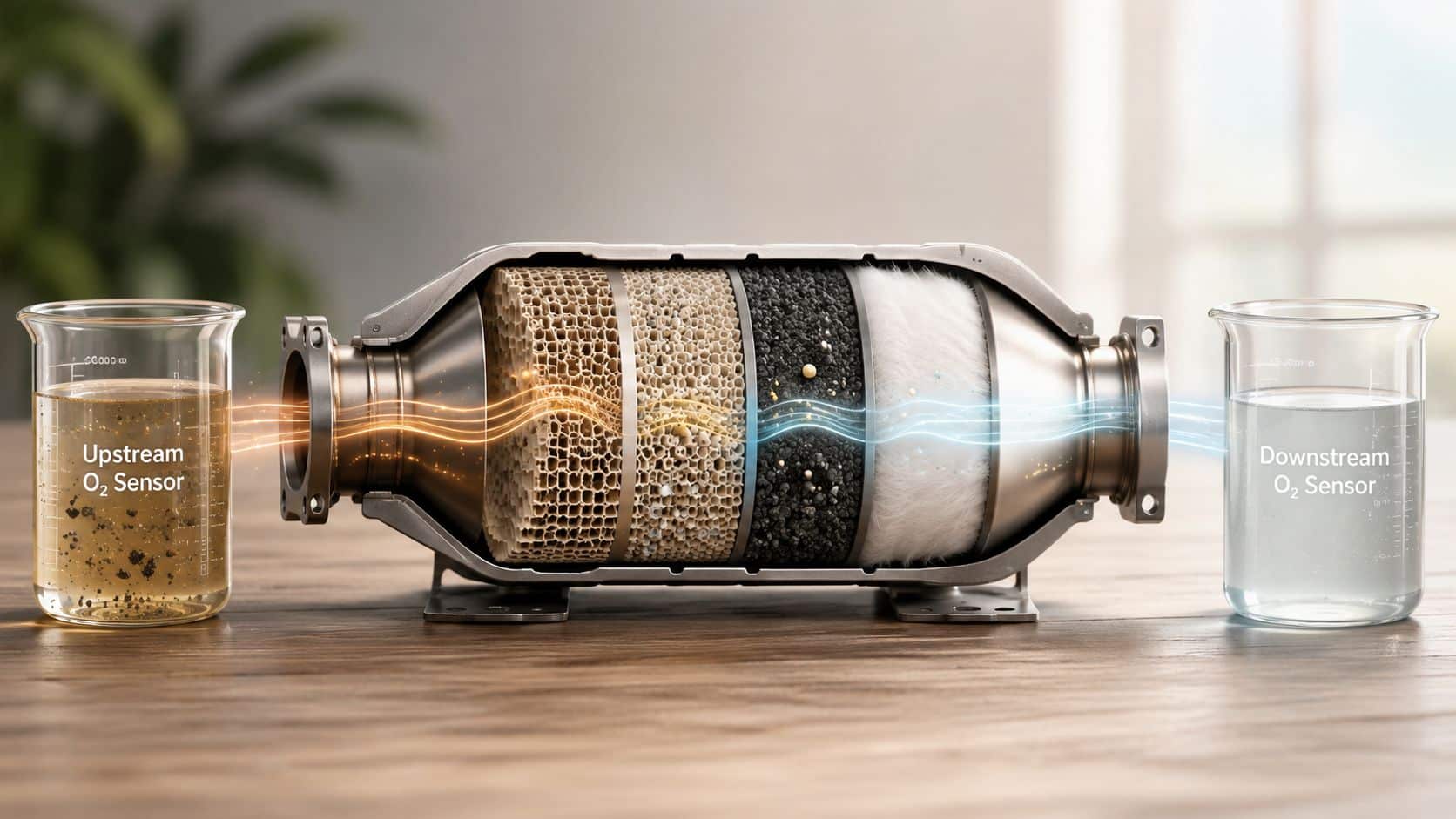
Bank 1 just means the side of the engine where cylinder one sits. On a four-cylinder engine, that's usually straightforward. On a V-engine, it tells the technician which bank the fault relates to, which matters because the other side may still be fine.
The important point is that P0420 does not prove the converter has failed (Edmunds explanation of P0420). It tells you the computer has judged the catalyst's efficiency to be below threshold on Bank 1. In real workshop terms, that could mean a tired converter, but it could just as easily mean the sensors are lying, the exhaust has a leak, or the engine's running too rich or misfiring.
A healthy catalyst changes the exhaust chemistry enough that the downstream sensor should react more slowly than the front sensor. That delay is the clue. When the rear sensor starts acting too much like the front one, the ECU assumes the converter isn't doing enough work.
Why that matters before you buy parts
If you replace the converter first, you're betting on the most expensive part without proving it. That's bad diagnosis, and it's how people end up paying twice. The smarter approach is to treat P0420 as a system fault, not a one-part fault.
Common Causes of a P0420 Fault Code
A catalyst can be worn out, but it's rarely the first thing I'd blame without evidence. The code often comes from something that's upsetting the exhaust readings rather than destroying the converter itself.
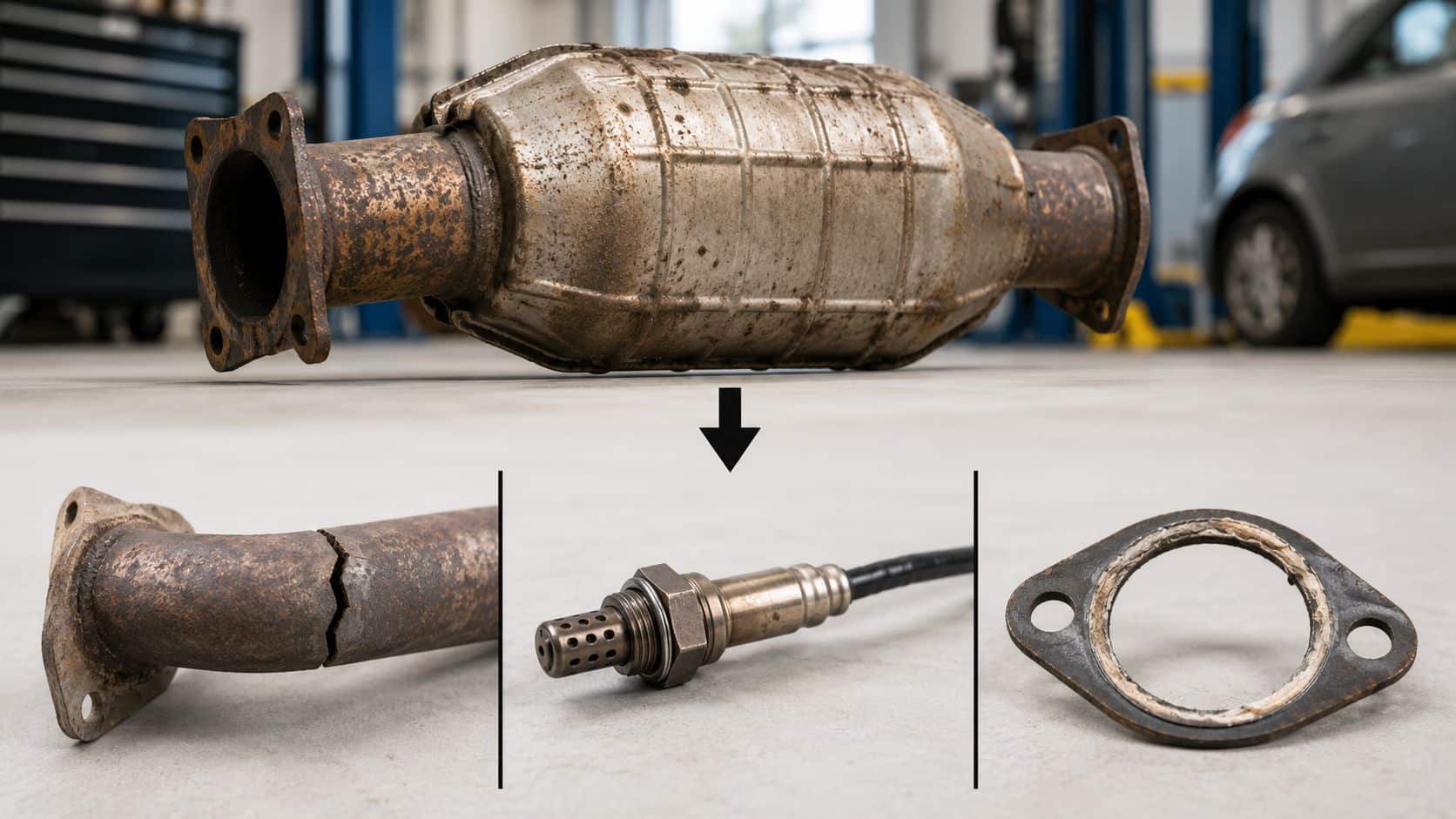
The usual suspects
Catalytic converter degradation is the obvious one. Over time, the converter can lose its ability to store oxygen and clean exhaust gases properly, so the ECU sees poor efficiency.
Oxygen sensor faults are next on the list. If the rear sensor is lazy, biased, or electrically faulty, the computer can think the converter is underperforming even when it isn't.
Exhaust leaks are another big one. A leak before or near the catalyst can pull in extra oxygen and distort the sensor readings, which makes the converter look worse than it is.
Misfires and rich running can damage the converter from the inside. Unburnt fuel overheats or contaminates the catalyst, and then the downstream sensor can start mirroring the upstream sensor. That's the exact chain that triggers P0420 (Identifix on misfires, rich fuel, and catalyst contamination).
Fueling and engine-management issues matter too. If the engine is running badly, the catalyst becomes the victim rather than the cause.
For sensor-specific reading, T1A Auto's comprehensive O2 sensor guide is useful because it helps separate a true sensor fault from a catalyst problem without guessing.
A good technician doesn't ask, “Which part is most expensive?” They ask, “Which fault would explain the data best?”
What usually gets missed
The mistake I see most often is replacing the converter before checking the engine's running condition. If there's a misfire, leak, or fuelling issue, the new catalyst can fail again. That's why diagnosis order matters more than parts shopping.
How to Diagnose Fault Code P0420 Quick Steps
Start with a proper scan tool, not just a basic code reader if you can help it. You want stored codes, pending codes, and live data. If there are misfire, fuel trim, or sensor heater faults present, deal with those first because they may be the root cause.
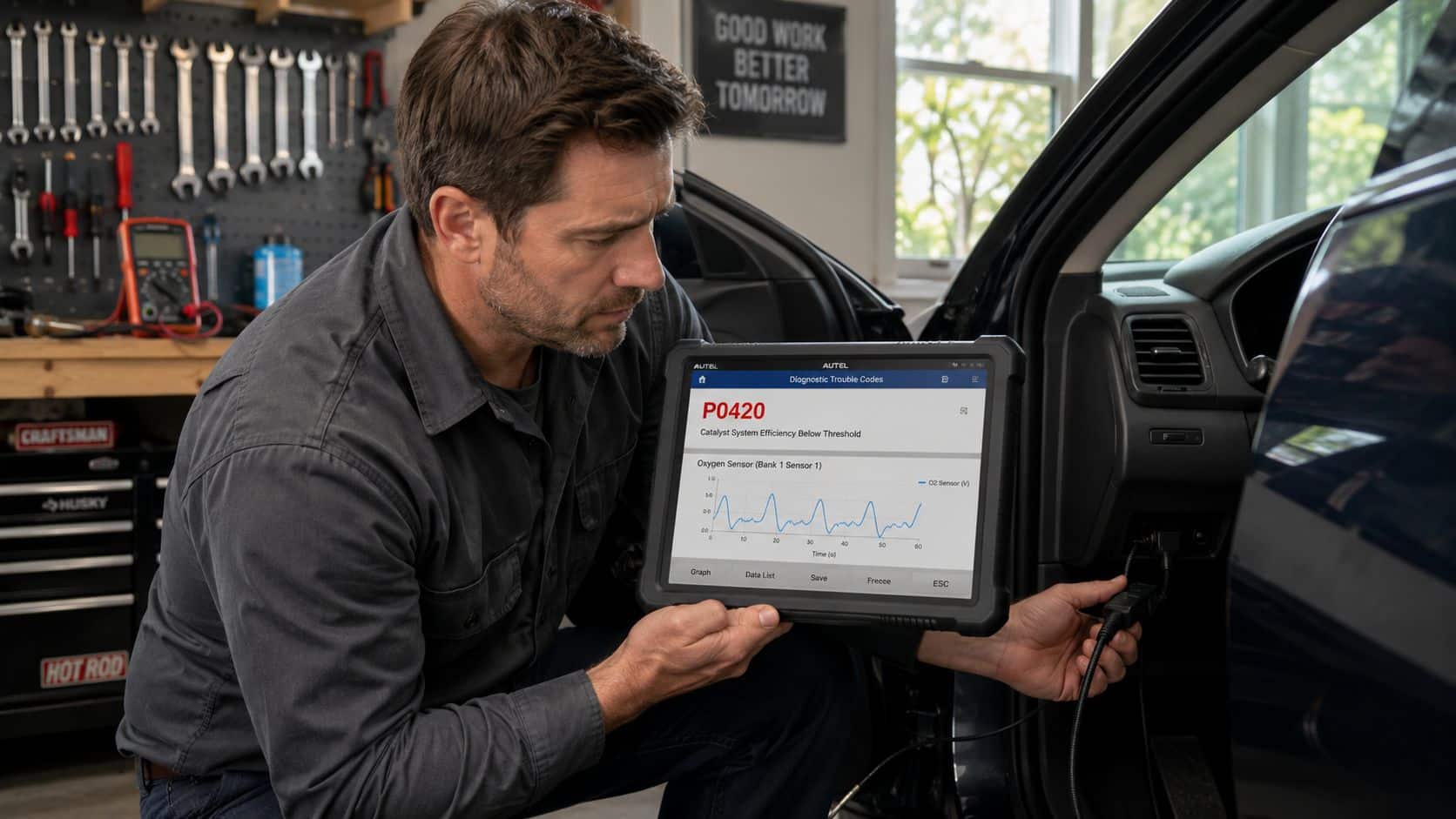
A sensible order to follow
- Read all codes first. Don't clear anything until you've seen the full picture. Another fault may point directly to the cause.
- Inspect the exhaust for leaks. Look around the manifold, joints, flexi section, and sensor bungs. A small leak can create a big clue problem.
- Watch live oxygen sensor data. The rear sensor should be much calmer than the front one if the catalyst is healthy.
- Check the converter when fully warm. A cold catalyst won't tell you much, so heat matters.
- Compare sensor response on a forced rich-to-lean change. A rear sensor delay of two seconds or more usually suggests the converter is working properly, while a faster response points towards low efficiency (Walker Exhaust diagnostic timing guidance).
- Check temperatures if you've got the kit. Exit temperature should be higher than inlet temperature on a working converter.
If you want a simple primer on what the scanner is showing, understanding check engine light codes helps make the basics less confusing.
What the pattern usually tells you
If the rear sensor mirrors the front sensor, think catalyst efficiency or a leak upstream of the rear sensor. If the rear sensor behaves properly but the code stays, I'd look harder at wiring, sensor quality, or an intermittent running fault. If there are misfire or fuelling codes too, fix those before touching the catalyst.
Repair Costs and Deciding Between DIY and a Garage
This is the point where people can save real money, or waste it. Reading the code and doing a visual inspection are fair DIY jobs. Swapping an accessible oxygen sensor can also be realistic if you've got the right tools and room to work.
The line gets crossed when you're guessing at a converter replacement. That's not a casual driveway job, and it's not a smart gamble if the diagnosis isn't solid. A converter replacement can be expensive, so you want evidence before committing to it.
What I'd treat as DIY and what I wouldn't
Safe enough for DIY:
- scanning the fault
- checking live data
- looking for obvious exhaust damage
- verifying connector and wiring condition
- replacing a clearly failed, accessible sensor if you know it's the problem
Best left to a garage:
- welding or cutting exhaust sections
- deep diagnosis with smoke testing or thermal checks
- converter replacement without confirming the root cause
- anything involving multiple faults, misfires, or fuelling issues
A common example is a driver who fits a rear oxygen sensor because the code points to catalyst efficiency. The light goes out for a bit, then returns because the actual issue was an exhaust leak or a rich-running engine. That's a false economy, and it's why proper diagnosis usually costs less than repeated parts swapping.
If the car has rough running, misfires, or a strong fuel smell, don't start with the catalyst. Start with the engine.
P0420 and Your UK MOT Test
For UK drivers, P0420 is a fault worth sorting early, because it can turn into an MOT problem as well as a repair bill. A stored code can mean the car is not passing the emissions check cleanly, and on newer vehicles the MOT process relies more heavily on the car's own onboard diagnostics. For cars first used from 1 August 2012, the OBD-based emissions check has applied since 1 January 2018.
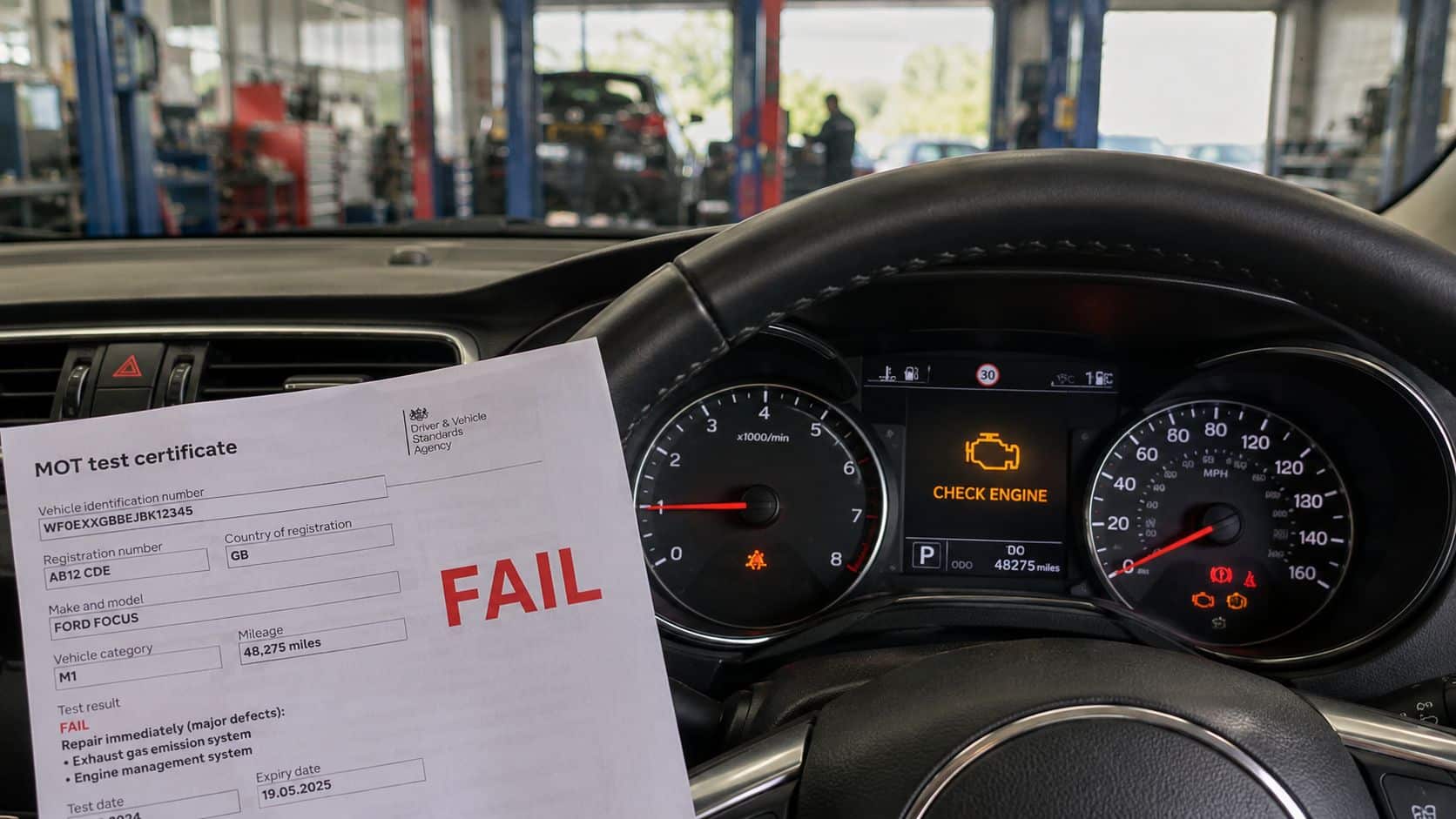
If the engine management light is on at test time, that is already a concern. Even if someone clears the code just before the test, the underlying catalyst fault can still appear in the emissions check or return soon after. Clearing the warning without fixing the cause only hides the problem for a short time.
That is why I would treat P0420 as a diagnosis problem first and a compliance problem second. Fix the root cause properly, and you improve drivability as well as the chances of a clean MOT result. Leave it alone, and you can end up paying for the wrong repair while still facing a failure.
A good workshop should confirm whether the catalyst, sensor, leak, or engine condition is causing the fault before giving a quote. That is the difference between a proper repair and an expensive guess.
If your car is showing P0420, get it checked before you buy a catalyst. Careful diagnosis can save you from replacing a part that is still serviceable, and that matters even more on a UK car where emissions testing and warning lights can turn a small fault into a costly one.
Looking for a refurbished phone?
Shop professionally tested refurbished iPhones and Samsung phones with 18 month warranty, 30 day returns and free UK delivery.
Browse Refurbished Phones