


Grade a vs Grade B Refurbished iPhones: A Practical Guide

30/05/2026

11 Mins
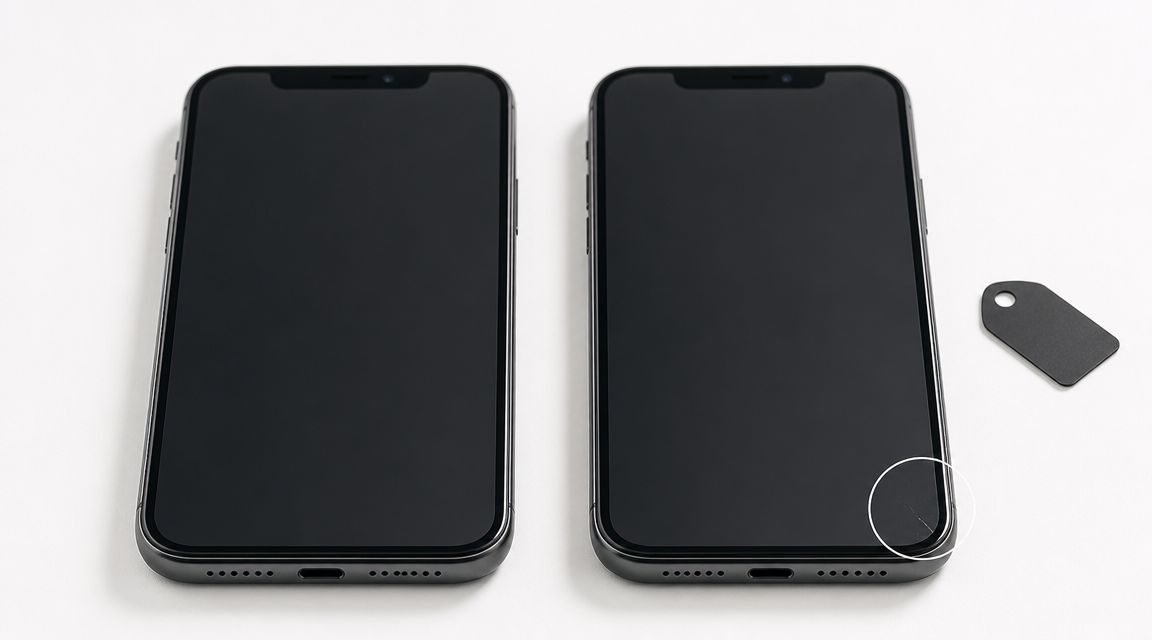
If you’re comparing Grade A vs Grade B refurbished iPhones, the real difference usually isn’t speed, camera quality or reliability. It’s looks. Grade A is the cleaner-looking phone. Grade B is normally the smarter buy if you care more about value than a couple of marks.
That surprises some people, but it’s the truth. In UK refurbished grading, Grade A is typically near-mint and Grade B is still fully functional with more visible wear, so for most buyers the decision is really about how much cosmetic perfection matters day to day.
Grade A vs Grade B Refurbished iPhones What Is the Real Difference
A Grade A refurbished iPhone is the one that looks closest to new. A Grade B refurbished iPhone is still properly working, but it will show more obvious signs of previous use.
That’s the short answer. If you’re browsing UsedMobiles4U iPhones, the choice isn’t usually about getting a “better” phone internally. It’s about whether you want a cleaner finish in your hand or a better deal in your pocket.
Across the UK refurbished market, grading has become a standard way to describe cosmetic condition. Grade A sits at the top, Grade B is the next tier down, and both can still be fully tested and functional. That’s why the same iPhone model can carry different prices without being a different phone in any practical sense.
The Short Version A Quick Comparison
- Grade A means cleaner cosmetics. Think near-mint, excellent, and very little visible wear.
- Grade B means honest wear. Expect scratches, scuffs or small marks from normal previous use.
- Performance shouldn’t be the deciding factor. The practical difference between A and B is usually cosmetic rather than core functionality.
- Battery matters more than grade. Reputable refurbishers usually work to a battery health benchmark of at least 80%, and some premium Grade A units may reach 90%.
- Grade B is usually the better-value buy. If the phone is going straight into a case, paying extra for a prettier housing often isn’t money well spent.
- Choose Grade A if appearance will bother you. If you’ll notice every mark, buy the cleaner one and be done with it.
- Choose Grade B if you’re practical. Same model, same day-to-day job, less concern about tiny cosmetic flaws.
Practical verdict: Most people don’t need Grade A. They just think they do until the phone lives in a case for the next two years.
What Our Grades Actually Mean The Visual Difference

When people ask about grade A vs grade B refurbished iPhones, they’re usually asking one thing. “What will I actually see when I take it out of the box?” That’s the right question.
In UK refurbished-phone grading, Grade A iPhones are typically described as near-mint with little to no visible wear, while Grade B units are still fully functional but usually show cosmetic marks such as scratches or scuffs. The practical difference is cosmetic rather than core functionality, as described in this explanation of Grade A vs Grade B refurbished phones.
What Grade A usually looks like
Grade A is the phone you buy when you want it to feel tidy the moment you pick it up. The frame should look smart, the back should be clean, and any signs of use should be minimal enough that most people won’t notice them in normal lighting.
On an iPhone, that normally means the obvious areas are clean. The corners look presentable. The rear housing doesn’t show much previous life. The screen shouldn’t distract you with marks the second it lights up.
What Grade B usually looks like
Grade B is where you start seeing the normal life of the phone. Not abuse. Not cracked glass. Just the kind of wear you’d expect from being used properly.
- Screen marks: Light scratches can show when the display is off, especially under bright light.
- Frame wear: Small scuffs on the edges or corners are common.
- Back housing: You may see rub marks, faint scratches or general signs of handling.
- Overall impression: It won’t look new, but it should still look presentable and function as it should.
We’d rather be upfront and call a phone Grade B with minor marks than call it Grade A and have a customer be disappointed.
That’s the part buyers should focus on. A Grade B iPhone often looks more “used” on close inspection, but once it’s in a case and switched on, most of those concerns fade quickly. If you want full transparency on how devices are described, it’s worth checking the seller’s grading wording and return terms before ordering.
Beyond Cosmetics What Else Is Different
A lot of buyers assume Grade A must also mean a healthier battery, better internals, or a lower chance of faults. That’s not the right way to look at it. In the UK refurbished-phone market, grade A versus grade B is primarily a cosmetic distinction, and reputable refurbishers usually require devices to be fully operational while meeting a battery-health benchmark of at least 80%.
Some premium Grade A units may reach 90% battery capacity, but the bigger point is this. Grade alone doesn’t tell you everything useful about daily use. Battery health, warranty, return protection and proper testing matter more than whether the frame has a couple of scuffs.
What shouldn’t change between grades
If a refurbisher is doing the job properly, these things should be held to the same standard whether the iPhone is Grade A or Grade B.
- Core functionality: It should power on, charge, connect, and do the normal job of an iPhone without drama.
- Testing: Cameras, speakers, buttons, biometric features and charging all need checking.
- Data wiping: Previous owner data should be securely removed before resale.
- Network use: A properly prepared resale device should be ready for normal UK use.
What you should ask about instead
If you’re stuck between grades, ask the questions that actually affect ownership. What’s the battery health? What’s the warranty? What’s the returns process if the handset isn’t right for you? Those answers tell you more than the letter grade does.
If you want to understand what battery percentages mean in real daily use, this refurbished iPhone battery life guide is worth reading before you buy.
Don’t pay a premium just because a phone photographs better on a white background. Pay for battery confidence, proper testing and backup if something goes wrong.
Our Experience Refurbishing iPhones at Used Mobiles 4U

One thing we regularly notice is that a phone can fall into Grade B for very ordinary reasons. A careful owner can still leave faint marks on the frame just from taking the phone in and out of a pocket, setting it on hard surfaces, or using a case that traps grit around the edges.
That’s why grading needs a bit of common sense. Refurbished grading became a standard shorthand in the secondary-device market to communicate cosmetic condition. Grade A is positioned as “like new”, while Grade B is the value option with minor wear, even when both are fully tested and functional, as outlined in this guide to refurbished iPhone grading.
What our technicians often see
Battery wear is one of the first things we pay attention to because it affects the owner’s day more than cosmetic marks ever will. A tidy-looking phone with a tired battery isn’t a better buy than a lightly marked one with stronger battery health.
Our technicians often see the same pattern with iPhones from the iPhone 11, iPhone 12 and iPhone 13 range. The cosmetic wear tends to show on corners, around the charging area, and along polished edges first. The actual performance issues, when they appear, are usually separate from grade and have more to do with battery condition, charging-port contamination, previous poor-quality repairs, or face and fingerprint security features needing a proper check.
- Screens: Some devices come in with obvious wear but work perfectly. Others need a replacement screen to meet resale standard.
- Batteries: We often weigh battery condition more heavily than minor casing marks when deciding if a phone is a sensible retail unit.
- Frames and backs: Tiny edge dents can move a phone into Grade B even when everything else is excellent.
- Cameras and charging: These are common bench checks because buyers rely on them every day and faults show up quickly if they aren’t tested properly.
How a phone ends up as Grade A or Grade B
A phone doesn’t become Grade A just because it’s had parts fitted, and it doesn’t become Grade B because it’s mechanically suspect. We sometimes see an iPhone with a fresh screen and very clean housing that presents beautifully. We also see untouched original devices with clear signs of use that stay in Grade B because that’s the honest description.
A common example we see is a handset traded in by someone who upgraded early and kept the old phone in a case from day one. Those often clean up very well. Another common example is a perfectly good iPhone that lived in a handbag or pocket with keys. It works exactly as it should, but the frame tells its story.
Where these phones come from matters too. Trade-ins and resale stock need proper intake checks and secure handling from the start, which is why the journey matters as much as the final grade. If you’re curious about that side of it, have a look at the Used Mobiles 4U Refurbishment Process.
A scratched corner doesn’t worry a good technician. Poor battery condition, inconsistent charging or failed biometrics do.
Who Should Buy Grade A vs Grade B iPhones

This is where the decision gets simple. A key question for UK buyers is whether Grade A is worth the premium when grading is mainly cosmetic and both grades can go through the same repairs and testing. That makes the value difference more about appearance than reliability, as discussed in this piece on what refurbished phone grade is best.
Choose Grade A if
- You hate visible marks. If a scuff on the frame will annoy you every time you pick the phone up, save yourself the irritation and buy the cleaner one.
- The phone won’t live in a case. If you like using your iPhone bare, cosmetics matter more.
- It’s a gift. A tidier handset simply makes a better first impression.
- You want the closest thing to new without buying new. That’s what Grade A is really for.
Choose Grade B if
- You care about value first. This is the better option for most sensible buyers.
- You’ll use a case and screen protector. Once it’s protected, many minor marks become irrelevant.
- You want the same model and same daily performance for less money. That’s the whole appeal.
- You’re buying for a teenager, second phone, work handset or backup phone. Practical use matters more than showroom looks.
A common example we see is a parent buying an iPhone for their teenager. They know the phone is going straight into a case, probably with a screen protector, and it’s going to school rather than a boardroom. In that situation, Grade B makes far more sense than paying extra for a cleaner edge finish.
My advice is straightforward. If you’re buying for yourself and you’re practical, Grade B is usually the shrewder decision. Put the saved budget towards more storage, a newer model, or just keep the money in your bank account.
What we’d recommend: Buy Grade A for vanity. Buy Grade B for value. Most people are happier with Grade B once the phone is set up and in a case.
What We Check Before Every Sale
What We Check Before Resale

Grade should never be confused with standards. A Grade B phone still needs the same non-negotiable checks as a Grade A phone before it goes anywhere near a customer.
Our benchmark is simple. If the device isn’t right functionally, it isn’t ready for sale, no matter how clean it looks on the outside. You can see the full process in how we check refurbished devices.
- Battery condition: We check that the battery is fit for real-world use, not just that the phone turns on.
- Screen and touch response: Dead spots, lifting screens and poor replacement parts need spotting before resale.
- Cameras: Front and rear cameras must focus properly and open without fault.
- Charging: Port fit, cable connection and stable charging all matter.
- Buttons and switches: Power, volume, mute and home functions need to respond properly where applicable.
- Audio: Speakers and microphones are checked because muffled calls and weak sound are common customer frustrations.
- Security features: Face ID or Touch ID must be tested where the model supports them.
- Connectivity: Wi-Fi, mobile signal and Bluetooth need to behave normally.
- Data wiping: Previous user data must be securely removed.
- SIM-free readiness: Phones should be ready for normal use without awkward network surprises.
A Final Thought From Our Team
If you’re still weighing up grade A vs grade B refurbished iPhones, don’t overcomplicate it. Grade A is for buyers who want the nicest-looking device. Grade B is for buyers who want the smartest deal.
For most people in the UK, a well-tested Grade B iPhone with solid battery health, clear grading, proper warranty and a fair returns policy is the better purchase. You get the same core phone for the job that actually matters. Calls, messages, apps, photos, banking, maps, and daily use don’t care about a faint scuff on the frame.
If appearance matters a lot to you, buy Grade A and enjoy it. If value matters more, buy Grade B and don’t look back.
Written by James Waterston, 24 years in the mobile phone industry from customer service through to Sales Director of a global repair and recycling company. Now running Used Mobiles 4U for over 8 years.
LinkedIn: James Waterston
Meta description: Grade A vs Grade B refurbished iPhones explained simply. Learn the real difference, what matters most, and which grade is the smarter buy.
If you’re ready to compare properly tested refurbished iPhones with clear grading, UK support and a 12-month warranty, browse the current range at Used Mobiles 4 U.
Looking for a refurbished phone?
Shop professionally tested refurbished iPhones and Samsung phones with 18 month warranty, 30 day returns and free UK delivery.
Browse Refurbished Phones