


How to Spot Fake Refurbished Phones: A UK Guide

19/06/2026

11 Mins
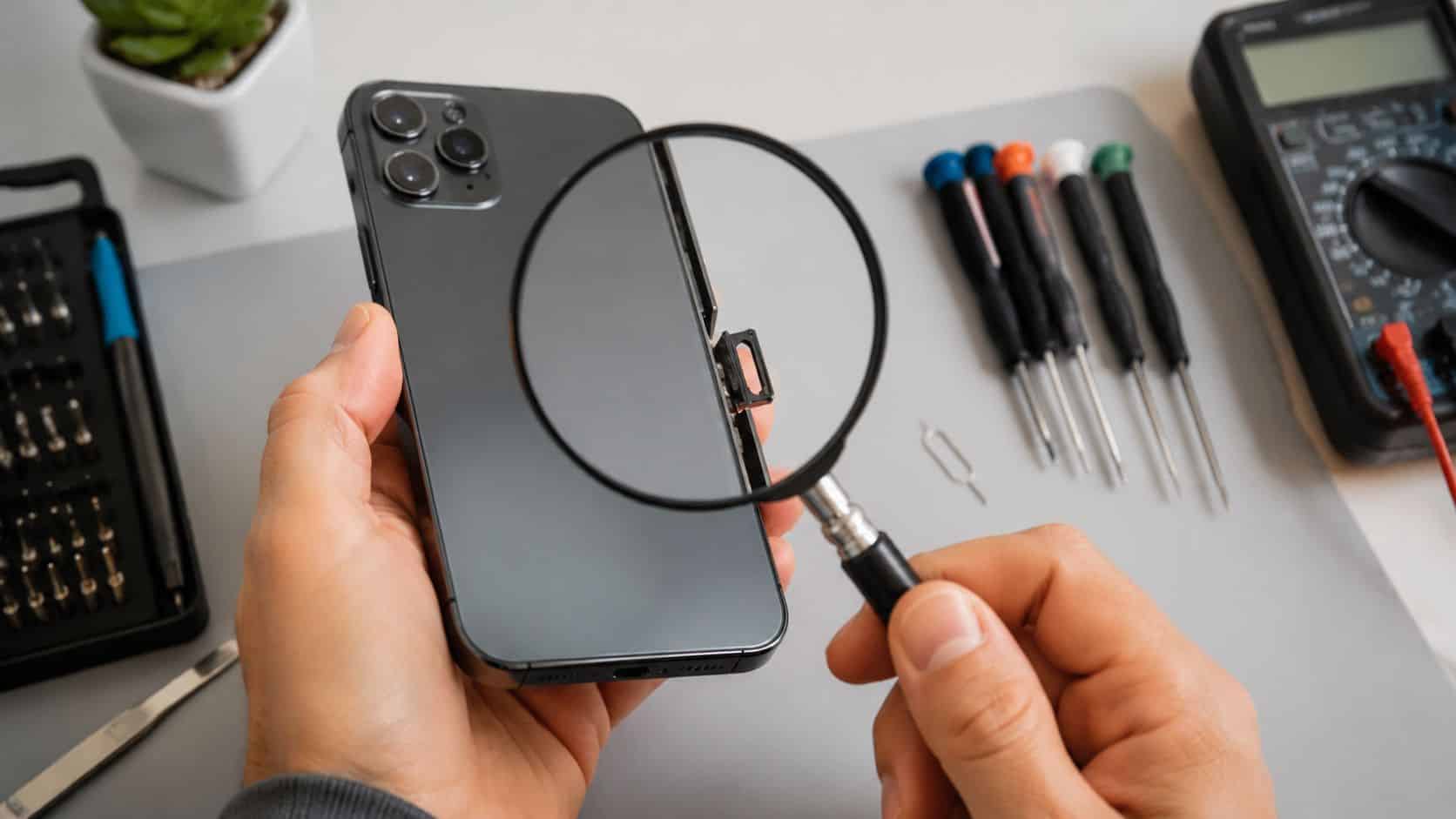
You’re probably looking at a phone listing right now and wondering if it’s a proper refurb or just a used handset dressed up to look safe. The quickest way to spot a fake refurbished phone is to stop judging the shine and start checking the history: IMEI match, battery disclosure, warranty, seller paperwork, and whether the phone’s identifiers tell the same story as the advert.
A convincing fake often looks tidy. What gives it away is missing evidence.
How to Spot a Fake Refurbished Phone
When customers ask us how to spot fake refurbished phones, we give the same answer every time. Don’t start with the scratches. Start with what the seller can prove.
A genuine refurbished phone should have a traceable identity, clear condition grading, proper testing, and written warranty terms. A dodgy one is often just cleaned up, reset, and relisted with vague wording like “mint” or “like new”, but no record of what was actually checked or replaced.
Practical rule: If the phone looks better than the paperwork, trust the paperwork less and walk away.
In the workshop, we’re far more interested in consistency than cosmetics. Does the IMEI match the listing and the device? Does the battery health line up with the seller’s claims? Does the model number tell you it’s retail, replacement, or third-party refurbished? If any part of that story is fuzzy, the phone probably is too.
The Short Version A Quick Checklist
- Match the identity: Check the IMEI on the phone, on the box if included, and on any seller paperwork. If they don’t match, leave it.
- Ask for battery proof: A proper refurb should come with battery health or battery condition disclosure, not just “holds charge well”.
- Check for warranty terms: If there’s no clear warranty and no proper returns process, you’re not buying a refurbishment. You’re buying a gamble.
- Read the listing language carefully: “Like new” means very little on its own. Look for tested functions, grading details, and what happens if something fails after delivery.
- Trust the seller, not the box: Fancy packaging proves nothing. A reliable seller gives you traceable details, support, and proper records.
- Be wary of “too cheap” recent models: If the price is wildly lower than comparable stock, something’s usually missing. It may be battery quality, genuine parts, a clean history, or support after sale.
- Compare with known-good stock: If you’re still deciding what’s sensible value, it helps to look at realistic examples of the best refurbished iPhones from a retailer that explains grade and condition properly.
If a phone fails even one of those checks, we’d slow right down. If it fails two, we wouldn’t buy it.
Physical Checks Beyond Scratches and Dents
Cosmetic wear matters, but not for the reason many buyers think. A few marks on the frame don’t bother us nearly as much as signs of rushed repair work, poor parts, or a phone that’s been rebuilt badly.
Start with the screen fit
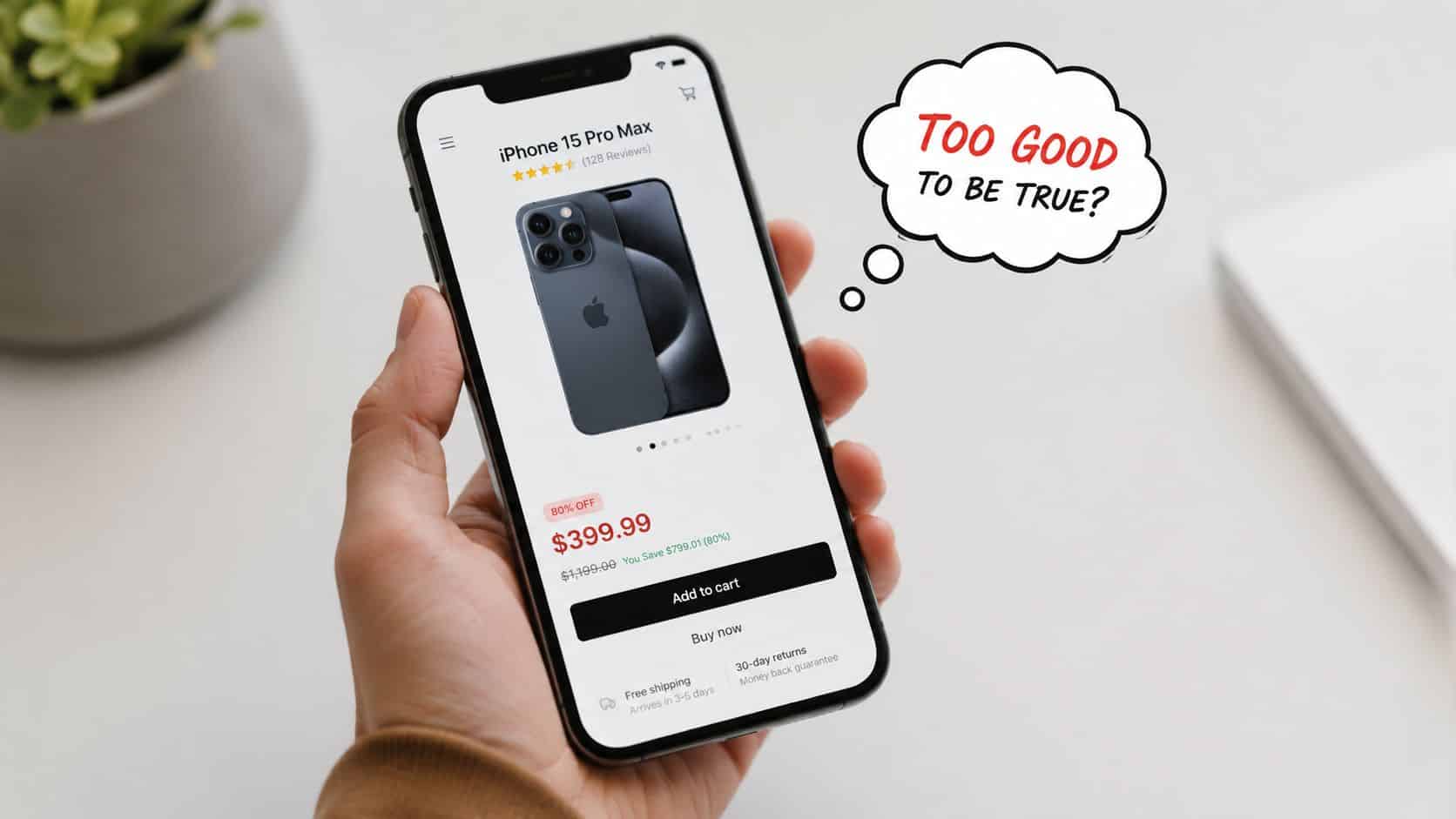
Run a thumb gently around the edge where the screen meets the frame. It should feel even and properly seated. If one corner lifts, creaks, or feels slightly soft, that often points to a poor screen fitting, weak adhesive, or swelling underneath.
Then look at the display straight on and at an angle. Cheap replacement screens often give themselves away with odd colour tone, weaker brightness, poor black levels, or a glass surface that feels less smooth than it should. A seller might call that “fully working”, but it isn’t the same as a properly refurbished phone.
- Look for glue marks: Visible adhesive around the frame usually means somebody rushed the job.
- Check bezel symmetry: Uneven borders can point to a non-original screen or poor fitting.
- Test touch properly: Open the keyboard and use every area of the screen. Dead strips and missed touches are common on cheap replacements.
Buttons ports and the frame tell their own story
Buttons should click cleanly. If the power button or volume keys feel mushy, sticky, or too loose, the handset may have had impact damage, liquid exposure, or low-quality housing work.
The charging port is another giveaway. It should be centred, secure, and not look skewed inside the frame. Misaligned ports, rough cut-outs, or a cable that only charges when held at an angle often tell us the phone has had hard use or poor repair work.
One thing we regularly notice is that badly refurbished phones often look fine in listing photos, then feel wrong the moment they’re in your hand.
Battery behaviour also leaves clues. Fast drop-off, random shutdowns, or a phone getting unusually warm during simple use often points to battery wear or poor-quality replacement cells. If you want a plain-English explanation of how battery ageing shows up in daily use, this Simply Tech Today guide on battery life is a useful general read.
Small details catch out a lot of fake stock
Check the camera lenses for dust under the glass, mismatched rings, or poor alignment. Open the camera app and switch between lenses. A fake or badly rebuilt phone may have one camera that works and another that doesn’t focus properly.
We also look at screw heads, SIM tray fit, and finish consistency. Rounded screws suggest repeated opening. A SIM tray that sits proud of the frame or doesn’t match the phone colour can mean parts have been swapped around.
None of these signs proves fraud on its own. Together, they often tell you the phone has been patched up rather than professionally refurbished.
Digital Detective Work Using IMEI and Software
The body of a phone can be cleaned, polished, and rehoused. Its digital identity is much harder to fake. This is where we’d spend our time if we were checking a phone at a collection point or standing in front of a marketplace seller.
Ofcom notes that every mobile phone has a unique 15-digit IMEI, and UK buyers can use CheckMEND to see whether a handset has been reported lost, stolen, or has a poor history. The same source also highlights why this matters: UK Finance’s Fraud the Facts 2025 report says £316.7 million was stolen through purchase scams in 2024. That’s exactly the sort of risk buyers run when they buy “refurbished” phones through unofficial channels.
How to check a phone before you hand over money
- Dial for the IMEI: Open the phone app and dial *#06#. The handset should display its IMEI.
- Match it against the phone itself: Compare that number with any number shown in the settings, on the SIM tray if available, and on the seller’s paperwork.
- Check the history: Run the handset through CheckMEND before buying. If the seller resists this, that’s a red flag by itself.
- Confirm the software story: On an iPhone, go to Settings > General > About and check the model number.
- Read the model prefix properly: The same source notes that Apple model numbers starting M indicate retail, N indicates a replacement or refurbished unit, and F indicates carrier or third-party refurbished.
- Compare that with the advert: If a seller says the phone is “brand new” but the identifiers say otherwise, don’t argue. Just leave.
What works and what doesn’t
What works is checking identifiers yourself on the device in front of you. What doesn’t work is relying on screenshots sent before the meeting, a serial number typed into a message, or a box that may not belong to that handset.
A common mistake is treating a factory reset as proof of refurbishment. It isn’t. Wiping a phone removes user data. It does not tell you whether the battery is healthy, whether the screen is genuine, whether the housing has been changed, or whether the phone has a blocked history.
Workshop habit: We trust live checks on the device more than seller descriptions every single time.
If you want a more detailed walk-through of the checks involved, including the identity and lock checks buyers often miss, our guide to Used Mobiles 4 U IMEI verification covers the safe process in more detail.
What We Check Before Resale at Used Mobiles 4U
This is the part many buyers never see. Proper refurbishment isn’t a quick wipe-down and a charger test. It’s a chain of checks that has to hold up after the phone leaves the bench.
In the UK, the Consumer Rights Act 2015 requires goods to be of satisfactory quality, fit for purpose, and as described. The same reference also notes that reputable sellers, including Apple’s own refurbished programme, back their products with a warranty, typically 1-year, and that Which? says buyers should expect battery health disclosure as part of proper refurbishment. That’s a useful benchmark because it separates genuine refurbishment from ordinary second-hand resale. You can read more about the practical side in the Used Mobiles 4U Refurbishment Process.
Our Experience Refurbishing This Model at Used Mobiles 4U
Although the checks are similar across iPhones and Android handsets, the same patterns come up again and again on popular used models. One thing we regularly notice is that battery condition and charging behaviour tell us more about the phone’s future reliability than the outer shell does.
Our technicians often see phones that look excellent from the front but show heavy wear in the charging port, weakened speaker mesh, tired batteries, or replaced screens with poorer colour and touch response. Those are the phones that disappoint buyers if nobody catches the detail first.
- Battery health: We pay close attention to battery condition because a phone can pass basic power-on checks and still be unpleasant to use every day if the battery drains too quickly.
- Common faults: We regularly inspect charging issues, weak earpiece volume, face recognition problems, camera focusing faults, and microphones that sound fine on one app but not another.
- Parts replaced: The usual replacements are batteries, screens, charging components, and cosmetic housings where needed. What matters is that the work is disclosed and the finished phone is tested properly.
- Grade differences: Grade should describe cosmetics, not excuse faults. A lower cosmetic grade can still be a very sensible buy if the battery, cameras, speakers and charging all perform as they should.
- Signs of heavy use: Deep port wear, polished button edges, lens marks, and frame distortion usually tell us the phone has had a harder life than the front glass suggests.
- Repair or replace logic: If a device needs too many major parts or the result won’t be reliable enough for resale, replacement is often the better choice than forcing a marginal repair.
That’s the trade-off most buyers don’t see. A proper refurbisher rejects some phones because making them look presentable isn’t the same as making them dependable.
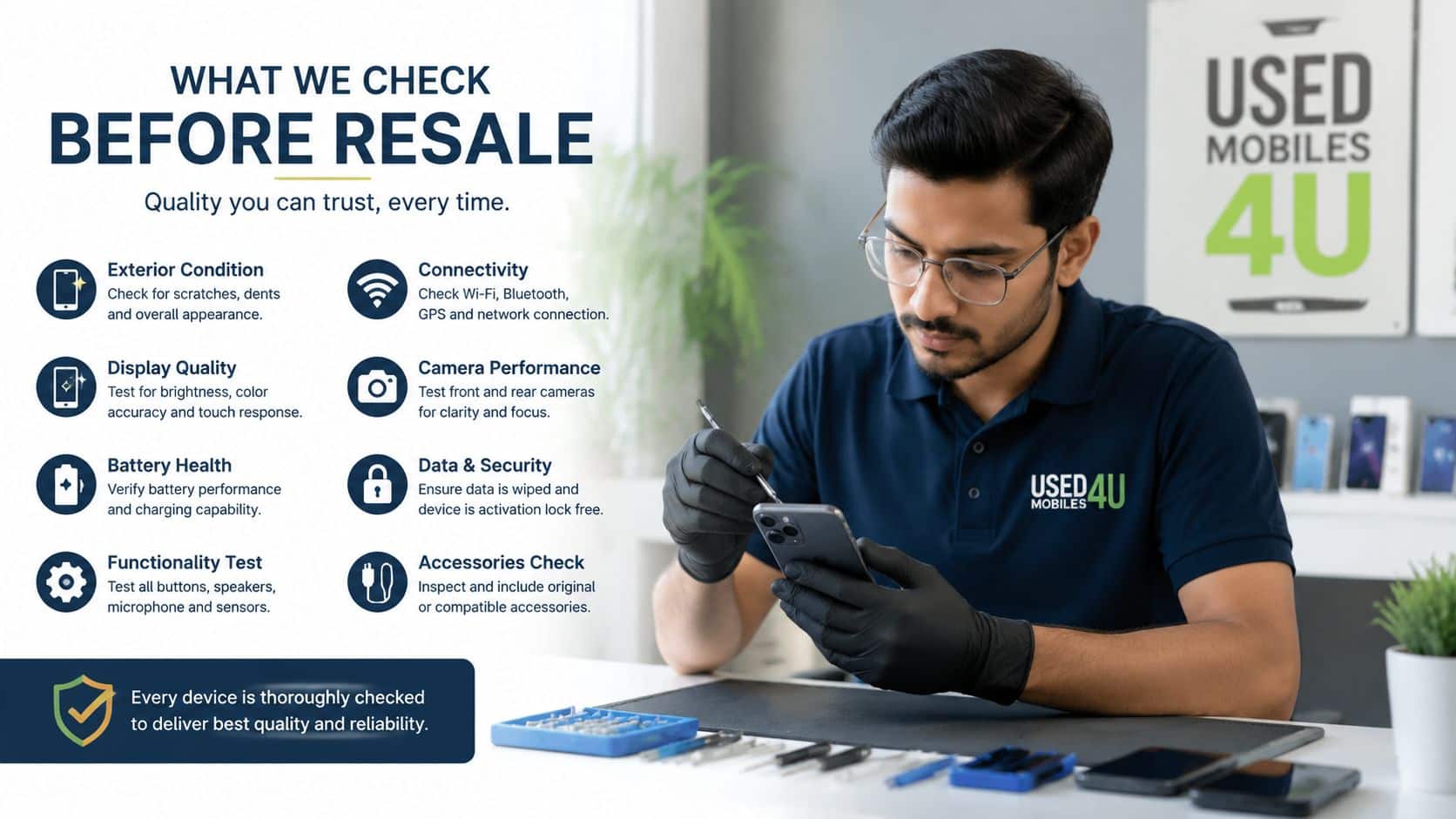
What We Check Before Resale
- Identity checks: The phone’s identifiers have to line up with its paperwork and sales description.
- Battery disclosure: If battery condition matters to the buying decision, it should be stated clearly, not hidden behind vague wording.
- Core daily-use functions: We focus on what customers actually notice first. Charging, call quality, signal, cameras, speakers, microphones, buttons, Wi-Fi, Bluetooth, and biometric features.
- Signs of poor previous repair: Lifted screens, glue residue, low-quality panels, and mismatched parts are all reasons to slow down or reject stock.
- Software sanity checks: A phone must reset properly, set up cleanly, and behave as expected through normal menus and updates.
If a seller can describe the colour and storage but can’t explain battery condition, grading, or warranty, that usually tells you what sort of “refurbishment” they’re doing.
A common example we see is a buyer comparing two phones that look almost identical in photos. The cheaper one often turns out to have weaker battery condition, vague history, or unknown parts. On paper it looks like a bargain. In the hand, it usually isn’t.
The Seller The Price and The Paperwork
Sometimes the biggest warning sign isn’t on the handset at all. It’s the way the sale is presented.

Price tells you what’s been left out
If a recent iPhone or Samsung looks dramatically cheaper than similar refurbished stock, don’t assume you’ve simply found the smartest seller. Proper refurbishment costs time, skilled labour, testing, support, warranty cover, and sometimes replacement parts. A suspiciously low price usually means one of those has been skipped.
That doesn’t always mean the phone is counterfeit. More often, it means the seller is passing off an untested used phone as refurbished.
Seller quality matters more than seller confidence
Marketplace listings are full of strong wording. “Works perfectly.” “As new.” “No issues.” None of that means much without a real business trail, clear returns terms, and some accountability after the sale.
A common example we see is a buyer who picks up a phone from a social media seller because the photos look good and the price is tempting. The handset works at first, then a problem appears and the seller account disappears. That’s exactly why it helps to start with established guidance on where to buy refurbished iPhones UK rather than treating every listing as equal.
Paperwork is where genuine refurbishment shows up
We’d expect to see a proper receipt, clear warranty wording, grading that means something, and enough detail to understand what you’re actually buying. If the listing uses polished language but avoids specifics, that’s a warning.
- Good sign: Clear grade description, tested status, returns route, and battery information.
- Bad sign: No business address, no written warranty terms, and no proof that the phone’s identifiers match the listing.
- Another bad sign: Pressure to pay quickly before you’ve checked anything.
Appearance can be faked. A clean paper trail is much harder to fake consistently.
Our Verdict What to Do if You Suspect a Fake
If the phone’s history doesn’t stack up, don’t buy it. If you’ve already bought it and the checks raise concerns, stop using guesswork and start collecting evidence: screenshots of the listing, the IMEI results, any messages with the seller, and photos of anything that doesn’t match the description.
If the purchase was from a business, raise the issue promptly and refer to your rights where the phone isn’t as described. If it was through a marketplace, report the seller through the platform straight away and keep every record you have.
Our plain verdict is simple. Buying refurbished is worth it when the phone has a traceable identity, honest grading, battery disclosure, and real warranty support. It isn’t worth it when the whole deal depends on trust alone.
If you want a refurbished iPhone or Android that suits daily use, buying from a proper UK refurbisher makes sense. If you’re chasing the lowest possible price from an unverified seller, you’re the one carrying the risk.
If you’d rather avoid the guesswork, have a look at Used Mobiles 4 U for tested, graded refurbished phones with UK support, warranty, and clear condition information before you buy.
Meta description: Learn how to spot fake refurbished phones in the UK with practical checks on IMEI, battery health, warranty, paperwork, and seller red flags.
Written by James Waterston, 24 years in the mobile phone industry from customer service through to Sales Director of a global repair and recycling company. Now running Used Mobiles 4U for over 8 years.
LinkedIn: James Waterston on LinkedIn
Looking for a refurbished phone?
Shop professionally tested refurbished iPhones and Samsung phones with 18 month warranty, 30 day returns and free UK delivery.
Browse Refurbished Phones