


Phone Trade in Offers: How to Get the Best Deal

27/07/2026

12 Mins

You're probably staring at a quote right now and wondering if it's fair, or if the phone's one tiny fault is going to knock the value sideways. That's the right instinct. Phone trade in offers are only good if you understand the conditions behind them, because the headline figure is never the whole story.
If you want the honest version, a trade-in is a fast way to turn an old handset into credit, but the final amount depends on model, condition, age, and verification. Miss the small print, and the offer drops or disappears.
What a Phone Trade In Offer Actually Is
A phone trade in offer is a quoted value for your handset before the buyer has physically checked it. In practice, that quote is only the starting point, because most programmes confirm the final credit after inspection, reset checks, and condition verification. If the phone doesn't match the description, the payout changes. That's the part people miss, and it's usually where disappointment starts.
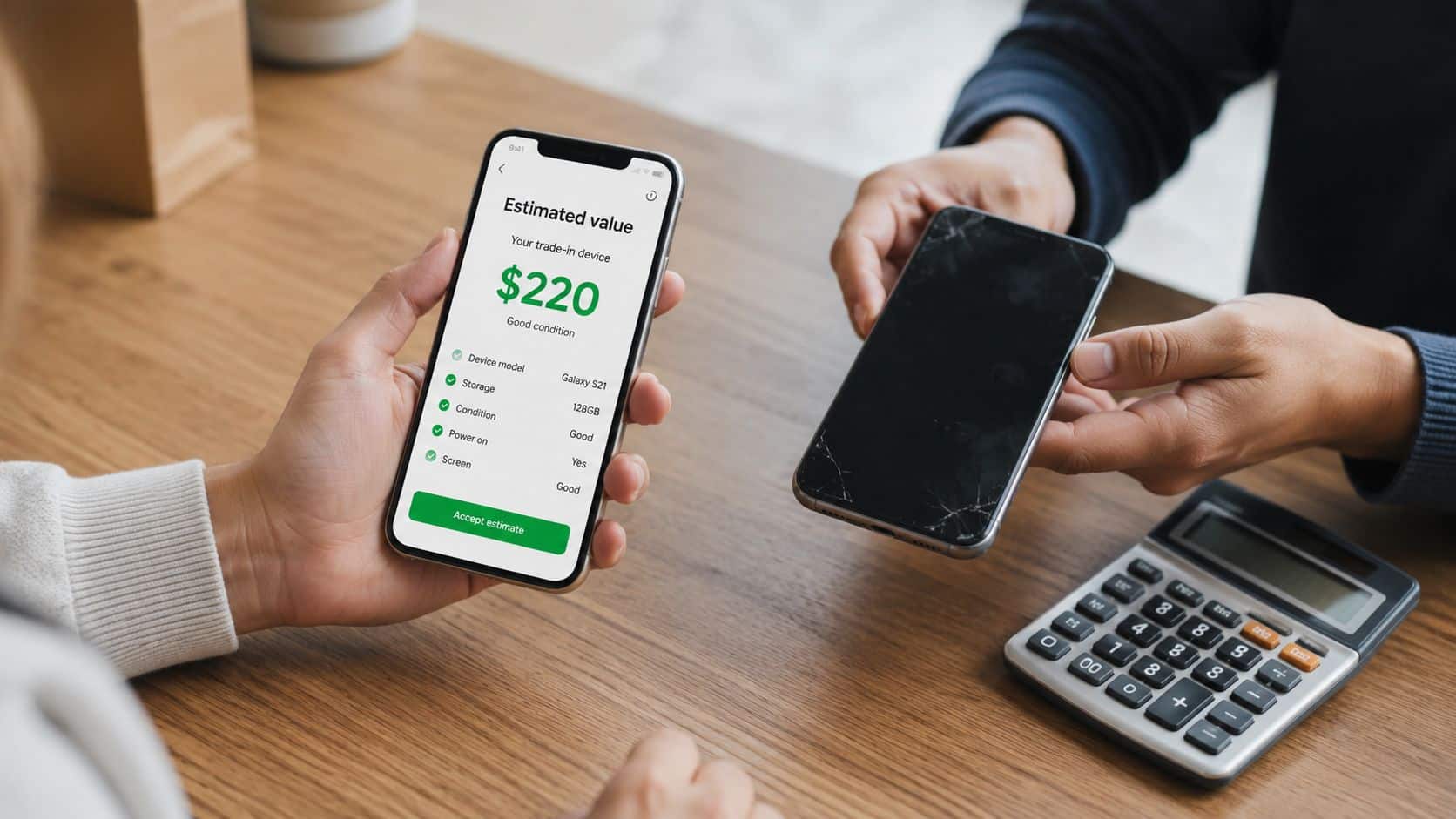
What the offer is really based on
The buyer looks at the make, model, age, and condition of the handset, then checks whether it powers on and passes basic acceptance rules. Trade-in programmes are highly sensitive to timing, because older phones still hold value, but delaying a trade-in usually means the device has moved further away from its resale peak. That's the basic commercial logic behind it, and it's why a phone can seem “fine” to you but still price lower than expected.
The wider market backs that up. Assurant reported that trade-in programs returned $1.34 billion to consumers in Q2 2024, up 8% from Q1 and 60% year-on-year, with the average age of phones turned in reaching 3.88 years, the longest recorded at that point. That doesn't mean every old phone is worthless. It does mean waiting too long tends to cost you value. See the Q2 trade-in upgrade data trends for the market context.
Practical rule: if you're close to upgrading, price the trade-in now, not after another year of wear.
A trade-in offer is not the same as a guaranteed sale price. It's an estimate with conditions attached, and those conditions are often underestimated.
What Decides Your Trade In Value
The biggest driver is condition, and I mean real condition, not the “it's basically fine” version people give themselves at home. A phone can look tidy and still fail the checks that matter. The screen, charging port, battery, and any lock status all change the final number, sometimes quickly.
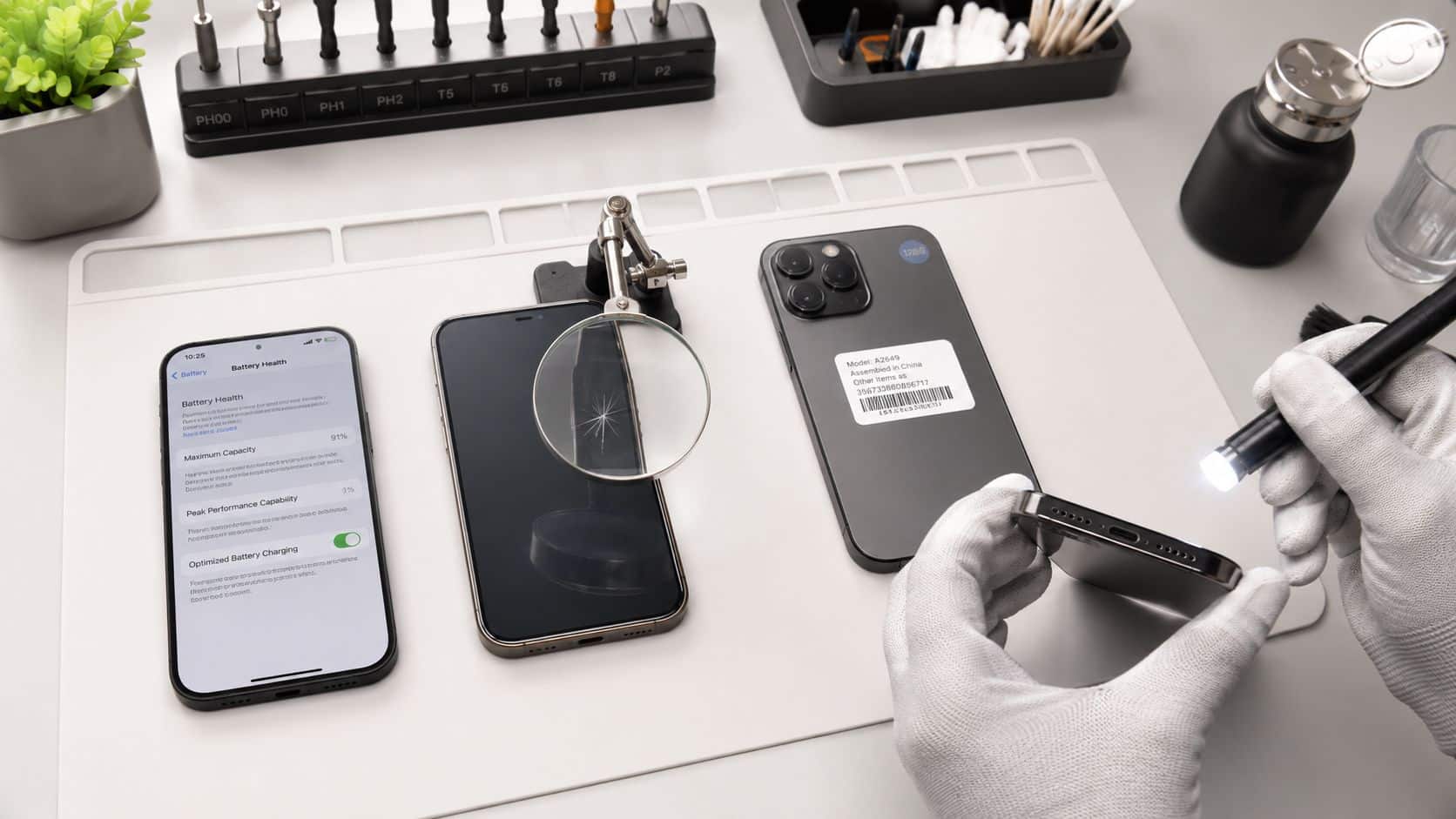
Model desirability and hidden faults
Mainstream models hold value better because they're easier to resell and easier to refurbish. Assurant noted that the iPhone 13 stayed the most commonly received device for four consecutive quarters in the trade-in pipeline, which is exactly what you'd expect from a model with broad market demand. Popular phones usually get cleaner, more predictable offers than oddball or low-demand handsets. The point isn't fanboy nonsense, it's liquidity.
Then there's the stuff you don't spot at a quick glance. Cracked glass, dark or burnt-out LCDs, missing pixels, charging-port faults, and swollen batteries push a device into higher refurbishment risk, and that's where trade-in values tend to fall hard. Google's refurbishment guidance explains why, because those defects increase triage, data-wipe, and component replacement work, and can even push a handset into recycling-only handling. That's the reality behind a lower quote, not some mysterious penalty.
Age, battery health, and accessories
Age matters because a phone loses value as it gets older, even if it's still working. The Assurant data above is the clearest signal here. A handset that's been sitting in a drawer for too long often misses the best resale window.
Battery health is another quiet killer. A battery that's tired but still running can be enough to make a buyer cautious, especially if the device is going back out as a refurbished phone. Minimum acceptance rules vary by programme, but as a technician I'd say this plainly, if the battery is weak, expect the offer to soften.
Accessories are less glamorous, but they can matter. If a programme expects a box or charger and you don't include what you said you would, the quote can be challenged. Don't send a phone in with missing bits and act surprised when the credit changes.
What usually hurts most: damage you can see, and faults you can't. Sellers lose money when they quote a clean device and send in a tired one.
What we commonly see on the bench
- iPhone screens: light cosmetic wear is one thing, but hairline cracks near the edge often trigger a downgrade because the panel is at higher risk once tested.
- Samsung handsets: battery swelling or a flaky charging port is a classic reason a device gets held back, because repair cost can outweigh resale margin.
- Used devices with locks still active: these cause problems straight away, because a buyer can't properly process a phone that's still tied to an account.
Where to Find UK Trade In Offers
UK sellers usually have three routes, and they don't all do the same job. Retailer trade-ins are quick and tidy, marketplaces can bring more cash if you're patient, and specialist buyers sit somewhere in the middle. Pick the route that matches how much hassle you're prepared to handle.
Retailer trade-ins
Retailer programmes are the easiest option if you want speed and certainty. You get a quote, send the phone, and usually receive credit or voucher value once it passes inspection. The downside is simple, you often trade convenience for a lower headline return, and the payout may be tied to a store or a fresh contract.
If you want to start with a retailer route, you can trade in your old iPhone and see what the process looks like in practical terms.
Marketplaces and direct sales
Selling outright on a marketplace gives you more control and, in the right case, more money. The catch is obvious, you're handling photos, messages, postage, disputes, and buyers who always seem to “be nearby right now” only when it suits them. MoneyHelper's guidance makes the basic trade-off clear, because some channels pay cash directly while others lock value into credit or a contract, which changes the net outcome.
Specialist buyers and bulk routes
Specialist buyers are useful when you want a firmer process than a private sale but don't want the friction of managing listings. That's the route I'd look at for business stock, fleet changes, or older phones that still have parts value. Ofcom's 2025 research showing that 42% of UK adults bought a used or refurbished phone in the previous 12 months tells you the secondary market is mainstream, so comparison matters rather than assuming one route fits everyone.
For a normal customer, my view is simple. Choose a retailer trade-in if speed matters, choose a marketplace if you can handle the work and want to squeeze more value, and choose a specialist buyer if you want a cleaner middle ground.
How to Get the Best Phone Trade In Offer
You don't win a trade-in by guessing. You win it by preparing the phone properly, removing locks, and sending a handset that matches the quote you asked for. If you skip the basics, the buyer will catch it and the value will drop.
Quick steps before you send it
- Back up your data first. Save photos, contacts, and app data before you touch the reset. Once it's gone, it's gone.
- Sign out of your accounts. Remove your Apple ID, Google account, and any other linked logins before the phone leaves your hands.
- Turn off Find My iPhone or Find My Device. If an anti-theft lock stays active, the handset can be delayed or rejected.
- Factory reset the phone. Use the proper reset path in settings, then check that it boots to the welcome screen.
- Remove the SIM card. Don't leave your SIM sitting in the tray.
- Photograph the handset. Take clear pictures of the screen, back, frame, and accessories before posting it.
- Inspect the screen and charging port. These are the places that most often change the final offer.
- Check battery health in settings. A weak battery won't always kill the deal, but it does affect the value conversation.
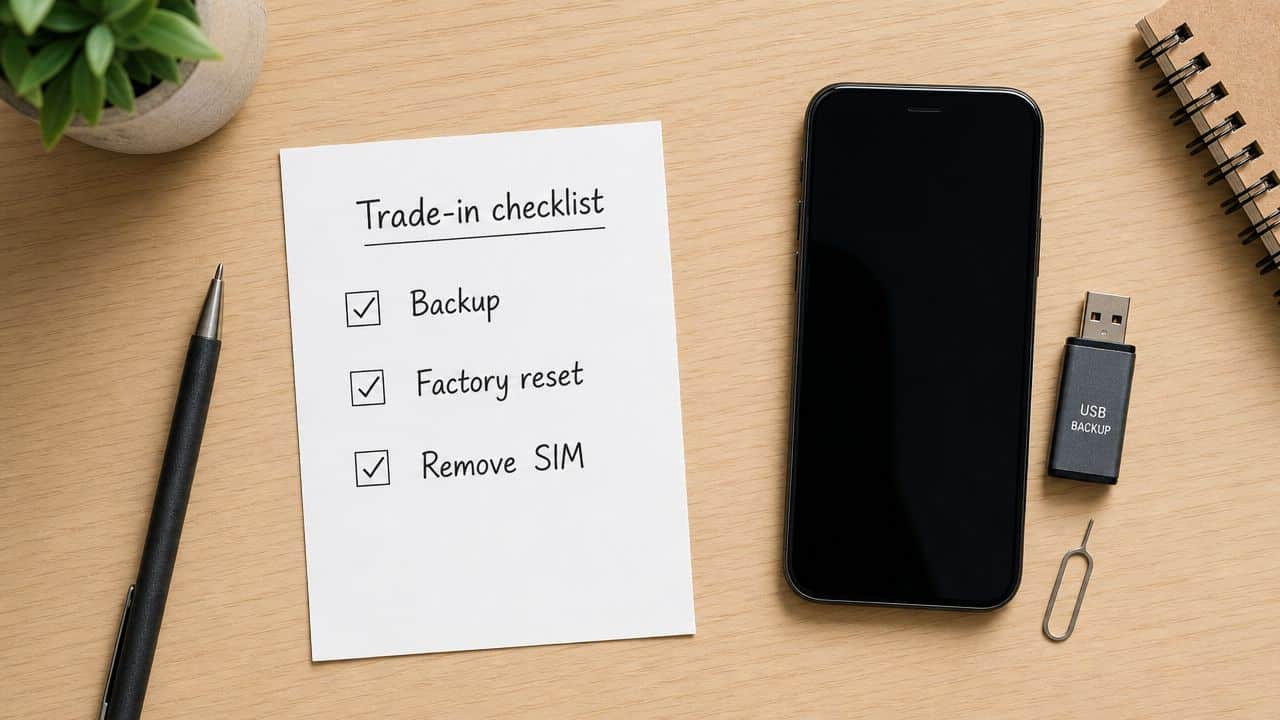
What to double-check before posting
Samsung's trade-in guidance says you need to remove personal information, disable anti-theft locking software, and perform a factory reset before sending a device. Verizon gives the same broad advice, which is exactly what you'd expect from any serious trade-in process. A phone that still has account locks on it is not ready to sell, full stop.
Warning: major programmes often use a 14-day inspection window. Best Buy says the item must be delivered within 14 days of the estimate or the offer can change, and Apple uses a 14-day send-back window after the new device is received. Miss the window, and you risk losing the quoted value entirely. See Best Buy's trade-in FAQ for that policy example.
For a proper prep checklist, our How to Get Your iPhone Ready to Sell guide is the right place to start before you hand anything over.
A Common Scenario and How the Offer Can Change
A common example we see is someone sending in an iPhone 13 because the first quote looked decent and the phone was “only lightly used”. On paper, it sounds straightforward. In actuality, the value shifts the moment the buyer checks for small but important problems.
The screen might have a cracked edge that wasn't mentioned. The phone might still be signed into an account, which means the buyer can't verify it properly. Then there's the delivery timing, and if it lands after the programme's inspection window, the original figure is no longer safe.
How the small mistakes stack up
Each issue on its own looks minor to a seller. Together, they change the result. A crack makes refurbishment riskier. An activation lock slows processing or blocks it. A late arrival can invalidate the quote.
That's why I tell customers to treat a trade-in like a handover, not a hope. Photograph the handset before posting it, remove the locks, and get it in the post quickly. Those three habits protect more value than any polishing cloth or fancy packaging ever will.
A lot of people also underestimate how quickly “fine” becomes “depreciated”. The earlier section covered why age matters, and that point really hits home when you consider it. Leave the phone in a drawer for too long, then post it with a cracked screen edge and an account lock still attached, and you've stacked the odds against yourself.
What would’ve changed the outcome
- Earlier submission: the trade-in would have landed closer to the original quote.
- Better prep: removing the account lock would have avoided a rejection risk.
- Accurate condition description: the cracked edge would have been priced in from the start.
That's the lesson. The quote is only as good as the handset you send.
How Used Mobiles 4 U Handles Trade Ins
At Used Mobiles 4 U, the process starts with an estimate and ends with a proper check, not guesswork. Once a phone comes in, it's assessed, wiped securely, and graded against the condition it arrived in. If the device matches the description, the process moves cleanly. If it doesn't, the quote has to reflect that.

What happens once the phone arrives
The first thing our technicians check is whether the phone powers on, resets cleanly, and is free of account locks. After that, we look at the screen, charging port, battery condition, and any signs of physical wear that affect resale or parts recovery. That's standard refurbishment discipline, and it saves everyone time.
Our grading runs from Like New through to Good, which is exactly how used phones should be described if you want the condition to be honest. One thing we regularly notice is that customers overrate cosmetic condition but underestimate hidden faults, especially battery wear and charging issues. That's why we'd rather be strict at the front end than argue later.
What buyers should understand about resale quality
Phones we refurbish for resale need to make sense both technically and commercially. We're not interested in pretending a tired handset is mint. We're interested in whether it can be sold responsibly, repaired sensibly, or recycled properly if it's beyond worthwhile repair.
That same logic is why battery condition matters on the resale side. We aim to work to a minimum 85% battery health threshold when reselling refurbished stock, because anything weaker starts to affect daily use and customer satisfaction. A device that can't hold charge properly belongs in the repair queue, not the sale shelf.
If you want to see how our workflow is structured, the Used Mobiles 4U Refurbishment Process lays out the broader handling standards we use.
Business stock and bulk handovers
For companies clearing multiple handsets, the process is simpler than one might expect. Bulk trade-ins are assessed as a group, which saves time when a business is moving office stock, replacing a fleet, or retiring older devices in batches. That's the sort of job where a straightforward valuation and secure wipe process matter more than individual retail polish.
When a Trade In Is Not the Best Route
A trade-in is convenient, but convenience isn't always the best money move. If the phone is still in strong condition and you're happy managing the sale, selling outright can return more cash. If the handset has another use in the family, passing it on might be the smartest option of all.
The biggest reason trade-ins fall short is parts-level risk. A phone with cracked glass, a damaged LCD, a faulty charging port, or a swollen battery can move from resale into recycling-only handling. Once that happens, the realised credit can drop sharply because the buyer is dealing with recovery work instead of a clean refurbish path.
When I’d think twice
If the phone is a popular model, in good shape, and not locked to a contract, I'd compare a direct sale against trade-in first. If the handset is battered or the battery is tired, the trade-in route is often still the least painful option because you're not trying to persuade a marketplace buyer to overlook obvious faults. If the phone has serious damage, recycling may be more honest than chasing a quote that won't survive inspection.
Ofcom's used and refurbished phone research, plus the wider resale market, shows there's real demand for second-hand devices. That doesn't mean every phone should be sold the same way. It means you should match the route to the device.
My blunt view: if the phone is clean and popular, compare routes. If it's damaged or awkward, don't waste time forcing a private sale if the trade-in or recycling route is more realistic.
Simple decision guide
- Sell outright if the device is popular, clean, and you're willing to manage buyers.
- Trade in if you want speed and certainty, or the phone has minor faults.
- Recycle or pass on if the handset is too damaged to justify the effort.
Our Verdict on Phone Trade In Offers
Phone trade in offers are worth using when you want a quick, practical exit from an old handset and you've prepared the phone properly. They suit people who value speed, dislike haggling, and want a straightforward path into credit or replacement stock. They're a poor fit for anyone who sends in a phone without checking locks, battery condition, or the inspection deadline.
My advice is blunt. Check the screen, battery, charging port, and account locks before you accept any quote. Then decide whether the trade-in route, a private sale, or a family handover gives you the best net result. That's the only sensible way to do it.
If you're buying again, it's usually smarter to put the trade-in money straight towards a reliable refurbished handset than to chase a brand-new retail price. You can buy refurbished iPhones and keep the upgrade sensible without paying fresh-out-the-box money for a device that's going to live in a case anyway.
Written by James Waterston, 24 years in the mobile phone industry from customer service through to Sales Director of a global repair and recycling company. Now running Used Mobiles 4U for over 8 years.
LinkedIn: James Waterston on LinkedIn
If you're ready to sell, compare, or replace a handset, Used Mobiles 4 U can help you move the old phone on and pick a sensible refurbished replacement. Visit Used Mobiles 4 U to check trade-in options, refurbished stock, and the best route for your device.
Looking for a refurbished phone?
Shop professionally tested refurbished iPhones and Samsung phones with 18 month warranty, 30 day returns and free UK delivery.
Browse Refurbished Phones