


Refurbished iPhone 13 vs 14: Which Should You Buy?

22/05/2026

12 Mins
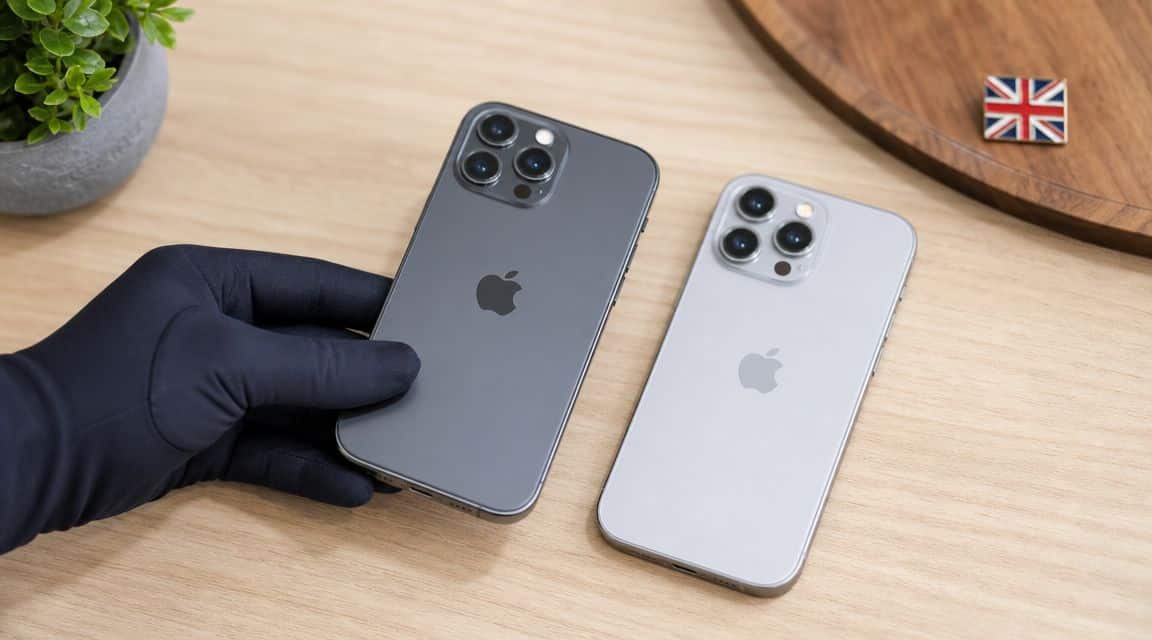
If you’re stuck between a refurbished iPhone 13 and 14, the short answer is this. For most UK buyers, the iPhone 13 is the better value. The iPhone 14 only makes more sense if you specifically want the newer camera and safety features, and you’re happy to pay more for a fairly small step up.
That’s usually the real decision on the shop floor. Not which one is “better” on paper, but which one gives you the least regret six months later.
The Short Version A Practical Verdict
For everyday use, the gap between these two phones is smaller than most comparison pages make it sound. Both use Apple’s A15 Bionic chip, both have a 6.1-inch OLED display, and both launched with the same 128GB, 256GB and 512GB storage tiers, so the iPhone 13 still sits in a very strong spot for value in the refurbished market, as outlined in this iPhone 13 and iPhone 14 comparison.
- Choose the iPhone 13 if you want the sensible buy. In daily use, it feels extremely close to the 14, and that’s why it still ranks among the best refurbished iPhones for buyers who care more about value than bragging rights.
- Choose the iPhone 14 if you actually care about camera processing improvements, steadier video, or the added safety tools.
- Don’t overpay for the number if the condition is worse. A cleaner iPhone 13 with stronger battery health is often the better buy than a tired iPhone 14.
- Put grade and battery first if your phone lives in a case and you mainly use WhatsApp, Safari, banking apps, email and photos.
Practical rule: If you have to ask whether the iPhone 14 upgrades matter to you, they probably don’t.
We usually steer budget-minded buyers towards the iPhone 13. We only push the 14 when someone already knows they want the extra features, or plans to keep the phone for a longer upgrade cycle and wants the newer model for that reason.
Design and Daily Use Differences
If you put a refurbished iPhone 13 next to a refurbished iPhone 14 in a case, most people won’t notice much difference at all. They share the same 6.1-inch OLED display and they feel almost identical in the hand. Even the weight difference is tiny, with the iPhone 14 at 172 g and the iPhone 13 at 174 g.
That matters because buyers often spend too much time comparing model-year details and not enough time looking at the condition of the actual handset. In the real world, cosmetic grade changes your experience more than these small design differences do.

What you’ll actually notice day to day
The screen size is the same. The general shape is the same. In a pocket, bag, car holder or bedside charger, they live the same sort of life. If you’re moving from an older iPhone, either one feels modern enough.
What usually stands out more is the grade. A cleaner unit with fewer frame marks, a better screen and stronger battery health simply feels nicer to own. That’s why we tell people to read the grading properly before getting hung up on the jump from 13 to 14.
- Case users won’t gain much from the tiny physical differences.
- Heavy phone users should care more about battery health than the small change in weight.
- Fussy buyers often feel happier with a higher cosmetic grade on the older model than a rougher example of the newer one.
Condition matters more than the year
A common mistake is assuming the newer number automatically means the better buy. On refurbished phones, that isn’t always true. If one handset has a cleaner frame, less visible wear and a battery that hasn’t had a hard life, that often beats the slight prestige of buying the 14.
We’d also say this. If you’re choosing between an iPhone 13 in stronger condition and an iPhone 14 in lower grade, the 13 often feels like the smarter ownership experience. You see the scratches every day. You don’t see a model year every day.
For most people, the “feel” of a refurbished iPhone comes from its condition, not from the difference between these two designs.
Camera and Video A Practical Comparison
The camera is one of the few areas where the iPhone 14 has a proper real-world case for itself. Not because the iPhone 13 camera is poor. It isn’t. It’s because the 14 makes life a bit easier when the light is bad or the subject won’t stay still.

The iPhone 14 adds Photonic Engine, Action Mode, a brighter f/1.5 main camera, autofocus on the front camera, plus Emergency SOS via satellite and Crash Detection. The iPhone 13 doesn’t have those additions, and the battery rating is also slightly higher on the 14 at up to 20 hours of video playback versus up to 19 hours on the 13, as covered in this iPhone 14 vs iPhone 13 feature breakdown.
What those camera features mean in normal life
Photonic Engine sounds like marketing language, but the practical bit is simple. In dim rooms, dull winter afternoons and evening shots, the iPhone 14 usually gives you a bit more help. If you take photos in pubs, restaurants, concerts, or on grey British days, that matters more than megapixel talk.
Action Mode is also easy to understand once you use it. If you’re filming kids running about, a dog tearing across the park, or you’re walking while recording, it helps your video look steadier. Not everyone needs that. Some people never touch it.
- Casual photo users will still be happy with the iPhone 13. It remains a very good everyday camera phone.
- Low-light shooters have a better reason to pay extra for the iPhone 14.
- Video-first buyers get more out of the 14 than still-photo-only users do.
When the iPhone 14 camera upgrade is worth it
If your phone is your main camera, the iPhone 14 is easier to justify. The front camera autofocus helps with selfies, video calls and social clips, and the image processing is a bit more forgiving. It won’t feel like a dramatic jump from a 13, but it is a cleaner, more polished camera experience.
A common example we see is someone replacing an older iPhone because they want better family photos without thinking too much about settings. That buyer usually appreciates the iPhone 14 more than someone who mostly scans boarding passes, takes the odd receipt photo, and snaps a few daylight pictures at the weekend.
Bench advice: If your camera use is mostly daylight shots, food photos, QR codes and family pictures in decent light, the iPhone 13 still does the job comfortably.
The safety features are part of this decision too. Crash Detection and Emergency SOS via satellite won’t matter to everybody every day, but for drivers, regular travellers and people who just want that extra layer built in, the 14 does offer something the 13 simply doesn’t.
Performance Battery and Future iOS Support
This is where the spec sheets can mislead people. Both phones use Apple’s A15 Bionic platform, so for the sort of things most people actually do, texting, streaming, browsing, online banking, maps, social apps, either phone feels quick.
The iPhone 14 does have a **5-core GPU**, while the iPhone 13 has a **4-core GPU**. That gives the 14 a modest graphics edge rather than a night-and-day speed jump.

Who will notice the speed difference
Heavy gamers might. People editing video on the phone might. Anyone using more GPU-heavy apps will get a bit more out of the 14. For routine use, most buyers won’t feel much in it.
The benchmark gap backs that up. Geekbench 5 figures cited here in this iPhone 13 vs 14 benchmark comparison put the iPhone 13 at 1,684 single-core and 4,192 multi-core, versus 1,727 single-core and 4,553 multi-core for the iPhone 14. That’s a real uplift, but it’s still a modest one.
- Messaging and social media feel much the same on both.
- Streaming and browsing won’t justify paying extra on performance alone.
- Gaming and editing are where the iPhone 14 has a more sensible argument.
Battery and longer ownership
On paper, the iPhone 14 has a slight endurance advantage and a marginally larger battery. In practice, the condition of the specific refurbished handset matters more than the factory spec sheet. A fresher iPhone 13 battery can easily be a better everyday experience than a tired iPhone 14 battery.
That’s also why we tell buyers to think in terms of total ownership, not just model year. If you’re trying to maximize refurbished iPhone value, the better question is how long you plan to keep it, how much battery wear you’re willing to accept, and whether the extra features on the 14 will still matter to you after the first few weeks.
The iPhone 13 is still a safe long-term buy for most people. The iPhone 14 just gives you a slightly newer starting point, not a completely different class of phone.
For software support, both sit in a comfortable place compared with older iPhones. We wouldn’t avoid an iPhone 13 out of fear that it’s suddenly about to feel outdated. It isn’t.
Our Experience Refurbishing This Model at Used Mobiles 4U
On the bench, these two are more alike than different. That’s good news for refurbished buyers because both are familiar, well-understood models with mature repair knowledge behind them. There usually aren’t any nasty surprises if the phone has been checked properly.
One thing we regularly notice is that buyers obsess over spec differences that matter less than the condition checks. Face ID, charging, microphones, speakers, camera focus, network signal, vibration, buttons and battery behaviour matter more to the ownership experience than the small gap between a 13 and 14.

What our technicians often see
- Battery wear is one of the first things we pay attention to. It shapes daily satisfaction more than most shoppers expect.
- Frame wear often tells you how hard a phone has been used. Deep corner marks and scuffs usually suggest a rougher previous life.
- Charging issues are sometimes simple pocket-lint problems, but we still test charging properly rather than assuming.
- Camera faults can be subtle. We check focus, clarity and switching between lenses, not just whether the camera app opens.
- Screen quality matters a lot on these models because both have good OLED panels when they’re in proper condition.
Our technicians often see iPhone 13 and 14 units that are perfectly solid internally but vary a lot cosmetically. That’s why grade matters. A lower-grade phone may be a perfectly good buy if you’re realistic about marks on the frame or screen, but it shouldn’t be mistaken for a nicer handset just because it has the newer number on the box.
Repair or replace logic on these models
If someone already owns an iPhone 13 in good condition, we usually don’t see the jump to an iPhone 14 as a must-do upgrade. It’s more of a selective upgrade. You do it because you want the camera and safety additions, not because the 13 has suddenly become weak.
If someone’s older phone needs replacing and they’re choosing fresh, both make sense in refurbished form. The deciding factor is usually battery health, grade, storage, and whether they’ll genuinely use the iPhone 14 extras. That’s broadly how the Used Mobiles 4U Refurbishment Process approaches stock as well. The priority is tested function first, then clear condition grading.
Workshop view: A well-tested iPhone 13 is often the smarter buy than a poorly checked iPhone 14. Good refurbishment beats model-year chasing every time.
Compared with nearby options, both are still in a strong sweet spot. They feel modern, repairs and parts knowledge are established, and they don’t carry the same compromise feeling you get with much older models.
Refurbished Price and Who Should Buy Which
This part matters more than people think. With refurbished phones, the label price alone doesn’t tell the full story. Storage, battery health, cosmetic grade, warranty and overall condition all affect whether a handset is actually good value.
The iPhone 13 usually wins on value because the hardware gap is small and the day-to-day performance is very close. The iPhone 14 launched a year later and started higher at launch, which helps explain why it still sits above the 13 in the value ladder, but the real buying decision is total cost of ownership rather than just the sticker difference, which is a point raised in this refurbished iPhone ownership cost discussion.
Choose the refurbished iPhone 13 if
- You want the stronger value buy. This is the one we’d recommend to most people.
- Your use is ordinary daily phone use. Calls, messaging, apps, photos, banking, streaming and sat nav won’t push it hard.
- You care more about condition than model year. A cleaner iPhone 13 is often the sweeter ownership choice.
- You’re replacing an older iPhone without overspending. It feels modern without the newer-model premium.
Choose the refurbished iPhone 14 if
- You’ll use the camera upgrades. The low-light improvements and steadier video are the strongest reasons to step up.
- You want the added safety features. That’s a real difference, not fluff.
- You keep phones longer. Some buyers simply prefer starting from the newer point in the range.
- You do heavier graphics work. Gaming and editing users have more reason to care about the GPU change.
If you want our honest recommendation, most buyers should choose the iPhone 13. The iPhone 14 is the better phone, but not by enough to make it the better buy for everyone. It only becomes the right answer when its specific extras line up with how you actually use your phone.
What doesn’t work is buying the 14 just because it sounds safer to pick the newer one. That often leads to spending more for gains you don’t really notice. If your budget is tight, get the nicest iPhone 13 you can. If your budget has room and you know you’ll use the extras, the 14 is the cleaner step-up.
FAQs for UK Refurbished iPhone Buyers
Does grading matter more than choosing between the 13 and 14
Very often, yes. If one phone is in clearly better cosmetic condition and has better battery health, that can make more difference to daily satisfaction than the move from iPhone 13 to iPhone 14.
Are these good refurbished phones for a few more years of use
Yes. Both still sit in a strong place for buyers who want a modern iPhone without paying for a current flagship. The iPhone 14 gives you a slightly newer starting point, but the iPhone 13 is still a sensible longer-term buy.
Is the iPhone 14 camera much better
Not much better in every situation. Better in the right situations. If you take lots of photos in lower light or film while moving, the iPhone 14 has a more obvious advantage. If your photos are mostly in good light, the iPhone 13 still holds up very well.
Should I repair my iPhone 13 or replace it with a refurbished iPhone 14
That depends on the condition of your current phone. If your iPhone 13 is otherwise healthy and only needs a straightforward repair, replacement isn’t always the best value move. If the battery is tired, the body is heavily worn, and there are multiple faults starting to stack up, replacing it can make more sense.
- Repair first if the phone is in decent shape apart from one clear issue.
- Replace it if battery wear, damage and fault risk are all building at once.
What should I check before buying a refurbished iPhone
- Check the grade. Make sure you understand how much cosmetic wear you’re happy to live with.
- Check battery health. This affects the phone more than many buyers expect.
- Check if it’s SIM-free. That keeps things simple on UK networks.
- Check the warranty and returns position. You want support if something isn’t right.
- Check that it’s been properly tested and data-wiped. That’s basic, but it matters.
- Check storage carefully. Don’t buy the wrong capacity and regret it a week later.
Where can I compare available stock
If you’re ready to compare condition, storage and available models in one place, you can buy refurbished iPhones by model and grade and then narrow the choice from there.
For the typical UK buyer comparing refurbished iPhone 13 vs 14, our advice stays the same. Buy the iPhone 13 unless you have a clear reason to pay more for the 14. If your priority is straightforward value, the 13 is still the one that makes the most sense. If your priority is the newer camera and safety package, the 14 is worth the extra spend.
Written by James Waterston, 24 years in the mobile phone industry from customer service through to Sales Director of a global repair and recycling company. Now running Used Mobiles 4U for over 8 years.
LinkedIn: James Waterston on LinkedIn
Meta description: Refurbished iPhone 13 vs 14 explained by a UK refurbisher. See the real differences in battery, camera, value and which model is worth buying.
If you’re weighing up a replacement phone, Used Mobiles 4 U stocks tested, data-wiped refurbished phones with clear grading, UK support and warranty cover, so you can compare the iPhone 13 and 14 on condition as well as model number.
Looking for a refurbished phone?
Shop professionally tested refurbished iPhones and Samsung phones with 18 month warranty, 30 day returns and free UK delivery.
Browse Refurbished Phones