


Refurbished iPhone 13 Mini in 2026: A UK Buyer’s Guide

01/06/2026

7 Mins
We’d still buy a refurbished iPhone 13 Mini in 2026, but only for the right buyer. It’s a smart pick if you want a truly small iPhone and can live with shorter battery life.
If you’re comparing refurbished iPhones and trying to avoid an expensive mistake, this model comes down to three things: battery health, storage, and who refurbished it. The 13 Mini still feels fast and modern enough, but it doesn’t hide a tired battery well.
Start with the practical checks below, then decide whether the Mini suits your habits better than a larger iPhone.
Before You Buy
- Buy it if pocket comfort and one-hand use matter more to you than all-day battery.
- Skip weak battery units, because this model has less margin than a full-size iPhone 13.
- Choose 128GB or 256GB for most people, because the small size doesn’t mean small photo libraries.
- Check Face ID, charging, cameras, speakers, and whether it’s unlocked and SIM-free.
- If your current iPhone needs both a screen and a battery, replacement often makes more sense than repair.
Why the iPhone 13 Mini still makes sense in 2026
The main reason people still want this phone is simple: hardly anyone makes compact phones well any more. Amongst refurbished smartphones UK buyers, the 13 Mini stands out because size is the selling point, not a side note.
It still has the A15 chip, 5G, a sharp OLED display, and cameras that are more than good enough for daily photos, social posts, video calls, maps, banking apps, and streaming. In normal use, it feels far closer to the regular iPhone 13 than its size suggests.
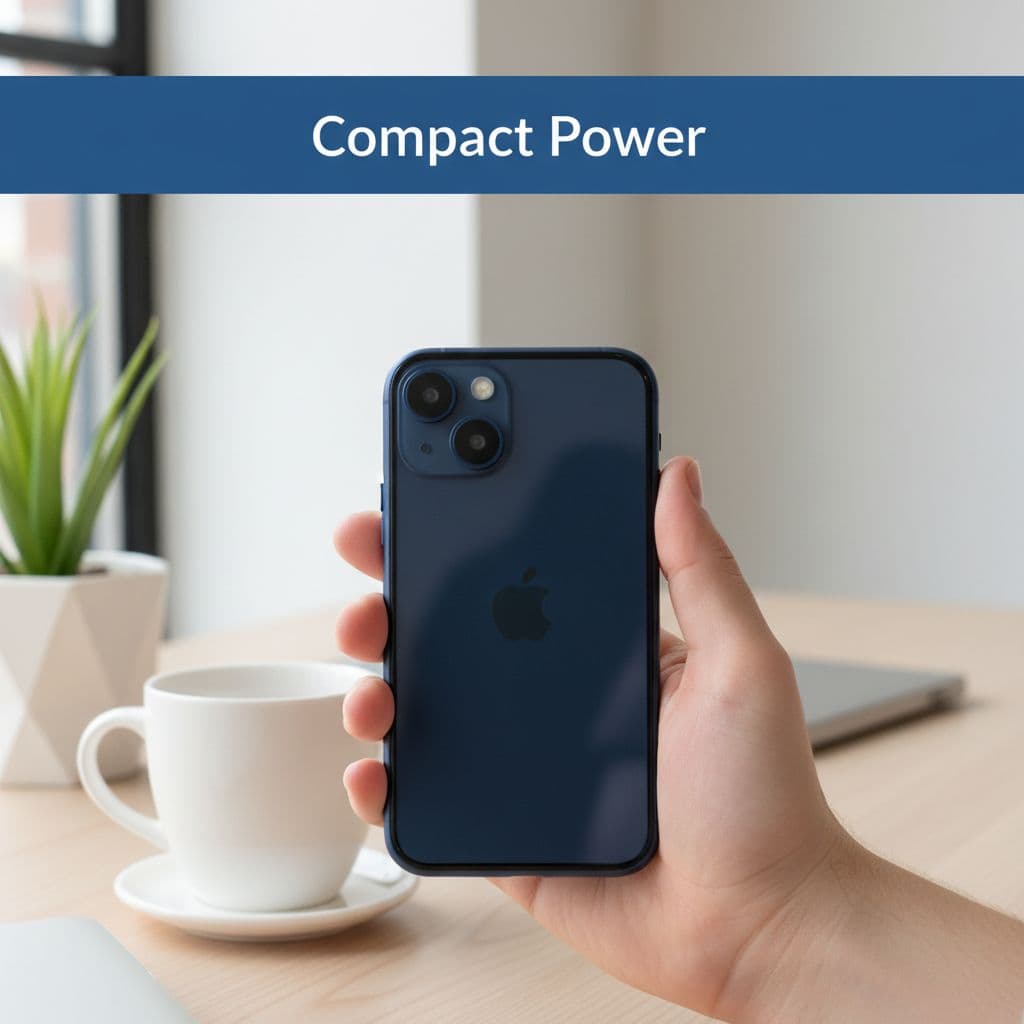
The other reason it holds value is that it’s the last small mainstream iPhone many buyers still care about. That keeps demand steady. Broad 2026 round-ups, such as Refurbed’s iPhone buying guide, still keep the 13 Mini in the conversation for buyers who want a small handset without dropping back to much older hardware.
There are limits, though. The screen is compact at 5.4 inches, so long typing sessions feel tighter. Outdoor brightness and battery stamina also fall behind newer models. If you want USB-C, a bigger display, or a phone built for heavy video use, we’d look elsewhere.
If you want a fuller view of day-to-day performance, our used iPhone 13 Mini review goes deeper into how it feels after the launch hype has long gone.
Battery, storage and daily use
Daily use is where this phone either wins you over or annoys you. For calls, messages, WhatsApp, maps, Apple Pay, web browsing and the odd burst of photos, it’s still excellent. It slips into any pocket, feels light, and stays easy to use one-handed on the train, in the car park, or walking between meetings.
Battery life is the catch. The 13 Mini improved on the 12 Mini, but it still isn’t a late-night phone for heavy users. If you stream a lot, use 5G often, take lots of video, or spend hours on social apps, you’ll notice the smaller battery sooner than you would on a regular iPhone 13.
On a 13 Mini, battery health isn’t a footnote. It’s part of the buying decision.
That’s why we always tell buyers to look for at least 85% battery health, and higher if they rely on the phone all day. A tidy-looking handset with a worn battery can feel worse than a slightly marked one with stronger battery health.
Storage matters too. One overlooked advantage is that the 13 Mini started at 128GB, not 64GB. That’s a much better floor for 2026. For most people, a 128GB blue iPhone 13 Mini is the sensible middle ground. If you keep years of photos, download offline music, or record a lot of video, 256GB is easier to live with long term.
A lot of used iPhones UK listings look tempting on price, yet storage and battery health often tell the real story. The cheaper phone isn’t always the better buy.
Our Experience Refurbishing This Model at Used Mobiles 4U
One thing we regularly notice with the 13 Mini is that condition can vary sharply even when two phones look similar from the outside. On the bench, this model usually holds up well in core performance, but battery condition separates the good buys from the poor ones more than on many larger iPhones.
Our technicians often see three patterns. First, honest wear with a still-healthy battery, which is the best case. Second, clean cosmetic condition paired with a battery that’s already near the point where daily use feels frustrating. Third, signs of earlier repair work, especially screen replacements, where we pay close attention to Face ID, ear speaker behaviour, brightness consistency and how the display sits in the frame.

The biggest difference between grades is usually cosmetic, not speed. However, when checking these devices, we pay close attention to battery health, charging stability, cameras, speakers, Face ID, network connection, and signs the housing has taken a hard knock. A bent frame or poor-quality earlier repair is where this model becomes less appealing.
We also see that the 13 Mini often attracts buyers who would otherwise settle for second hand iPhones UK marketplace stock. The difference is that tested refurbished stock should already have secure data wiping, clear grading, and proper after-sales support behind it. That matters more than a shiny listing title.
What We Commonly See
- Buyers usually choose this model when they want a phone that disappears into a pocket.
- The most common concern is battery life, not raw speed.
- The main thing we check before resale is battery condition alongside Face ID and charging.
- Customers often compare it with the regular iPhone 13, because the price gap can be modest.
- The main reason to step up to the next model is battery headroom, not processing power.
What to check before spending money
If we were helping someone buy refurbished iPhone stock at the counter, we’d start with battery health, then signs of previous repair, then storage. Cosmetic grade matters, but it isn’t first on our list.
Face ID is a big one. A badly repaired front assembly can leave you with a phone that works but loses one of its most useful features. Screen replacements also deserve a closer look, because poor fitting, odd brightness, or touch issues can show up later. If the phone has had a hard life, the frame can tell you before the spec sheet does.
Next, check whether the phone is unlocked and properly tested. A decent seller should be clear about battery standards, returns, and warranty support. At Used Mobiles 4U, we think a clear UK warranty and a proper return window matter as much as the grade.
The best refurbished iPhone deals UK buyers find are rarely the absolute cheapest listings. They are the listings that still tell you what you need to know. Cheap refurbished iPhones only stay cheap if they don’t need a battery or screen soon after purchase.
Price also shifts with storage, grade, colour demand and stock levels. Budget-focused lists such as refurbished iPhones under £300 in the UK show why older 13-series phones still get attention, but current value always depends on the actual handset in front of you.
Where buyers usually go wrong
Most mistakes are boring, not dramatic. People buy on cosmetic grade alone, then realise the battery is average and the storage is too tight. Others see second hand iPhones UK ads that say “good condition” and assume that means properly tested.
We also see buyers choose the 13 Mini because it’s cute and compact, then use it like a larger phone. Heavy streaming, gaming and hotspot use expose its weak point quickly. If that sounds like your routine, the regular iPhone 13 is usually the safer spend.
Another common miss is cable expectation. The 13 Mini still uses Lightning. If your household has moved to USB-C, that old port becomes more annoying over time than many buyers expect.
Repair your current phone, or replace it with a 13 Mini?
If your current iPhone only needs a simple screen repair and is otherwise healthy, repair can still be sensible. That is more true on a newer phone with strong battery life and no sign of wider damage.
However, once a phone has poor battery life, a bent frame, charging issues, or earlier repair history, screen repair can turn into false economy. We see this often. Someone fixes the obvious fault, then the next one follows not long after.
DIY makes that risk bigger. A screen job can go wrong through torn sensor cables, lost Face ID, bad adhesive fit, or hidden frame damage. So if you’re weighing up repair against replacement, the cleaner move is often a properly tested refurbished handset.
For many buyers, the 13 Mini works best as a replacement for an ageing compact iPhone, especially the 12 Mini or older. If you want more battery or a larger display, we’d step up instead of forcing the Mini to be something it isn’t. And if you know you’ll keep more media on the phone, a 256GB white iPhone 13 Mini is usually the safer long-term choice.
Conclusion
We’d still recommend the 13 Mini in 2026, but only when size is the priority. It’s one of the few refurbished iPhones that people choose with their hand and pocket in mind, not only the spec sheet.
For light to moderate use, it still feels quick, reliable and easy to live with. For heavy users, battery life is the reason to skip it and move to a larger iPhone.
If you’re comparing refurbished iPhone deals UK sellers side by side, focus on battery health, testing, storage and support before you look at tiny cosmetic differences.
Written by James Waterston, with 24 years in the mobile phone industry and now running Used Mobiles 4U. This guide reflects the checks we make when assessing compact iPhones for resale, including battery health, Face ID, grade and signs of earlier repair. Connect on LinkedIn.
Looking for a refurbished phone?
Shop professionally tested refurbished iPhones and Samsung phones with 18 month warranty, 30 day returns and free UK delivery.
Browse Refurbished Phones