


Refurbished iPhone 16 Buyer’s Guide For The UK 2026

03/06/2026

6 Mins

Meta description: Refurbished iPhone 16 UK buyer’s guide for 2026, covering battery checks, warranty cover, repair decisions and when the 16 is worth buying in Britain.
If we are looking at a refurbished iPhone 16 UK buyers can trust in 2026, the short answer is yes. It is a strong choice when battery health, warranty cover and testing are clear.
We should still be selective. A small saving on a rough handset is not a good deal, and we should not pay near-new money for a phone with hidden faults.
Best Option for Most People
- Choose a refurbished iPhone 16 if we want a current iPhone that should stay useful for years.
- Choose it when the price gap against a refurbished iPhone 15 is small.
- Skip it if the seller is vague about battery health, grading or testing.
- Consider an older model if saving money matters more than having the latest base iPhone.
Why the iPhone 16 still makes sense as a refurb
Refurbished iPhone 16 models are already available in the UK, and Apple’s UK refurbished store is a useful benchmark. Apple says its refurbished iPhones include a new battery, a new outer shell and a 1-year warranty, which sets a high bar for any UK seller.
That matters because the iPhone 16 is not just about the badge on the back. In daily use, it should feel quick for messages, maps, banking apps, photos and streaming, and the move to USB-C keeps charging simple. If our house already has USB-C cables for laptops, tablets or earbuds, the whole setup is easier to live with.
For buyers who want a current model without paying full retail, the iPhone 16 sits in a sensible place. We get modern hardware, familiar iOS support and a phone that should not feel old too soon. If we want to compare it with other value picks, our best refurbished iPhones to buy in 2026 guide is a good starting point. When the 16 is priced too close to new, the View Refurbished iPhone 15 Models page is worth a look as well.
What to check before we buy
The difference between used iPhones UK listings and properly tested refurbished smartphones UK stock is usually in the details. We want to see the checks, not guess at them.
Before we buy, we should look at:
- Battery health and replacement history, because a clean-looking phone can still have poor runtime.
- Display condition, including brightness, touch response and any dead spots.
- Face ID, cameras and charging, since these faults can turn a cheap phone into an expensive one.
- Warranty and returns, because cheap refurbished iPhones can become costly if the cover is weak.
- Storage size, because 128GB can fill up fast if we keep lots of photos, videos or offline files.
We also prefer SIM-free handsets, because they are easier to use on any UK network. If we are unsure about the basics, we should read our refurbished iPhone buying guide before we place an order. A few minutes of checking can save a lot of hassle later.
Our Experience Refurbishing This Model at Used Mobiles 4U
One thing we regularly notice is that the iPhone 16 tends to arrive in better shape than many older handsets, but that does not make every unit the same. The biggest difference between grades is usually cosmetic, yet the battery and screen behaviour matter more when the phone is in daily use.
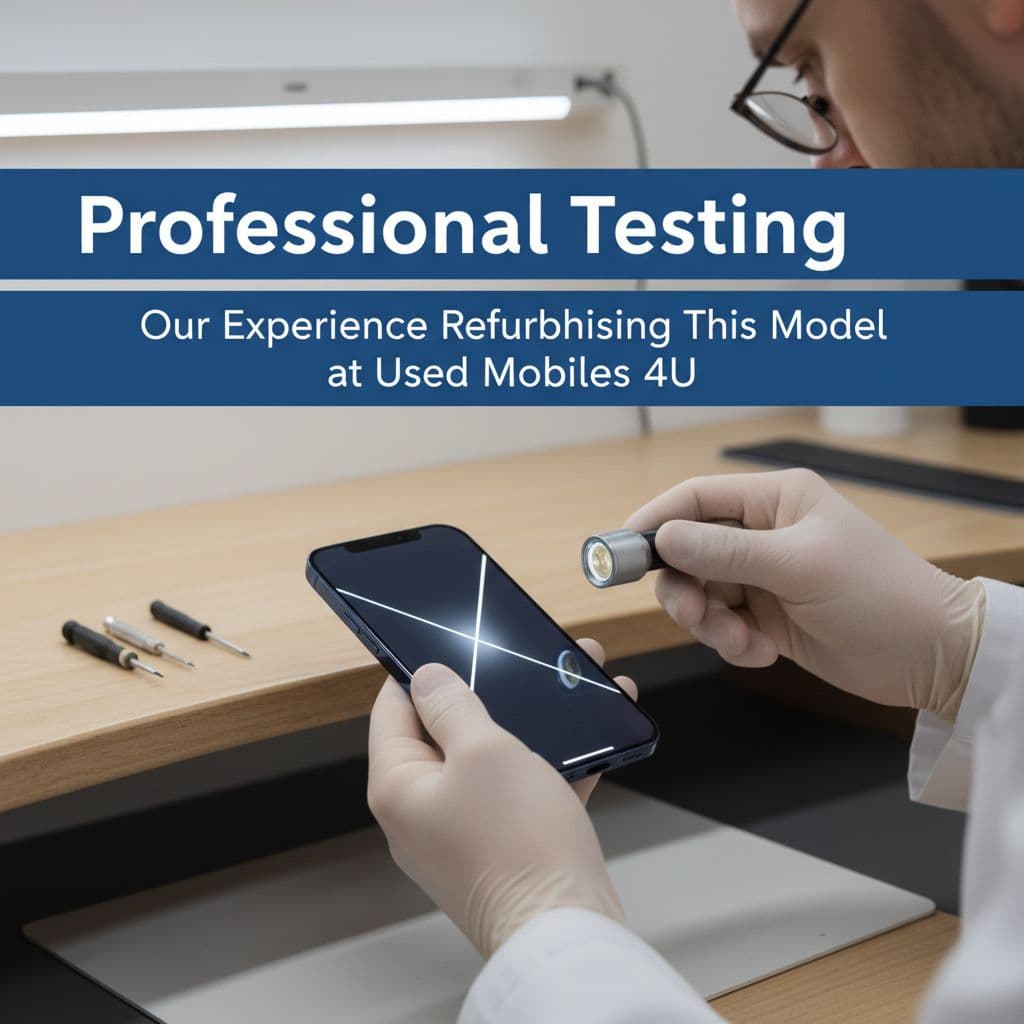
Our technicians often see buyers focus on tiny marks first. We take the opposite approach. A light scratch on the shell is easy to live with, but uneven brightness, poor touch response, weak charging or a failing sensor are the faults that change value fast.
When we inspect an iPhone 16 for resale, we pay close attention to:
- screen response across the full panel
- Face ID behaviour
- cameras and flash
- charging port fit
- speaker and microphone quality
- battery health and charging stability
The phone also needs to feel clean and honest at the grade level it is sold at. That is why we wipe data securely, test every device, and check that the handset is unlocked and ready for UK use. A polished body alone does not make a good refurb.
What We Commonly See
- Buyers usually choose this model when they want a current iPhone without paying new-phone prices.
- The most common concern is battery health, followed by whether the cosmetic grade feels premium enough.
- The main thing we check before resale is display response, Face ID, charging speed and camera function.
- The model tends to sell best when it is SIM-free, well graded and backed by a clear warranty.
- Customers often compare it with the iPhone 15, because the gap in daily use can be smaller than the price gap.
- The main reason to step up to a Pro model is camera features, not basic speed.
Repair or replace if your current phone is struggling
If we are replacing an older iPhone, we should be honest about its condition first. A cracked screen on its own is one problem. A cracked screen plus poor battery life, a bent frame or liquid damage is another.
In those cases, repair can become false economy. We may pay for a new screen, then discover Face ID is affected because the front assembly was damaged, or the frame is twisted and the new panel sits under stress. If the phone is still powering on, we should back it up first, then decide whether repair or replacement is the better route.
If a phone needs a screen, battery and frame work, replacement often beats repair on value.
That is where a refurbished replacement starts to make sense. We avoid the risk of a failed DIY job, we keep the warranty route clear, and we get a phone that has already been tested before sale. If we are ready to move on, Sell Your Old Phone can help offset the cost of the upgrade.
Where buyers usually go wrong
The biggest mistake is buying on price alone. The cheapest listing is not always the best value, especially when battery health, testing and warranty are unclear.
Another common slip is choosing too little storage. A 128GB iPhone 16 suits many people, but photo-heavy users, gamers and anyone who keeps a lot of video offline may want more headroom. We also see buyers ignore how they use their phone day to day. If the device handles work calls, banking, travel tickets and photos, it needs to be dependable, not just cheap.
That is the main difference between second hand iPhones UK listings and a well-refurbished phone. A genuine refurb should be tested, wiped, graded and backed by support. If the saving is small, or if we would still need to spend more on a battery or repair, the deal is weaker than it first looks. In that case, looking at a cleaner option among refurbished iPhones is usually the smarter move.
What we would choose
If we want a current model that still feels like a proper upgrade, the refurbished iPhone 16 is a good buy. It suits people who want USB-C, a modern iPhone feel and less risk than buying a random used handset.
If we are chasing the lowest price, we would step back and compare it with older options. If we want the best mix of value and current features, we would compare current stock rather than guess. A well-priced 16 is worth buying, but only when the warranty, battery standard and grade all stack up.
If we are ready to buy refurbished iPhone stock, we should take a slow look at current listings, then choose the phone that fits our budget and how long we plan to keep it.
Written by James Waterston, 24 years in the mobile phone industry, now running Used Mobiles 4U. LinkedIn: James Waterston
Conclusion
A refurbished iPhone 16 is worth buying in 2026 when we want a modern, reliable iPhone without full new-phone pricing. It makes the most sense for buyers who value USB-C, clear warranty cover and a phone that should stay useful for years.
If we are only chasing the lowest price, an iPhone 15 or another model may be the better fit. If we want a safer route, Browse Refurbished iPhones and compare the current stock before we decide.
Looking for a refurbished phone?
Shop professionally tested refurbished iPhones and Samsung phones with 18 month warranty, 30 day returns and free UK delivery.
Browse Refurbished Phones