


Used iPhone 15(s) vs iPhone 16(s): What’s Actually Different — And What’s Not

17/10/2025

4 Mins
Used iPhone 15(s) vs iPhone 16(s): What’s Actually Different — And What’s Not
Apple’s move from the iPhone 15 line to the iPhone 16 family continues the company’s trend of incremental evolution rather than dramatic redesign. The two generations share much of their core hardware, meaning that many buyers may find little reason to upgrade. This balance makes the used iPhone 15 a particularly attractive option — it retains flagship performance and build quality but at a far lower price than a brand-new iPhone 16.
The iPhone 16 models build subtly on the iPhone 15 foundation with small yet focused refinements in imaging, video recording, and ergonomics. Apple has made slight adjustments to enhance energy efficiency and stability while keeping its signature premium design consistent. For consumers comparing options, these subtle shifts highlight why a used iPhone 15 remains one of the smartest purchases in 2025.
Apple’s consistent approach means that even older models continue to feel modern, especially when paired with the latest iOS updates. Buyers considering value, longevity, and sustainable choices will find that the used iPhone 15 offers nearly the same experience as the iPhone 16, at a significantly reduced cost. In short, the latest iPhone may be refined — but the previous one is still remarkably relevant.
What’s New in the iPhone 16 Line
Apple introduced a few thoughtful upgrades in the iPhone 16 series, with a focus on photography and usability rather than appearance. The standout addition is the dedicated camera capture button on the iPhone 16 Pro and Pro Max. Positioned on the side frame, this tactile feature allows users to focus and shoot like a traditional camera. While it enhances creative control, it’s not a game-changer for everyday users — another reason many opt for a used iPhone 15 that delivers nearly the same capability at a lower price.
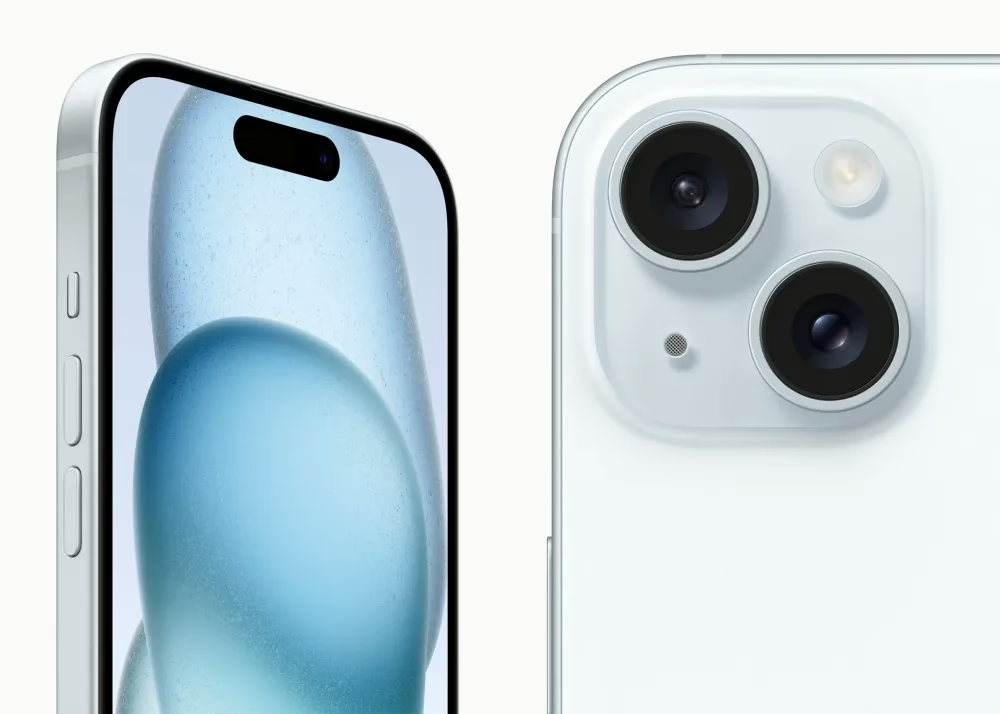
The base iPhone 16 now features a vertical dual-camera layout, optimized for Apple’s spatial video recording system. However, image quality improvements remain marginal compared to the used iPhone 15, which already captures excellent photos in most conditions.
The Pro and Pro Max variants bring a sharper ultra-wide lens and advanced 4K 120 fps video recording — upgrades aimed primarily at professionals. Everyday photography, social media shooting, and streaming remain nearly identical between the two generations.
Battery efficiency has improved slightly, and display brightness is marginally higher, but these changes are evolutionary, not revolutionary. When comparing the total user experience, a used iPhone 15 provides around 95 percent of what the iPhone 16 offers, with better value and availability.
What Remains the Same
A closer look at both generations reveals that Apple’s design continuity continues to favor durability, balance, and incremental performance gains. The titanium frame on the iPhone 16 Pro models is identical to that of the iPhone 15 Pro, offering strength without added weight. This shared build quality underscores the long-term value of a used iPhone 15, especially for buyers seeking premium materials without the new-device price tag.
Both models also share the same A17 Pro processor, ensuring that most users will notice no meaningful performance gap. Everyday multitasking, gaming, and media creation remain fast and fluid on the used iPhone 15, thanks to identical processing power and GPU architecture.
The Super Retina XDR display with ProMotion 120 Hz technology returns unchanged, as do color accuracy and resolution. Even battery life differences are minimal. Software features — including Apple’s expanding AI-driven tools — are supported equally on both generations.
These similarities illustrate how a used iPhone 15 remains a dependable flagship-level device in 2025. Apple’s incremental strategy means last year’s model stays fully relevant, offering the same iOS support and ecosystem compatibility as newer models. For those prioritizing cost-effectiveness and sustainability, the used iPhone 15 stands out as a balanced, future-ready choice.
Side-by-Side Comparison (Highlights)
Examining this comparison, the continuity becomes clear. Most specifications — chipset, display, materials, and even size — remain unchanged. The small hardware improvements will benefit niche users more than general consumers.
For those evaluating price versus performance, the used iPhone 15 retains virtually identical specifications, yet costs considerably less. Its titanium design, display quality, and raw speed mirror the iPhone 16’s performance closely. Buyers looking for a reliable premium phone without the full retail markup find that a used iPhone 15 delivers the same everyday excellence as Apple’s newest model, underscoring its exceptional long-term value in the refurbished market.
Should You Upgrade or Buy Refurbished?
The decision between upgrading and buying refurbished depends largely on your starting point. Owners of the iPhone 15 Pro series will find few compelling reasons to move to the iPhone 16 line. The added camera button and incremental lens enhancement are welcome but minor. Performance, materials, and user experience remain nearly identical — making a used iPhone 15 a smart hold-or-buy option for 2025.
For those upgrading from older generations, such as the iPhone 13 or 14, both the 15 and 16 series bring significant gains in speed, efficiency, and camera performance. Yet the used iPhone 15 delivers nearly the same leap at a fraction of the cost. As Apple extends iOS support for years, the 15 series retains strong longevity.
Environmental impact also plays a role. Choosing a used iPhone 15 helps reduce electronic waste while keeping perfectly capable devices in circulation. Consumers benefit not only from lower prices but also from sustainable purchasing choices.
In short, the iPhone 16 refines Apple’s formula without redefining it. The used iPhone 15 remains an outstanding option — a flagship experience, proven reliability, and top-tier performance — all without the premium launch-year cost.
Looking for a refurbished phone?
Shop professionally tested refurbished iPhones and Samsung phones with 18 month warranty, 30 day returns and free UK delivery.
Browse Refurbished Phones