


Discover the Best Refurbished iPhone to Buy 2026: UK Guide

23/05/2026

13 Mins
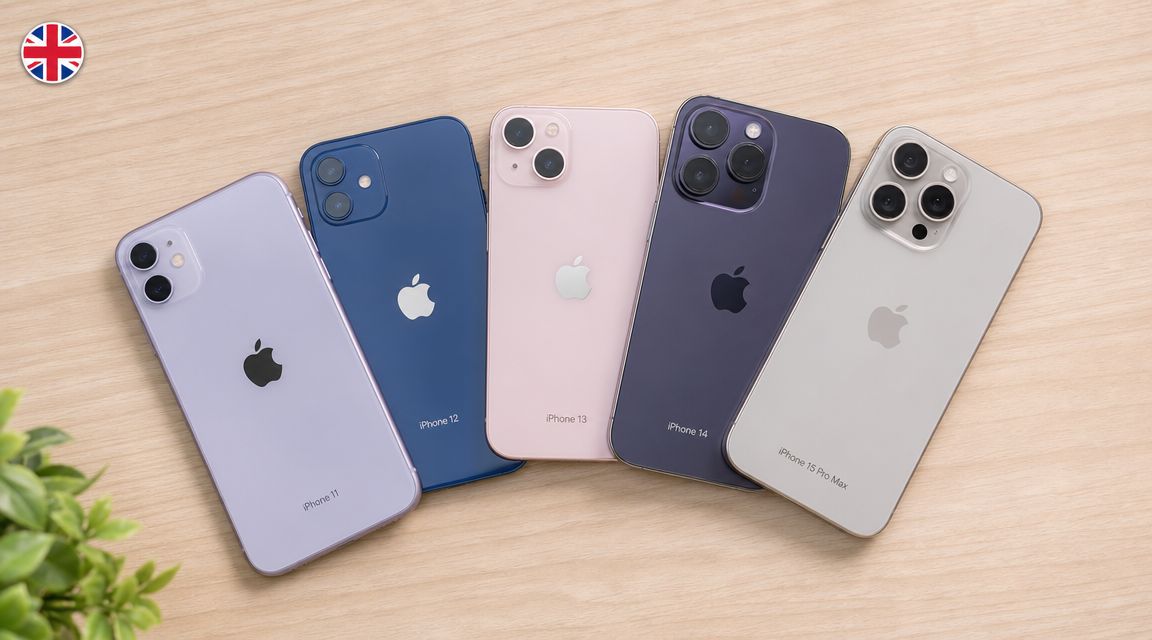
The best refurbished iPhone to buy in 2026 for most UK buyers is the iPhone 13. It hits the right balance of modern performance, sensible pricing, and enough remaining software life to still feel like a safe buy, rather than a false economy.
The surprising bit is this. The cheapest older iPhone isn’t always the best value. A model that’s too close to the end of its support life can cost you more in hassle, app issues, and earlier replacement than a slightly newer phone bought properly in the first place.
The Best Refurbished iPhone to Buy in 2026
If you want the short answer, the best refurbished iPhone to buy in 2026 is the iPhone 13. Apple generally supports iPhones with the latest iOS for about 5 to 6 years after launch, and with the iPhone 13 launching in September 2021, it still sits comfortably in that window for 2026, which is why it remains such a practical choice for security, app support and resale confidence as outlined here.
That matters more than many buyers realise. In the shop, the people happiest with their purchase usually aren’t the ones who bought the oldest phone for the lowest outlay. They’re the ones who bought a model with a sensible amount of life left in it, decent battery health, and a proper warranty from a UK seller.
Quick Comparison
- iPhone 13
Best all-round choice. Strong balance of battery life, camera quality, day-to-day speed and long-term practicality. - iPhone 14
Good pick if you want something newer without paying Pro money. A nice step up if condition and battery freshness matter to you. - iPhone 12
Best budget 5G option. Still worth considering if you want to keep spend down but don’t want to go too old. - iPhone 15 Pro Max
For heavy users who edit, game, multitask a lot, or want USB-C and stronger long-term headroom.
If you’re ready to compare actual stock rather than guess from listings, you can buy refurbished iPhones by model, grade and availability.
Practical rule: In 2026, don’t start with the cheapest iPhone you can find. Start with the newest model that still fits your budget comfortably.
Understanding Refurbished Grades and Warranty
Most disappointment with refurbished phones doesn’t come from the model. It comes from buyers not understanding grade, battery condition, or what the warranty actually covers.
That’s why grade matters in real life. Two iPhone 13s can work equally well but feel very different in the hand depending on screen marks, frame wear, battery health and whether previous repairs were done properly.
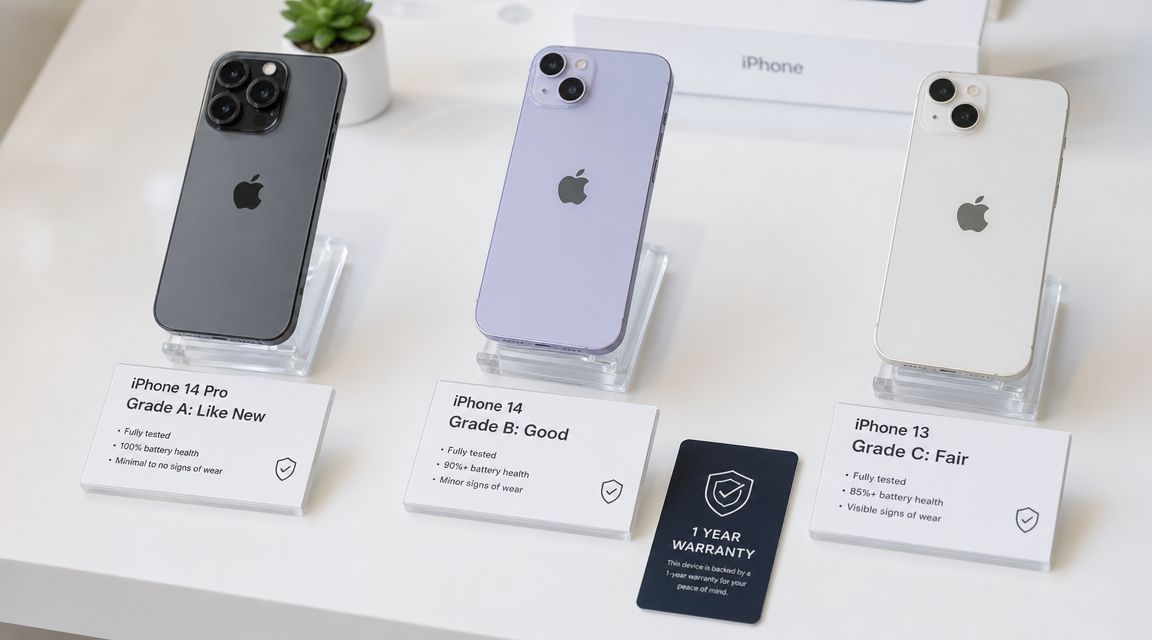
What the grades usually mean
A higher cosmetic grade normally means the phone looks closer to new. It doesn’t mean the lower grade is faulty. A well-tested lower-grade device can be a smart buy if you care more about price than appearance.
- Like New or Pristine
Very light or no obvious signs of use. Best if the phone is a gift or you know cosmetic marks will bother you. - Very Good
Minor signs of previous use, usually light marks on the casing. A common sweet spot for buyers who want a tidy phone without paying top grade money. - Good
More visible wear such as scratches or scuffs, but still fully functional. Often the best value if the phone will live in a case anyway.
Cosmetic grade should never be confused with technical condition. A phone with a few frame marks can still be the smarter purchase than a shinier one with poor battery health or a questionable repair history.
What a proper warranty should mean
In the UK refurbished market, a warranty is where the retailer proves whether they stand behind the device or just want the sale. A useful warranty should cover faults that appear after purchase and give you a clear route if something fails that shouldn’t.
Before buying, it helps to understand how refurbished iPhone grades work, because the grade tells you what to expect visually, while the warranty tells you what happens if the phone develops a genuine fault.
- Testing
Look for phones that have been checked for charging, cameras, speakers, buttons, Face ID, connectivity and battery condition. - Data wiping
A proper refurbished device should be securely wiped and reset, not just quickly erased. - Battery standard
Ask what minimum battery health is accepted. That affects the daily experience more than many buyers expect. - Clear returns process
If the phone isn’t right, you should know exactly what the next step is.
A lower grade with honest description and proper after-sales support is usually a safer buy than a suspiciously perfect phone from an unknown seller.
Key Buying Criteria for a Refurbished iPhone in 2026
When someone asks for the best refurbished iPhone to buy in 2026, I don’t start with camera count or colours. I start with support life, battery condition, storage, and how long they actually want the phone to last.
Software support comes first
This is the big one in 2026. Apple’s support window is the reason the iPhone 13 is such a sensible middle ground. The iPhone 11 launched in September 2019, the iPhone 12 in October 2020, the iPhone 13 in September 2021, the iPhone 14 in September 2022, and the iPhone 15 in September 2023. Apple states iPhones are generally eligible for the latest iOS releases for about 5 to 6 years after launch, which means the iPhone 13 and newer sit in a safer place for buyers who want a phone to remain relevant in 2026, while the iPhone 12 is later in that cycle but still a practical budget option based on this support-window overview.
That affects three things straight away. Security updates, app compatibility, and future resale. If you want another few years out of the phone, buying too old can be a mistake.
Battery health changes the daily experience
Buyers often focus on the model and forget the battery. A refurbished iPhone with tired battery health can still pass basic checks, but it won’t feel nice to use if it drops quickly under normal use or slows down under load.
For everyday use, battery condition matters more than a minor camera upgrade. A healthy iPhone 13 usually feels better to live with than an older flagship that needs charging too often.
- For commuting
You’ll notice poor battery health faster if you use 5G, maps, Bluetooth audio and brightness outdoors. - For parents buying for teens
A dependable battery matters because the phone needs to last a school day, not just look good in the box. - For work use
If you rely on calls, email, photos and hotspot use, battery health stops being a detail and becomes the job.
Storage is often a bigger issue than speed
Plenty of buyers overestimate how much processor power they need and underestimate how quickly photos, videos, apps and WhatsApp media fill the phone. Storage is hard to fix later, so it’s worth choosing carefully at the point of purchase.
If you keep a phone for several years, buying too little storage can make a good model feel cramped long before its processor becomes a problem.
5G matters, but not equally for everyone
The iPhone 12 and newer give you 5G, which is useful if you keep phones for a while or travel around areas with better newer network coverage. But I wouldn’t buy solely on that point.
If your use is mostly home Wi-Fi, messaging, banking and occasional streaming, support life and battery are still more important than chasing network features on paper.
Bench note: The best refurbished iPhone in 2026 isn’t the newest one you can stretch to. It’s the one with enough support left, enough storage for your habits, and a battery you won’t fight with every day.
The Main Contenders A Practical Comparison
Once you strip away marketing language, most buyers in 2026 are choosing between five sensible refurbished iPhones. Each one has a place. The mistake is assuming they suit the same buyer.
iPhone 13 versus iPhone 12
This is one of the most common real-world decisions. The iPhone 12 is still a valid budget buy, but the iPhone 13 is where value starts to feel more secure rather than merely cheap.
- Choose iPhone 12 if
- You want 5G for less
It’s the budget-friendly route into a modern design and network support without jumping too far up the price ladder. - You’re replacing a secondary phone
For lighter use, backup use or a shorter ownership plan, it still makes sense. - You accept it’s later in its support cycle
That’s the trade-off. It can still be practical, but you’re buying closer to the tail end of its long-term runway.
- You want 5G for less
- Choose iPhone 13 if
- You want the safest all-round buy
It’s the easiest model to recommend to most people because it balances age, support life, battery practicality and price well. - You want a phone to keep, not just get by with
The iPhone 13 is usually the point where buyers stop feeling like they compromised too much. - You care about resale later
Newer support life and stronger buyer confidence help when it’s time to move it on.
- You want the safest all-round buy
We’ve also covered this model gap in more detail in our Used Mobiles 4 U iPhone comparison if you’re torn between the middle options.
iPhone 14 as the sensible step up
The iPhone 14 sits in an awkward place on paper but often a useful place in practice. It tends to appeal to buyers who want something newer than the iPhone 13, but don’t care enough about Pro features to pay the jump.
- Choose iPhone 14 if
- You want a newer device without going premium
It’s a steady upgrade for people who value freshness and a bit more remaining life. - You’re replacing an iPhone 11 or older
The overall experience feels comfortably modern without becoming expensive for the wrong reasons. - You prefer to avoid older stock
Some buyers simply want a later launch year and are happy to pay a bit more for that peace of mind.
- You want a newer device without going premium
For many daily users, the iPhone 14 feels like the tidier buy rather than the dramatic one. That’s often enough.
iPhone 14 Pro versus iPhone 15 Pro Max
This comparison matters if you’re shopping at the top end of refurbished iPhones. The decision isn’t really about bragging rights. It’s about whether your usage justifies paying for more headroom.
The iPhone 15 Pro Max moves to Apple’s A17 Pro class with a 6-core CPU, 6-core GPU and 8GB RAM, which makes it the stronger long-term performance choice for gaming, heavier multitasking and power use, while the iPhone 14 Pro still gives you a premium everyday experience with ProMotion and strong cameras at a more accessible refurbished price point from this technical comparison.
- Choose iPhone 14 Pro if
- You want flagship feel without chasing the newest extras
You still get a premium screen and camera setup that feels properly high-end in daily use. - You care about value more than maximum longevity
It’s the smarter choice for most people who want a Pro phone but don’t push it hard. - You don’t need USB-C to fit your workflow
If your cables and accessories are already Lightning-based, the practical difference may be small.
- You want flagship feel without chasing the newest extras
- Choose iPhone 15 Pro Max if
- You’re a heavier user
Gaming, content work, larger files and longer ownership all lean in its favour. - You want USB-C
That’s a bigger real-world convenience than it sounds, especially if the rest of your kit already uses it. - You’re buying once and keeping it
This is the better long-term performance buy if you don’t like upgrading often.
- You’re a heavier user
Where the iPhone 11 fits in 2026
The iPhone 11 is the one many people ask about because it looks tempting on price. The issue isn’t that it suddenly stops being usable. The issue is that it’s far easier to buy one in 2026 and then feel its age sooner than you hoped.
- Choose iPhone 11 if
- You need the absolute cheapest route into iPhone
It can still suit very light use, a temporary device, or someone with modest expectations. - You understand the support risk
This isn’t the model I’d choose for a longer ownership plan.
- You need the absolute cheapest route into iPhone
- Avoid iPhone 11 if
- You want several more secure years of use
A newer model is simply the safer buy. - You’re buying for a child or work fleet
Longer support life matters more here than saving a bit upfront. - You want to reduce hidden replacement costs
An older cheap phone can become the more expensive choice if it needs replacing earlier.
- You want several more secure years of use
Our Experience Refurbishing the iPhone 13 at Used Mobiles 4U
The iPhone 13 is the model we’re most comfortable recommending to ordinary buyers because it tends to age well and refurbish well. That’s not the same thing. Some phones look good on paper but arrive with enough wear patterns and repair history to make them awkward stock. The iPhone 13 is usually more straightforward.
One thing we regularly notice is that iPhone 13s often come in with normal cosmetic wear rather than serious structural abuse. You’ll still see scratched frames, tired batteries and the occasional poor-quality earlier repair, but the model itself generally holds up well.
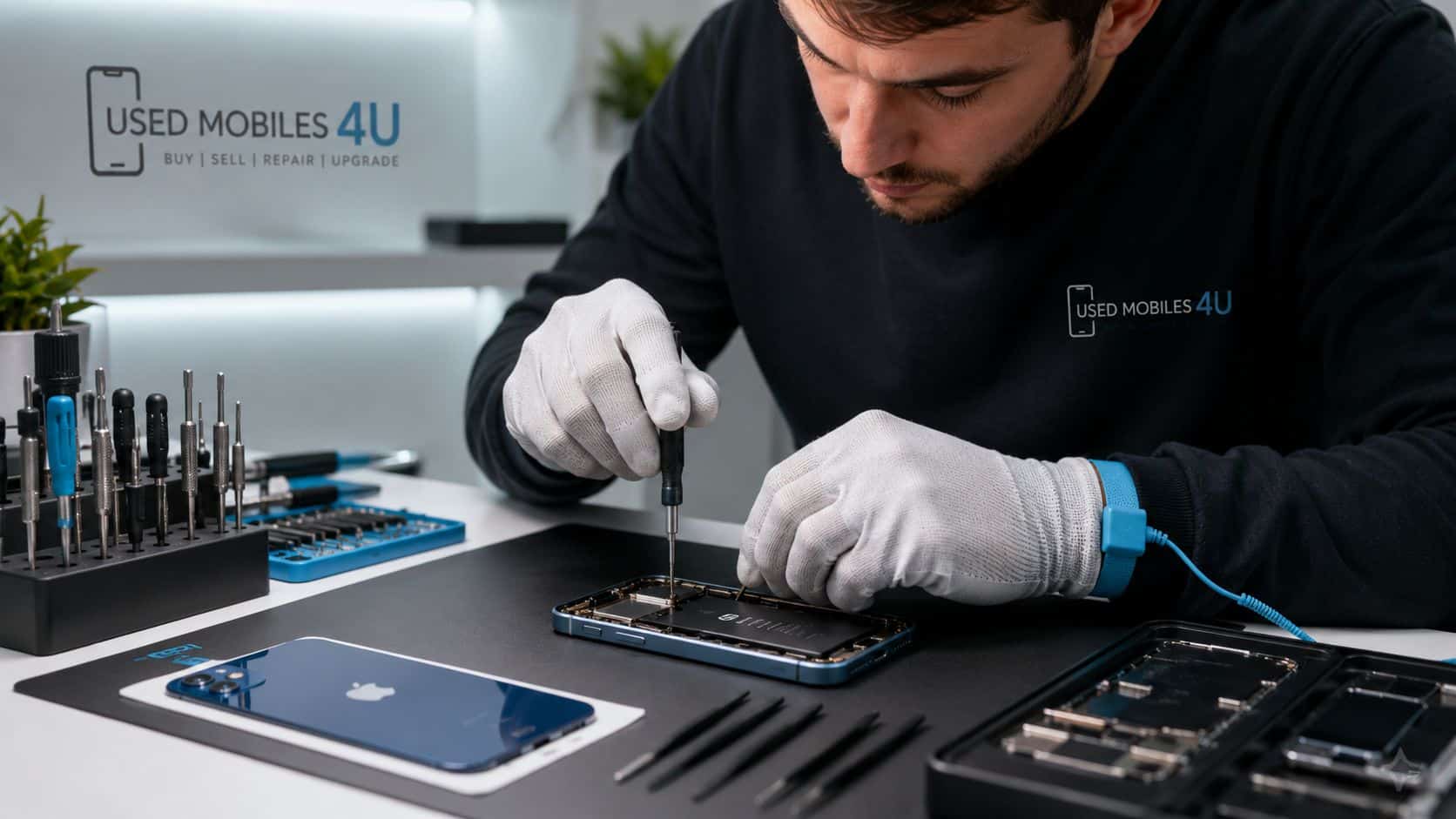
What our technicians often see
- Battery wear
This is still the most common issue on a used iPhone 13. Not dramatic, just normal ageing. A healthy battery makes a big difference to whether the phone feels sharp and dependable. - Debris in speakers and charging ports
Pocket fluff, dust and everyday grime can make a phone seem worse than it is. Proper cleaning and testing often restores normal performance. - Screen history
We sometimes see trade-ins with previous screen replacements. Good replacement work is fine, but cheap parts are easy to spot because touch feel, brightness and overall finish don’t match the standard of the original display. - Frame wear around corners
This usually affects grade more than function. It matters if you care about cosmetics, less so if the phone is going straight into a case.
Why the iPhone 13 refurbishes well
Our technicians often see that the iPhone 13 lands in a sweet spot between modern enough and not overly complicated from a resale point of view. It’s new enough that buyers still want it, but old enough that stock is available in a useful spread of grades and storage options.
It also compares well against nearby options. The iPhone 12 can still be fine, but more buyers worry about how much support life remains. The iPhone 14 is excellent, though not always enough of a leap to justify the extra spend for an average user. That leaves the iPhone 13 as the model that most often feels right when the phone is actually in your hand.
One well-prepared iPhone 13 with honest grading is usually a better buy than chasing a newer model with unclear battery condition or a vague repair history.
If you want to see the standard checks involved before a device goes back on sale, our Used Mobiles 4U Refurbishment Process explains the testing and preparation in more practical detail.
What Buyers Usually Ask Us
The same questions come up again and again, especially from parents, business buyers and people switching over from an older Android. The answers usually come back to lifespan, security and whether the saving is real or only looks good upfront.
- Is an iPhone 11 still safe to buy for a child
Usually not the first model we’d point a parent towards in 2026 if they want the phone to last properly. Apple’s UK support pages show iOS 18 is current, and older devices age out of major updates over time. For anyone wanting another 2 to 3 years of secure use, a refurbished iPhone 13 or 14 is the safer choice than an iPhone 11 because support lifespan matters more than low entry price as discussed here. - Should I trade in my old Android and move to iPhone
If you want a simpler long-term buying decision, often yes. A common example we see is someone replacing a tired Android with a refurbished iPhone 13 because they want predictable updates, strong resale later, and easier access to cases and repairs. - What about business fleets
Businesses usually benefit from buying a newer standard model rather than the cheapest handset available. A fleet of iPhone 13 or iPhone 14 devices is easier to manage than a mixed batch of ageing phones with different support outlooks. - Does grade matter for a work phone
Usually less than people think. For many business buyers, a lower cosmetic grade is perfectly sensible if the phones are cased and technically sound. - Should I buy Pro for everyday use
Only if you know why you want it. Many buyers are happier saving the difference and putting that money towards higher storage or a newer non-Pro model.
One other thing worth noting. Ofcom describes the UK smartphone market as mature, with smartphones used by the vast majority of adults. That’s exactly why software support matters so much now. In a market where the phone is a core daily tool, secure longevity beats flashy specs for most people.
Final Verdict Who Should Buy What in 2026
If you ask me for one clear recommendation, it’s still the iPhone 13. For most people searching for the best refurbished iPhone to buy in 2026, it’s the most balanced option. It feels modern, has sensible remaining life in it, and avoids the false saving of going too old.
The iPhone 12 is still worth a look if your budget is tighter and you specifically want a practical 5G iPhone without spending more than you need to. Just go into it knowing it sits later in its software-support life.
The iPhone 14 suits buyers who want something newer and are happy to pay for a bit more runway. If you’re a power user, heavy gamer or you want USB-C and stronger long-term performance, the iPhone 15 Pro Max is the premium choice. If you simply want a high-end phone without pushing right to the top, the iPhone 14 Pro remains the better-value Pro option for most.
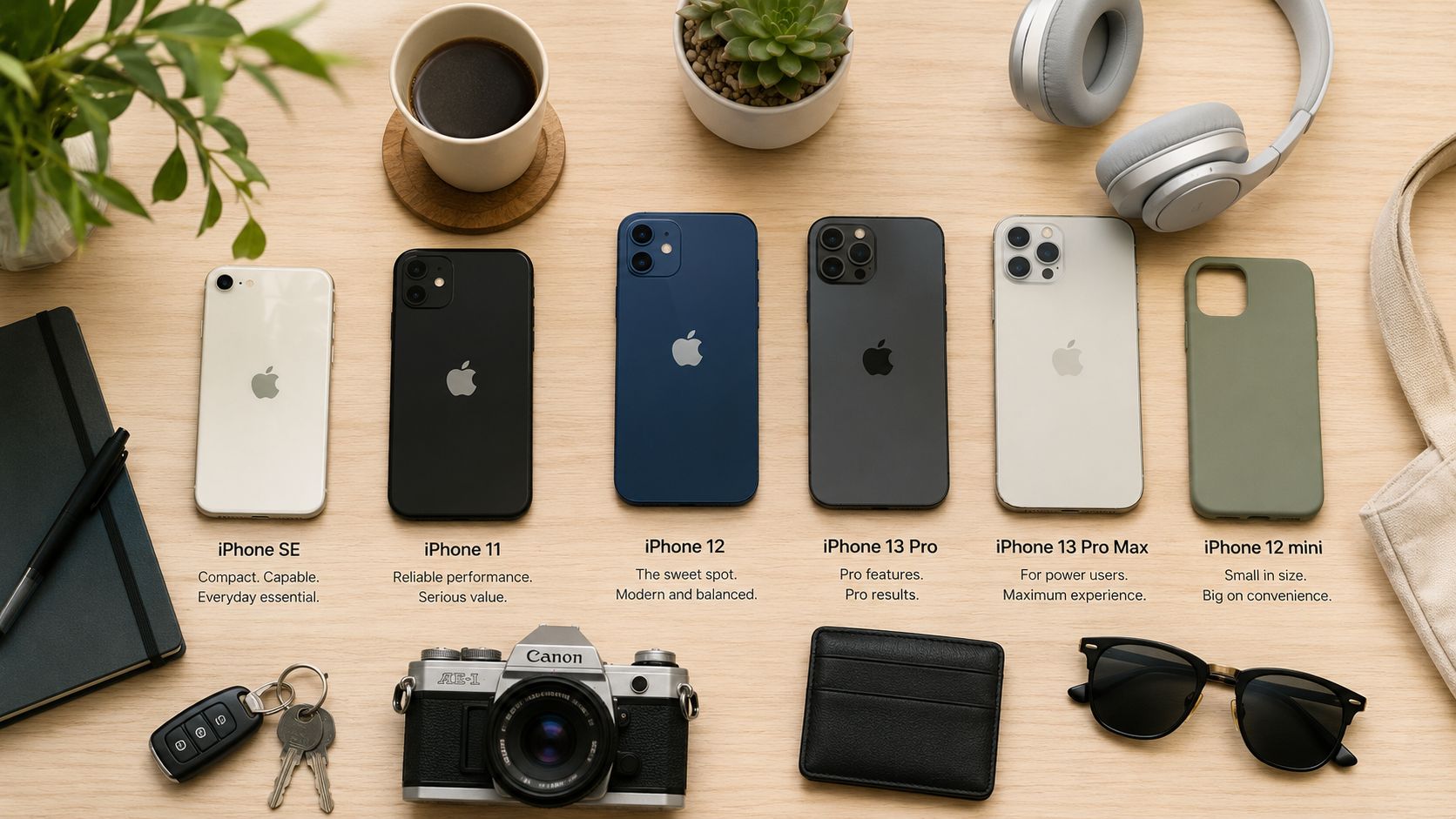
What we’d recommend
- Smart all-rounder
iPhone 13 - Budget 5G pick
iPhone 12 - Safer family buy
iPhone 13 or iPhone 14 - Best value premium phone
iPhone 14 Pro - Power user choice
iPhone 15 Pro Max
So yes, a refurbished iPhone is still well worth buying in 2026, but only if you buy the right model for the years ahead, not just the cheapest one for today. If you want a phone that should age sensibly, hold value reasonably and avoid support anxiety, the iPhone 13 is the one I’d choose most often. If you want help comparing grades, storage and stock, it’s worth checking what’s currently available before deciding.
Written by James Waterston. 24 years in the mobile phone industry from customer service through to Sales Director of a global repair and recycling company. Now running Used Mobiles 4U for over 8 years. LinkedIn profile
If you’re comparing options now, have a look at Used Mobiles 4 U for current refurbished iPhone stock, grading details, and UK warranty information before you buy.
Meta description: Best refurbished iPhone to buy 2026 in the UK: practical advice on iPhone 13, 12, 14 and 15 Pro Max, with grading, warranty and repair insights.
Looking for a refurbished phone?
Shop professionally tested refurbished iPhones and Samsung phones with 18 month warranty, 30 day returns and free UK delivery.
Browse Refurbished Phones