


Console Trade in: Your 2026 UK Guide to Max Returns

05/07/2026

11 Mins
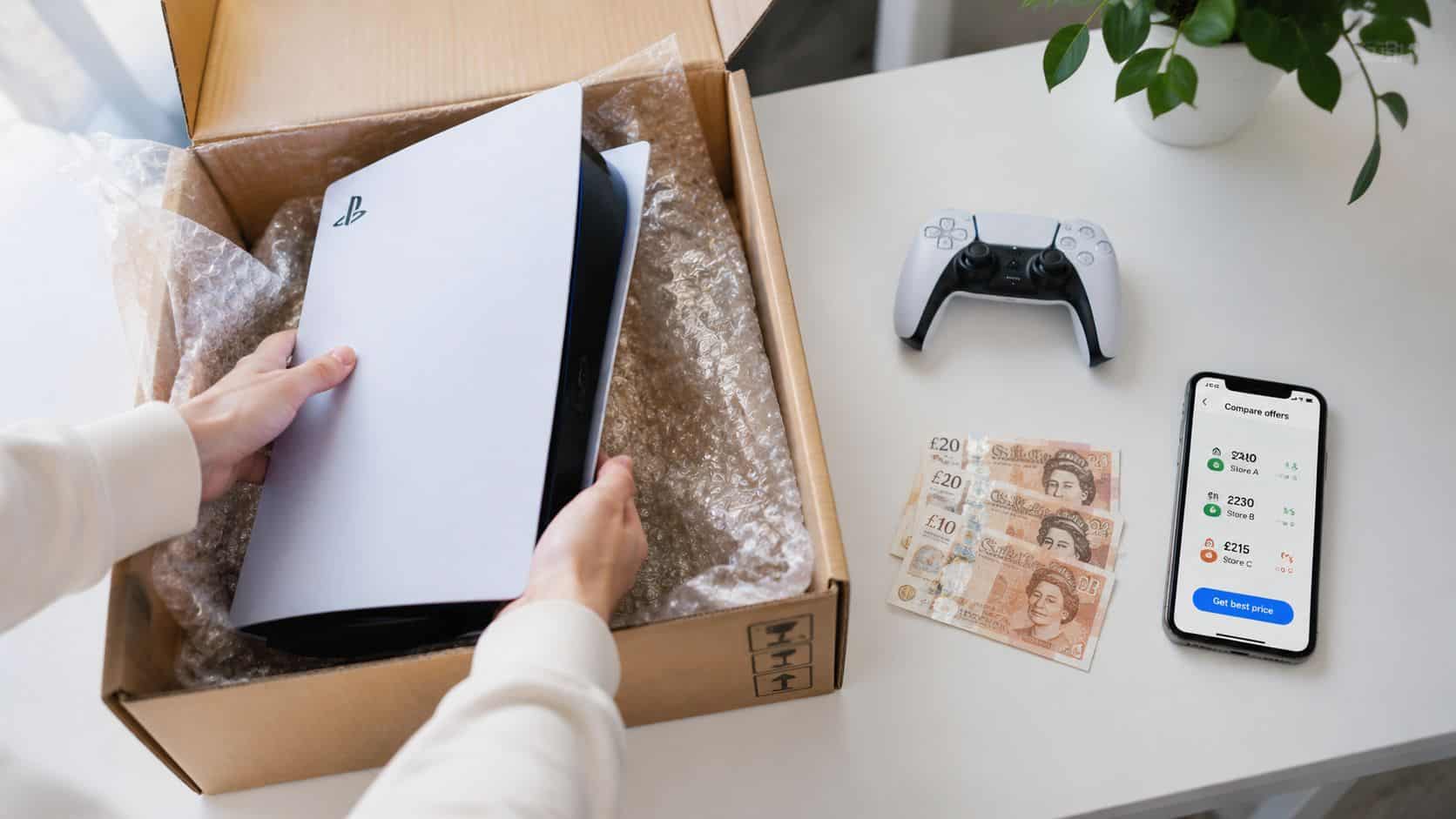
You’ve probably got a console under the telly that still works fine, but it’s no longer the one you actually want to keep. A console trade in is usually worth it if you want less hassle, faster payment, and a straightforward upgrade path. If you want the absolute top return, private sale can beat it, but only if the console is clean, complete, properly wiped, and you’re willing to deal with the legwork.
Your Guide to a Successful Console Trade In
A good console trade in starts before you ever ask for a quote. The biggest difference between a smooth sale and a disappointing one is usually preparation, not luck. Honest grading, a proper reset, and the right accessories matter more than most people think.
There’s also a solid reason this market keeps moving. UK console hardware sales hit a record £1.13 billion, driven by demand for newer machines, which keeps older PlayStation, Xbox and Nintendo consoles flowing into the second-hand market as people upgrade, as shown in UK gaming market data.
Practical rule: If your console turns on, reads games properly, stays cool, and includes the right leads, you’re already in a much better position than many sellers realise.
From a technician’s point of view, this process is familiar. It’s very similar to phones. The unit gets quoted, inspected, graded, and then either accepted as-is, revalued, or refused because of faults that should have been spotted earlier.
The aim is simple. Get paid without avoidable deductions, account problems, or transit damage.
The Short Version How to Get the Best Price
In Plain English
- Be stricter than you think on condition: Light marks are one thing. Deep scratches, cracked plastics, noisy fans, sticky buttons and thumbstick drift usually mean a lower final offer.
- Back up first, then wipe properly: Don’t assume deleting a profile is enough. Remove your account, factory reset the console, and sign out of linked services before it leaves your house.
- Find every accessory: Original power leads, HDMI cables, controllers, docks and chargers all affect how easily the unit can be resold. Missing bits slow everything down and often cut value.
- Choose the right route: Trade in works best when speed and convenience matter. Private sale suits people happy to photograph, list, answer messages and wait for the right buyer.
- Don’t guess the grade: Sellers nearly always see “good condition” where a technician sees wear, dust, controller issues or overheating signs.
- Clean it carefully: A wipe-down, dust-free vents and untangled leads won’t fix faults, but they do help the console present properly at inspection.
- Pack for impact, not appearance: The neatest box in the world is no use if the controller can bounce into the console during shipping.
- Photograph everything for private sale: Front, rear, ports, serial label, accessories, controller wear and any marks. It saves arguments later.
Most trade-in problems aren’t hidden electronic faults. They’re missing cables, poor resets, rough packaging, and a seller who was too optimistic about condition.
How to Prepare Your Console for Sale Quick Steps
Before anything else, back up your saves and anything else you need. The next steps are meant to remove your data completely. Once the console has been reset and accepted, don’t expect to recover anything from it.
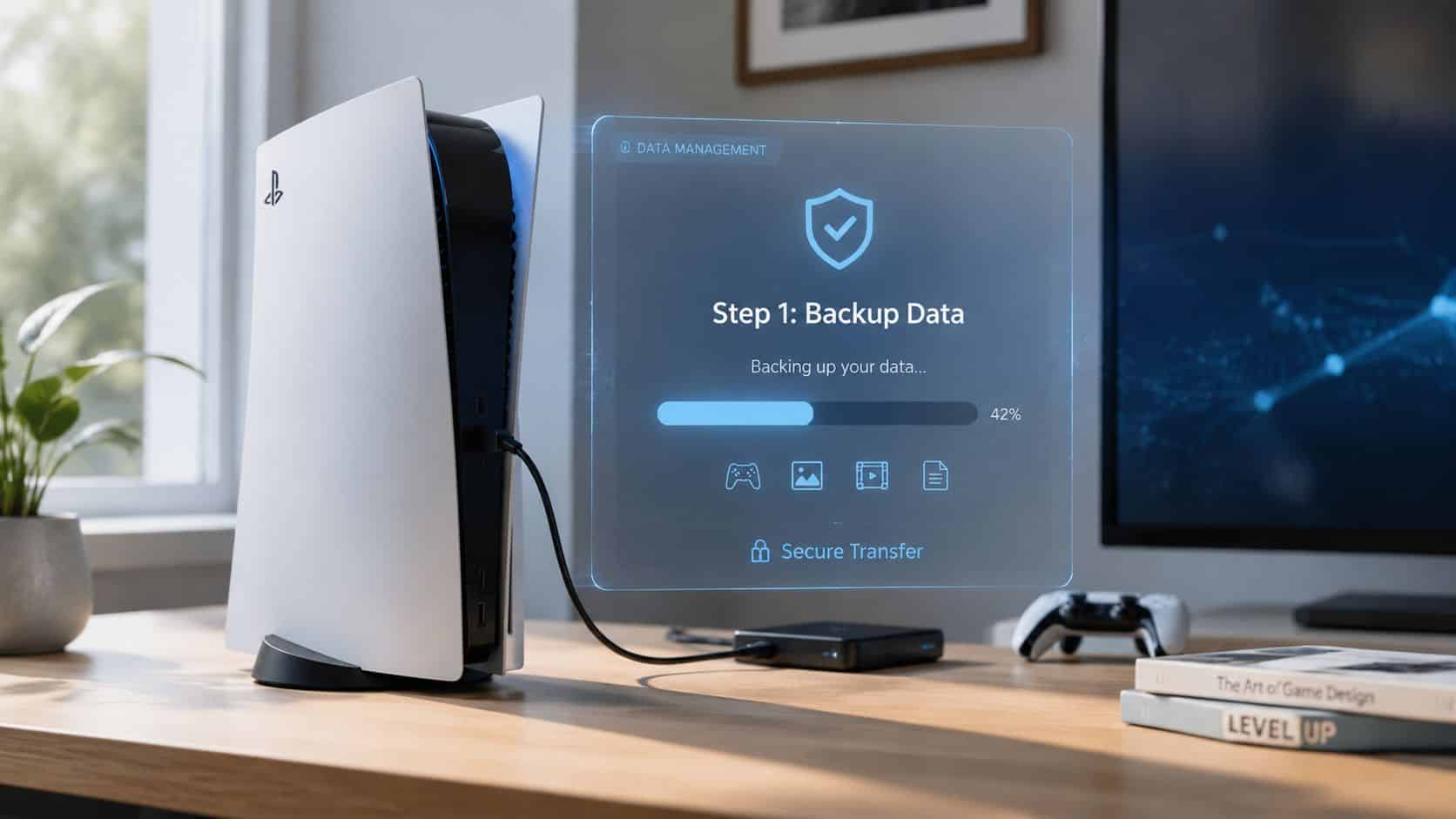
How to Prepare Your Console for Sale Quick Steps
- Back up saves and captures. Use cloud backup if your subscription allows it, or copy what you can to external storage. Check official reset guides from PlayStation Support, Xbox Support and Nintendo Support before you wipe anything.
- Sign out and remove the console from your account setup. On PlayStation and Xbox, make sure it’s no longer your primary or home console if that applies. On Switch, remove anything linked that you don’t want left behind.
- Run a full factory reset. Don’t just delete users. Use the proper reset option in system settings so the next owner or inspection team sees a clean setup screen.
- Clean the exterior properly. Use a dry microfibre cloth or a slightly damp one if needed. Keep moisture away from ports, vents and controller buttons. Don’t spray anything directly into the console.
- Test the practical basics. Power on, check disc drive function if it has one, test Wi-Fi, controller pairing, charging, HDMI output and any obvious fan noise. If you’ve been using adapters for older kit, it’s worth sorting out things like connecting old consoles to HDMI before you list accessories or legacy hardware bundles.
- Gather everything that should go with it. Power cable, HDMI lead, controller, dock, charger, stand, and any official accessories should be set aside together. This is where many offers get revised.
- Take photos if you might sell privately. Get clear shots in daylight, including all angles and any marks. Good photos don’t create value, but bad photos can definitely lose it.
The standard UK console trade-in process usually runs in three stages: a digital quote, a physical inspection, and a final valuation based on cosmetic grading and hardware checks, as outlined in this UK trade-in process overview. That matters because the online quote is only the starting point. The inspection is where unrealistic expectations get corrected.
What catches people out
A common example we see is someone resetting the console but forgetting to remove account links properly. The unit is technically wiped, but the handover still isn’t clean. Another regular issue is sending a console with a third-party cable setup, then assuming it won’t affect the grade because “it still works”.
If you want a straightforward transaction, act like the inspector is going to test exactly what you’d test yourself if you were buying it for your own home. Because that’s basically what happens.
Retailer Trade In vs Private Sale in the UK
The UK changed when GAME shut its trade-in programme in 2023. That removed a familiar route for people who wanted fast in-store credit against their next console, and it pushed more sellers toward online buyback services or private marketplaces. TechRadar’s coverage of the loss of GAME’s trade-ins captures why that mattered for affordability-conscious households.
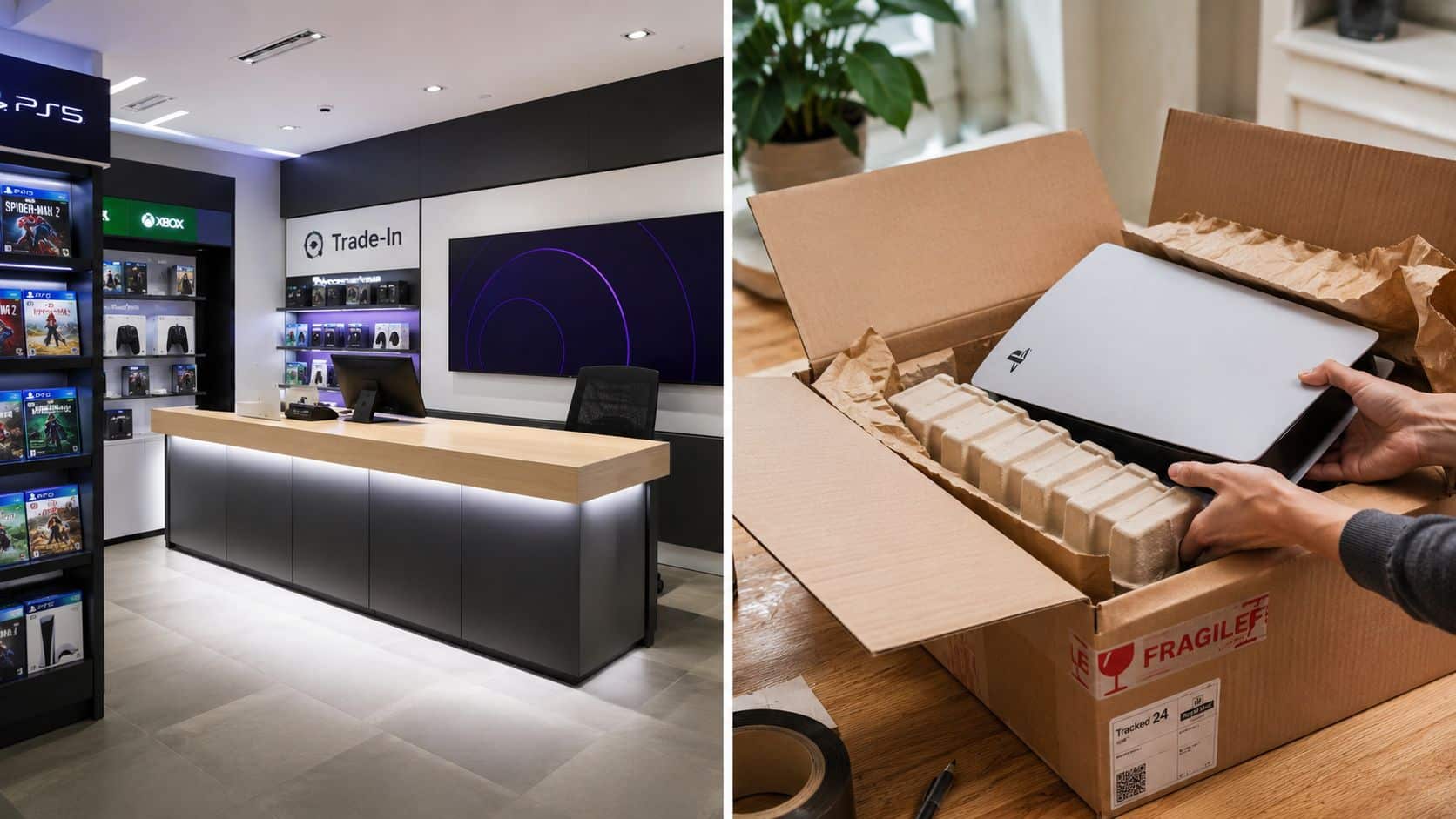
Choose retailer trade in if
- You want less hassle: You fill in the quote, ship the unit, wait for inspection, then get paid or credited.
- You’d rather avoid buyer disputes: There’s no haggling over messages, no no-shows, and no awkward collection arrangements.
- Your console is good but not immaculate: A professional buyer may still want it for refurbishment even when a private buyer starts nit-picking cosmetic wear.
- You need a faster decision: It may not be instant in the way old shop-counter trade-ins once were, but it’s usually simpler than waiting for the right private buyer.
Choose private sale if
- You want the strongest possible return: That’s the main reason to do it.
- You can describe condition properly: Honest listings attract better buyers than vague “works perfectly” descriptions.
- You’ve kept the box and accessories: Complete bundles usually present better and sell more easily.
- You don’t mind delays: Private sale often means relisting, answering questions and dealing with people who disappear after saying they’re interested.
There is a real value gap. One UK-focused buyback discussion highlights a common question people still struggle with: whether online trade-in actually matches private sale value for PS5 and newer Nintendo hardware. It notes that with PS5 sales down 50% in the UK over 52 weeks to May 2025, the cash value of a PS5 via online buyback had dropped 22% compared with 2024, while private sales were retaining 15% higher value. It also notes Switch 2 sales hitting 1 million units. That’s why timing and route matter so much in a moving market, as discussed on Back Market’s buyback pages.
If you need certainty, trade in is usually the better fit. If you need every last pound, private sale is usually the better fit.
A common example we see is someone trying to get the best price for your PS4 when they’re also funding a newer console purchase. If they need the money quickly and don’t want a week of messages and collection arrangements, the lower but cleaner trade-in route often makes sense. If the console is boxed, clean, and complete, private sale becomes more attractive.
The trade-off most people actually face
This isn’t only about headline value. It’s about your time, your tolerance for hassle, and how likely your console is to pass inspection without deductions. Sellers often compare quote numbers without comparing the hidden work around them.
Private sale is best when the console is presentable, you can show it working, and you’re patient. Trade in is best when convenience matters more than squeezing out the very top figure.
What We Check Before Resale A Technician’s Perspective
What buyers usually miss is that “working” is only the first layer. A console can power on and still be a poor trade-in if it runs hot, has damaged ports, a loud fan, a weak controller, or grime packed into the vents.
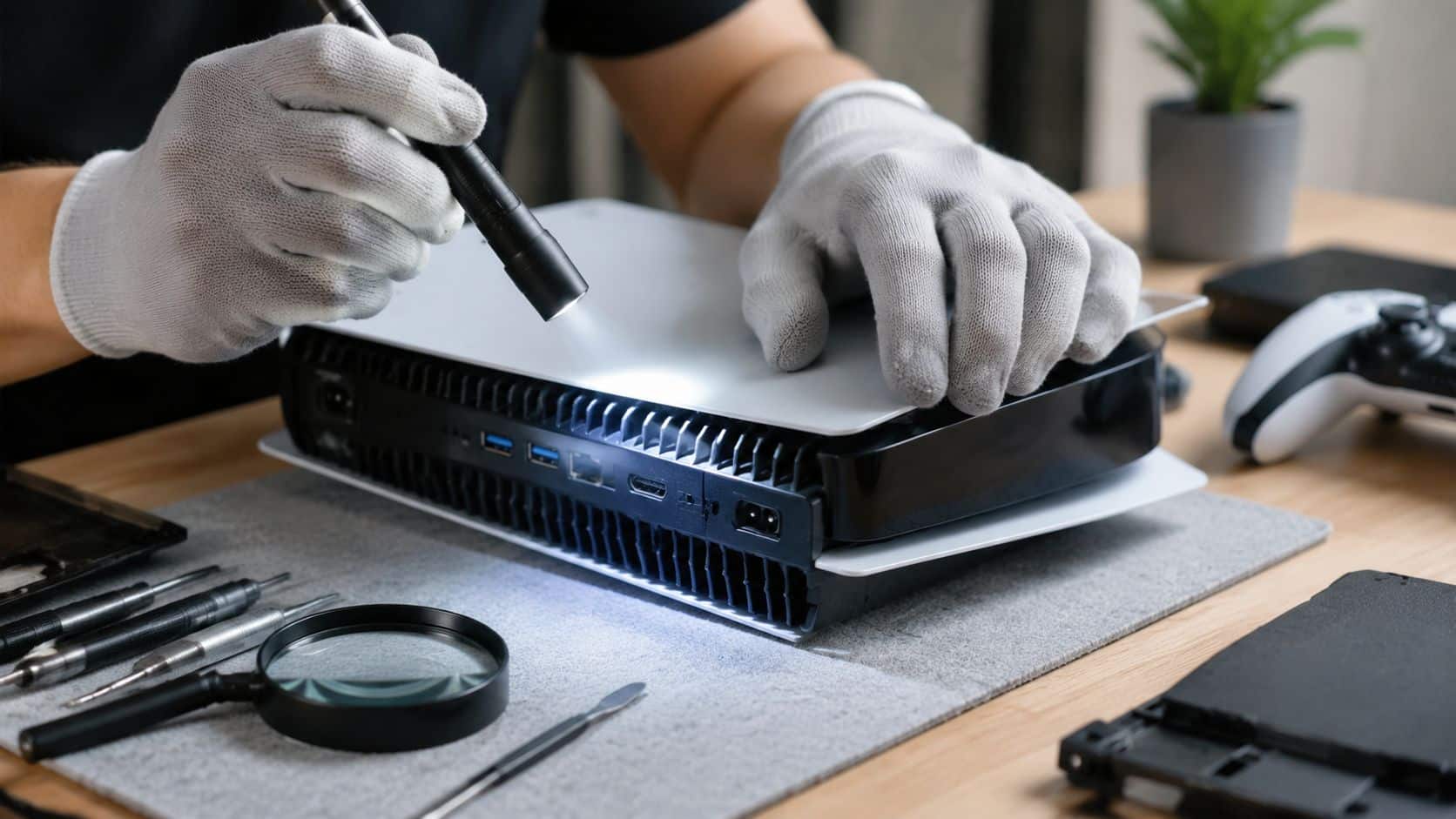
Our Experience Refurbishing This Model at Used Mobiles 4U
Even though our day-to-day bench work is mostly phones, tablets and other personal tech, the inspection logic is exactly the same when we assess used electronics. One thing we regularly notice is that wear tells a story long before a device fails. Heavy dust around vents, discoloured plastics, loose HDMI ports and shiny thumbsticks usually mean the unit has had a hard life, even if it still boots normally.
Our technicians often see the same pattern that comes up on mobile devices. Battery-backed accessories degrade before sellers admit they have. With consoles, that usually means controllers that don’t hold charge well, portable systems with tired batteries, or docks and cables that have been bent and re-used too many times. We also look closely for signs of previous DIY repair, missing screws, broken clips and non-original parts.
Grade differences are usually more obvious on the bench than they are in a living room. “Like New” means very little visible wear, clean plastics, tidy ports and accessories that look right for the unit. “Good” often means light scuffs and honest use. Once you get into chipped casing, drift, noisy cooling, weakened batteries or rough port fit, the decision shifts from straightforward resale to repair-first, or sometimes reject.
That same practical process sits behind our Refurbishment and Testing Process. We check charging, connectivity, cameras, biometric functions and battery health on phones. On consoles, the equivalent is power stability, HDMI output, controller response, thermal behaviour and account-free setup.
What We Check Before Resale
- Cosmetic wear: Light surface marks are normal. Deep scratches, chips, cracks and yellowing are not. Cosmetic wear can reduce trade-in value by 15 to 25%, as noted in UK console trade-in market data.
- Cables and essentials: Missing original power or HDMI leads can cause a 12% drop in the offer from the same source. This catches people out constantly.
- Ports and sockets: HDMI damage is a bigger issue than many sellers expect. If the plug feels loose or the picture cuts out, the grade drops quickly.
- Controllers: We check stick drift, sticky face buttons, weak battery performance, poor charging and cracked housings.
- Thermals and noise: Excess dust and loud fan behaviour can suggest overheating risk. That doesn’t always mean instant refusal, but it does affect confidence in the unit.
- Signs of heavy use: Smoker’s residue, pet hair in vents, and damaged seals often point to more internal cleaning or repair work than the seller expected.
PlayStation units dominate much of the UK trade-in flow, which makes them easier to move in the secondary market, based on the same UK market source. In practical terms, that usually means a cleaner path to resale if the condition is right.
Bench note: The cleanest-looking console isn’t always the best one. We’d rather see honest light wear and stable performance than a polished shell hiding a damaged HDMI port or overheating issue.
Repair first or sell as it is
If the fault is minor and clearly fixable, repair can make sense before sale. If the console has multiple issues, private buyers get nervous and trade-in buyers reduce offers hard. At that point, selling as faulty may be the cleaner option.
The same rule applies on phones. A device with one clear issue is easier to value than one with a list of small faults. Consoles are no different.
Shipping and Final Steps Getting Paid Without Hassle
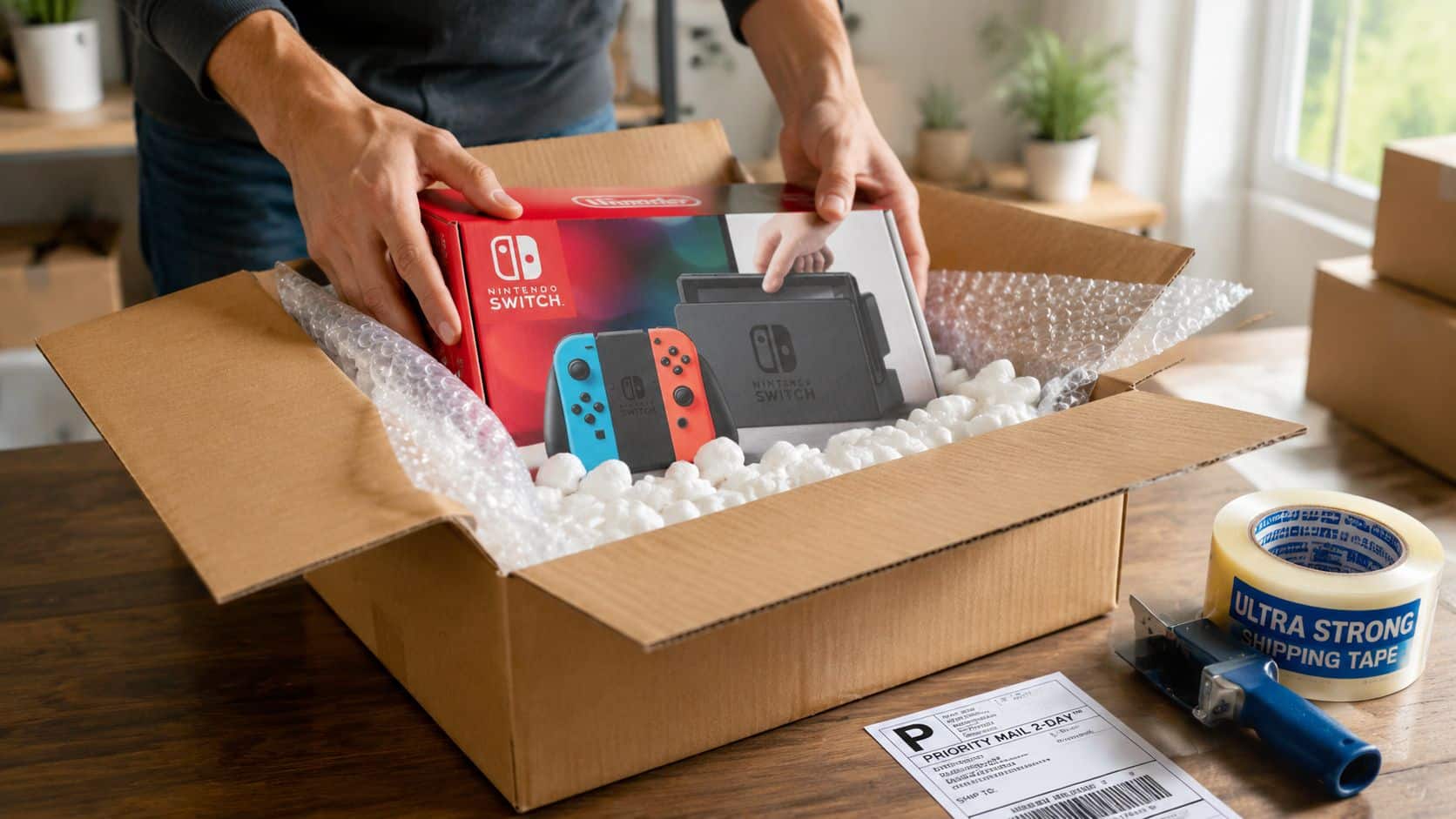
Shipping is where an acceptable console can become a problem. A machine that left your house in good condition can arrive with a corner crack, damaged port or scraped front panel if it’s packed loosely with cables bouncing around inside the box.
Pack it like an inspector will open it
- Use a sturdy box: Don’t re-use something half-crushed from the garage if the sides are already weak.
- Wrap the console separately: Bubble wrap or thick packing paper helps stop scuffs and impact damage.
- Bag the accessories: Power leads, HDMI cables and controllers should be secured so they can’t swing into the console during transit.
- Fill empty space: If the contents shift when you shake the box gently, it isn’t packed well enough.
- Use tracked shipping: You want proof of dispatch and delivery. If insurance is available for the value involved, it’s worth considering.
If you need a practical checklist, this guide to shipping your old devices covers the same common-sense approach we’d recommend for any valuable tech leaving your home.
After payment
Once you’ve been paid, tidy up the digital side properly. Remove the old console from your account management pages, check any subscription links, and keep the proof of sale or payment email. It’s a small step, but it prevents awkward account issues later.
The broader market is still active. The UK games sector remains large, with console hardware sales reaching £1.13 billion during the recent peak in upgrade demand, which is one reason trade-in activity stays strong as households move on to newer machines, based on UK gaming hardware spending figures.
A console trade in is worth it for people who want speed, less hassle and a cleaner transaction. Private sale is better for sellers who can wait, present the console properly, and don’t mind doing the extra work.
My view is simple. Trade in makes sense when convenience matters more than chasing the highest possible number. If your console is complete, well looked after, and you can tolerate the back-and-forth, private sale can be stronger. If it’s worn, incomplete, or you just want it gone without stress, console trade in is often the better route.
If you’re clearing out older tech as well as a console, Used Mobiles 4 U also buys phones and other devices through its Sell Your Tech service. If you’d rather replace than repair, you’ll also find tested, SIM-free devices with clear grading, secure data wiping, UK support and warranty cover.
Written by James Waterston, 24 years in the mobile phone industry from customer service through to Sales Director of a global repair and recycling company. Now running Used Mobiles 4U for over 8 years.
LinkedIn: James Waterston
Meta description: Console trade in explained for UK sellers. Learn how to prep, compare trade-in vs private sale, avoid deductions, and get paid with less hassle.
Looking for a refurbished phone?
Shop professionally tested refurbished iPhones and Samsung phones with 18 month warranty, 30 day returns and free UK delivery.
Browse Refurbished Phones