


Understanding What Does Refurbished Mean Iphone: A 2026

31/05/2026

10 Mins
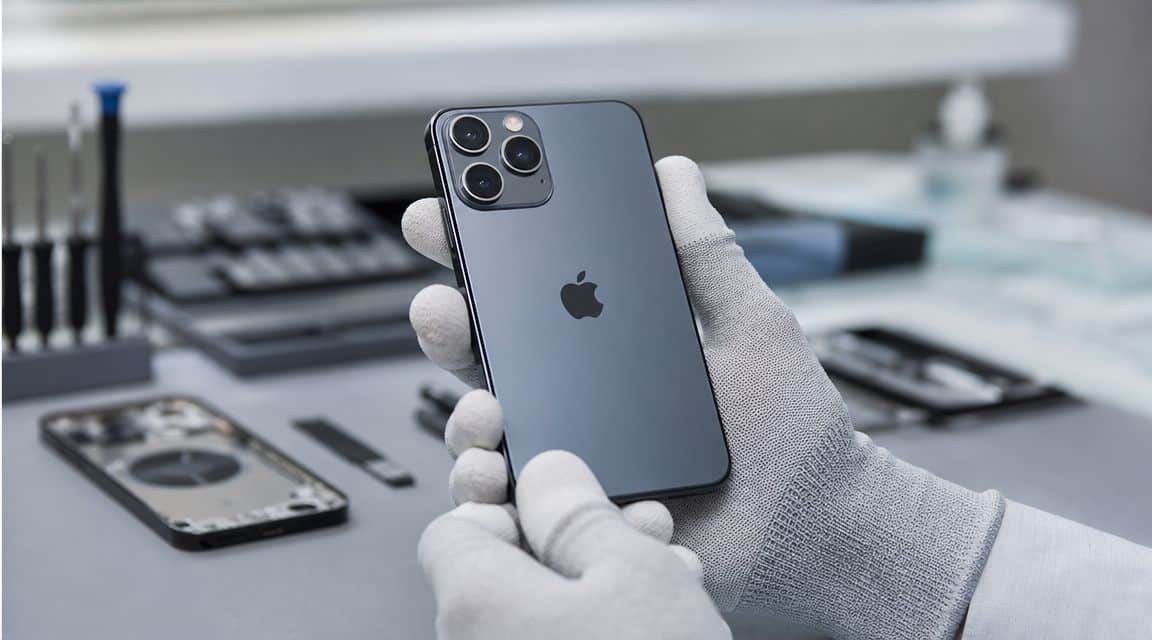
If you’re stood in a shop or scrolling listings wondering what does refurbished mean iPhone, the simple answer is this. It means the iPhone has had a previous life, then been professionally checked, cleaned, tested and, where needed, repaired before being sold again.
That’s not the same as a random used phone from a private seller. A proper refurbished iPhone should be sold with clear grading, battery information, warranty, and some accountability if something isn’t right.
So What Does Refurbished Mean for an iPhone
A refurbished iPhone is a pre-owned device that has been professionally tested, repaired if needed, and restored to working condition close to new. That’s the practical meaning most buyers need. It isn’t just “second-hand with a wipe-down”.
Apple’s own certified refurbishment standard is a useful benchmark because it describes a process of full functional testing, genuine replacement parts where needed, and even up to 15% savings against new through its programme, which you can see on Apple’s refurbished information page. In day-to-day buying terms, refurbished means someone has taken responsibility for checking the phone before it goes back on sale.
A used iPhone, by contrast, might be perfectly fine, or it might have a weak battery, a tired charging port, camera issues, or a hidden lock problem. That’s why the difference matters.
Practical rule: If the seller can’t clearly explain the testing, grade, battery condition and returns policy, treat it as used, not properly refurbished.
For a fuller breakdown of the language retailers use, it helps to start with understanding refurbished mobile phones before you compare specific iPhone models.
The Short Version Refurbished vs Used vs New
If you want the quick version, this is how most customers should think about it.
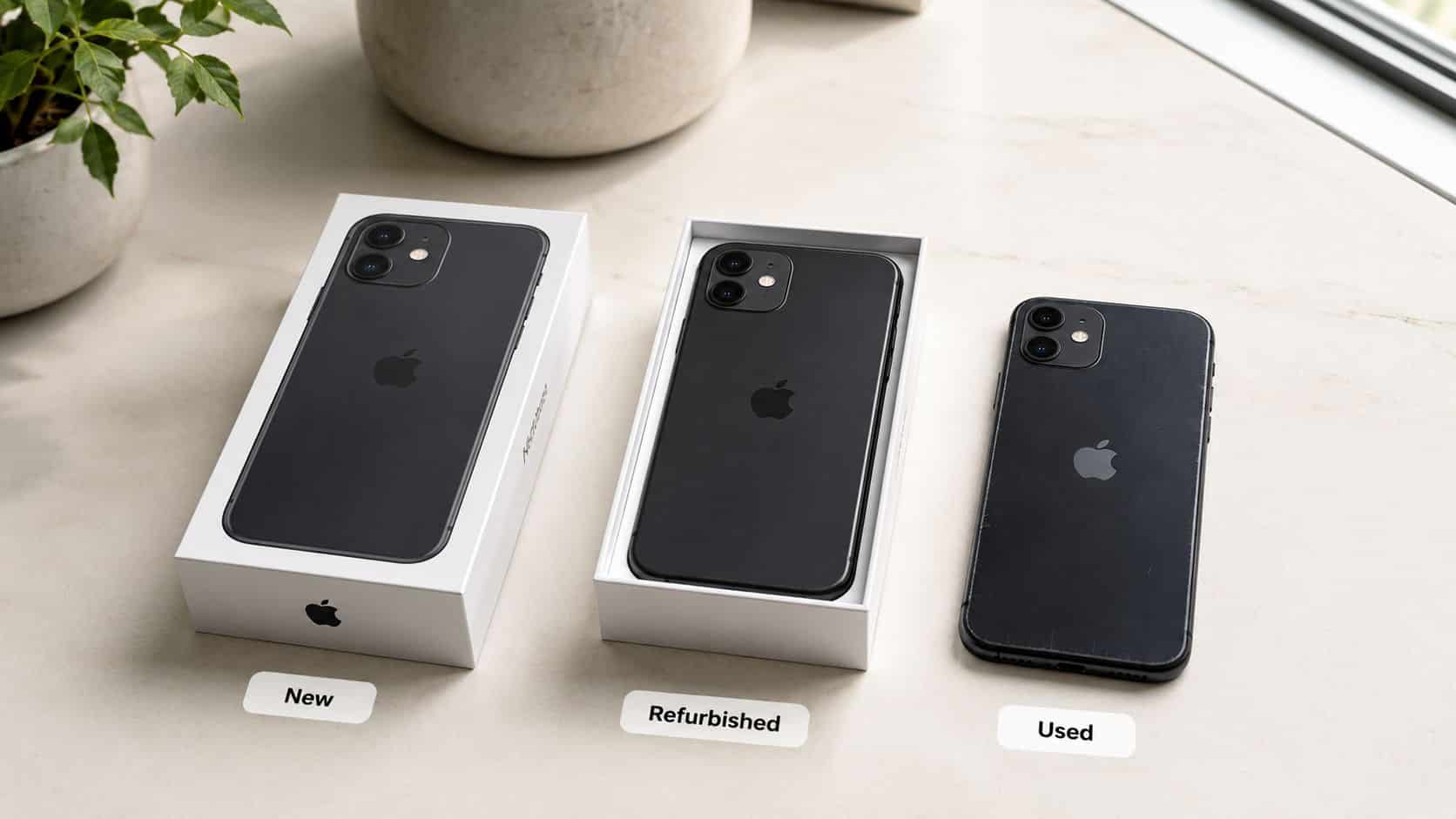
- New You’re getting a factory-fresh iPhone. No previous owner, no wear, and the highest level of cosmetic certainty.
- Refurbished You’re getting a phone that has been owned before, then checked and prepared for resale by a business. This is usually the sensible middle ground for value and peace of mind.
- Used You’re buying the phone more or less as-is. It may work well, but the risk is higher because there may be no testing, no battery standard, and no proper aftercare.
- Choose new if you want unopened condition and you don’t mind paying more for that certainty.
- Choose refurbished if you want a lower-cost iPhone with checks already done and some form of safety net after purchase.
- Choose used if price matters more than support, and you’re comfortable spotting faults yourself.
For many people, refurbished is the better buy because the phone does the same everyday jobs without the uncertainty that often comes with marketplace listings. If you’re weighing that up, this guide to compare refurbished and new iPhones is a useful next step.
The Refurbishment Process Grading Explained
When a phone comes into a proper refurbishment stream, the first job isn’t polishing it up. The first job is finding out whether it deserves to be sold at all.
What should happen before resale
A decent refurbisher checks the basics first. Does it charge properly, hold signal, connect to Wi-Fi, register touch correctly, and pass camera, speaker, microphone and button tests? On an iPhone, you also want checks around Face ID or Touch ID, the proximity sensor, loudspeaker quality, vibration, and whether the handset is still tied to someone else’s account.
After that comes secure data wiping, cleaning, and any repairs needed to bring the phone back to a reliable standard. Some phones only need cosmetic cleaning. Others need more, such as a battery, charging port attention, screen replacement, or camera module work.
A phone can look tidy and still be a poor buy. Internal condition matters more than a shiny frame.
What grading really means
Grading is mostly about cosmetic condition, not whether the phone works. A properly graded refurbished iPhone should function correctly whatever the grade. What changes is how much visible wear you’ll accept.
- Like New Usually means very clean overall, with little to no obvious wear in normal use.
- Very Good May have light marks on the frame or back, but nothing that affects daily use.
- Good Often gives the strongest value. Expect visible wear, but the phone should still be fully functional.
This is where buyers sometimes get caught out. They assume a lower grade means poorer performance. It shouldn’t. A “Good” grade iPhone can be a better purchase than a prettier phone with a tired battery and vague testing notes.
What works and what doesn’t
What works is a listing that separates cosmetic grade from battery condition, lock status, and warranty. What doesn’t work is a listing that just says “excellent condition” with no explanation of what has actually been checked.
It also helps to know that grades aren’t a universal legal standard. One seller’s “Very Good” can look like another seller’s “Good”. That’s why buyers should read the grading notes carefully rather than trusting the label alone.
If you want a clearer idea of how sellers describe condition, this page on understanding refurbished iPhone grades is worth a look before you buy.
Our Experience Refurbishing This Model at Used Mobiles 4U
On the bench, most iPhones tell the same story quite quickly. You can usually spot whether a phone has had an easy life or a hard one within a few minutes of handling it.

What we regularly notice on the workbench
One thing we regularly notice is that the outside condition can be misleading. A phone with only light marks can still have a battery that drains too quickly, a charging port that feels loose, or earpiece mesh packed with dust that affects call quality.
Our technicians often see battery wear as the issue buyers feel first in daily life. That’s why battery health matters far more than tiny scratches on the frame. Apple’s own certified refurbished programme includes a new battery, but outside that system battery replacement may only happen if needed, which is why battery quality can vary by seller and isn’t something you can judge just by looking at the phone. The practical point is simple. Always verify battery condition because it affects daily use more than cosmetic grade, as outlined in this guide to Apple refurbished phones.
Bench note: If a refurbished iPhone looks perfect but the seller is vague about battery health, that’s a bigger warning sign than a few marks on the casing.
What we check before a phone goes back out
Before resale, a sensible inspection should cover the charging port, speakers, microphones, front and rear cameras, buttons, vibration, network connection, Wi-Fi, Bluetooth and biometrics. We also look for signs of heavier use, such as worn port housings, pitted screws, weak button feedback, camera lens damage, or frames that suggest repeated drops.
Another practical point is battery threshold. At Used Mobiles 4U, devices are sold with a minimum 85% battery health, because below that buyers usually start noticing shorter daily runtime sooner. That’s the sort of standard worth looking for from any retailer, not just a nice cosmetic grade.
Repair or replace logic
A common example we see is an older iPhone that still runs well but has a weak battery and a worn charging connection. In that case, refurbishment makes sense because the phone still has life left in it once the weak points are dealt with.
Where refurbishment becomes less worthwhile is when a phone shows several signs of hard use together. Heavy frame damage, repeated non-genuine repair history, battery wear, and patchy sensor behaviour can turn a cheap handset into a false economy. That’s usually when it makes more sense to move up one model generation rather than chasing the lowest possible price.
What Buyers Usually Ask Us
- Will I notice the grade every day Usually only if you care a lot about cosmetics. Most people notice battery life and screen quality far more than a small mark on the edge.
- Is a lower grade risky Not if the seller has tested it properly. Lower grade should mean more visible wear, not worse performance.
- What tends to fail first on older iPhones Battery condition, charging wear, speakers clogged with dust, and damage from previous drops are the main things we watch for.
- Should I repair my current iPhone or replace it If your phone only has one meaningful fault, repair often makes sense. If it has several age-related issues at once, replacement is usually the cleaner answer.
How to Check a Refurbished iPhone Yourself
You don’t need workshop tools to spot the basics. A few checks in Settings and a couple of direct questions to the seller will tell you a lot.
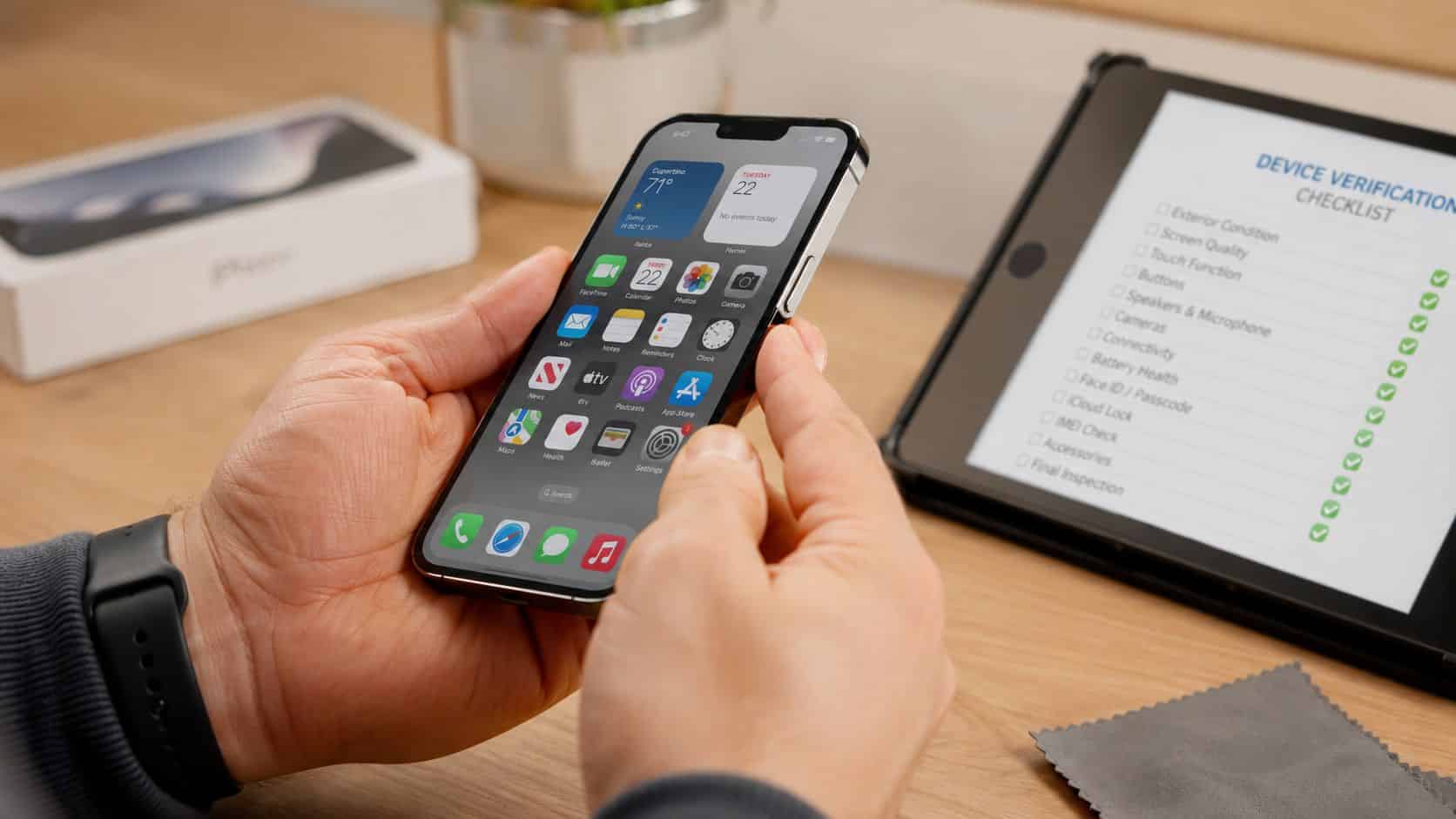
How to check a refurbished iPhone yourself, quick steps
- Back up first if it’s already your phone. If you’re inspecting a device you own, make sure your data is backed up before resetting or testing anything important.
- Open the model details. Go to Settings > General > About.
- Check the model number prefix. An F prefix indicates refurbished, M indicates new, N indicates replacement, and P indicates personalised or engraved. That model-number method is a handy way to verify the phone’s history, as explained in this model number prefix guide.
- Check battery health. Go to Settings > Battery > Battery Health & Charging and look at Maximum Capacity.
- Test Face ID or Touch ID. Don’t assume it works because the screen turns on. Set-up and use should be normal.
- Try the cameras and torch. Open the Camera app, switch lenses if available, and check focus, sound and image clarity.
- Test charging and sound. Plug it in, play audio, make sure the microphone and earpiece are clear.
Questions worth asking any seller
- Is it SIM-free and unlocked You want a straight answer, especially if you’re moving networks.
- What is the exact battery health Not “good”, not “tested”, but the actual figure shown in settings if available.
- Has anything been replaced Battery, screen, cameras and charging parts are the big ones to ask about.
- What does the warranty cover A proper retailer should explain faults, exclusions and return process clearly.
- How is the phone graded Ask what marks to expect on the screen, frame and back.
If a seller gets slippery on those questions, walk away. A reliable refurbished iPhone should be easy to describe clearly.
Warranty Returns and Peace of Mind
This is where many buyers come unstuck. They focus on the colour, the storage, and how tidy the phone looks, then ignore the part that matters if something goes wrong a week later.
Apple’s Certified Refurbished programme is a recognised benchmark because it includes full testing and can offer up to 15% savings against new, but the bigger lesson for UK buyers is that “refurbished” is not a legally protected standard. Warranty length, return rights and replacement-part quality can vary widely between sellers, which is why the seller’s own policy is such an important trust signal. Apple sets that benchmark out on its UK refurbished store information page.
What a good retailer should make clear
You should be able to find the warranty terms without hunting for them. You should also be able to understand the returns process in plain English. If those details are buried, vague, or full of exclusions, that’s usually a sign to slow down.
- Warranty Covers faults that appear after purchase, subject to the seller’s stated terms.
- Returns Gives you a route back if the phone isn’t as described or develops a problem quickly.
- Support Matters because a phone issue is stressful enough without chasing anonymous sellers.
A private sale may save money upfront, but if the battery drops off or Face ID stops working, you’re often on your own. That’s why buying from a retailer with a clear warranty policy is usually the safer choice.
Common Questions Buyers Ask Us
These are the things people usually ask once they’ve moved past the basic meaning of refurbished.
Will a refurbished iPhone come in its original Apple box
Not always. The box matters a lot less than the condition report, battery health, and warranty.
Can I use my existing SIM card
If the phone is unlocked, usually yes. It’s still worth checking network status before you buy.
Are refurbished iPhones worth it for kids or work phones
Often, yes. They make sense for first phones, backup phones and business handsets because you’re not paying purely for brand-new cosmetics.
What should I do with my old phone
If it still works, sell it, trade it in, or pass it on through a proper reuse channel. In the UK there’s a growing policy focus on reuse and repair to reduce e-waste, so buying refurbished supports that circular approach, but buyers still need transparent grading, testing and warranty because refurbished isn’t a uniform legal standard. That broader point is reflected in this piece on how refurbished phones fit reuse and repair.
Where should I buy from
Buy from a seller that clearly explains grade, battery condition, testing and returns. If you’re comparing options, this guide on where to buy refurbished iPhones UK can help you narrow it down.
What does refurbished mean iPhone, in plain terms? It means the phone has been through a controlled process before resale, not just passed from one owner to the next. It’s worth buying if you want better value than new without the gamble of a basic used listing. It suits most everyday buyers, parents, and businesses well. It’s less suited to anyone who insists on factory-fresh condition or won’t accept even light cosmetic wear.
Written by James Waterston, 24 years in the mobile phone industry from customer service through to Sales Director of a global repair and recycling company. Now running Used Mobiles 4U for over 8 years.
LinkedIn: James Waterston on LinkedIn
Meta description: What does refurbished mean iPhone? Learn the real difference between refurbished and used, what to check, battery health, grading, warranty, and UK buying tips.
If you’re comparing handsets and want a properly tested option with clear grading, warranty, and UK support, have a look at Used Mobiles 4 U for refurbished iPhones and other phones, or use the site to compare grades before you decide.
Looking for a refurbished phone?
Shop professionally tested refurbished iPhones and Samsung phones with 18 month warranty, 30 day returns and free UK delivery.
Browse Refurbished Phones